
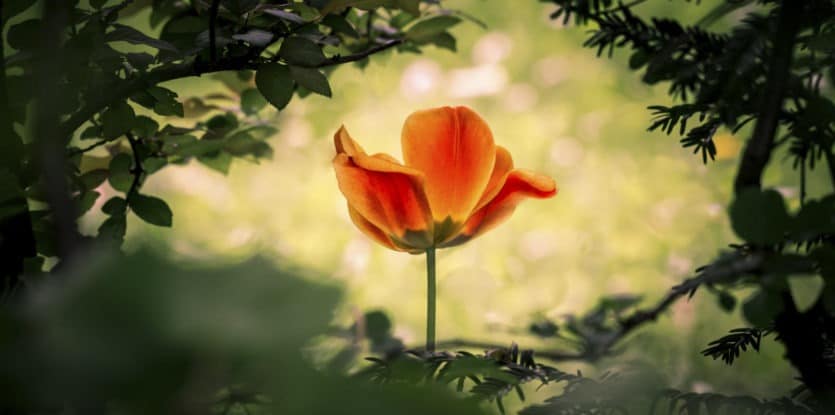
The difference between a miracle and a natural event is only in frequency.
— The Baal Shem TovMiracles are all around us; we must open our eyes to see them.
— The Rebbe
A group of college students had a private audience with the Rebbe. One student asked the Rebbe if he could perform miracles.
“This physical, natural world,” he explained, “ is not a separate entity from the higher, spiritual world — rather, it evolved from it. And so, when someone connects himself to the spiritual world, to G-d, he can affect things in this physical world in a way that cannot be anticipated. Every person is given the choice whether or not to connect themselves to the spiritual world.
“We must make the right choice,” the Rebbe continued, “and use all our strength to live virtuously, to introduce harmony to everyone we meet, to encourage others to increase goodness and defeat evil — in effect, to make the world a better place.”
The Rebbe concluded: “So, in essence, by inspiring students like yourselves to go into the world and perform good works, yes, we can perform miracles.”
What is a Miracle?
Do you believe in miracles? To answer this question, we must define what we mean by “miracle.”
The question of miracles is really a question of how we understand G-d and the role He plays in our lives. By analyzing the anatomy of a miracle and understanding your feelings about miracles, you can learn much that will help you find deeper meaning in your life.
So what do we mean by “miracle”? If we agree that a miracle is a beneficent occurrence that cannot be explained by the laws of nature, then we must first ask the question: What is a natural event? Why wouldn’t any natural event that awes and excites us be considered a miracle?
Truth be told, we don’t really understand the “laws” of nature. Yes, nature operates according to a design that we have come to accept as normal. But while this makes life more predictable and, therefore, comfortable, it doesn’t necessarily make it any more understandable. When we know, for instance, that the sun will rise tomorrow morning, we feel a sense of order and control; but we still have no idea as to why nature was created this way. Just because we label something “natural” doesn’t mean that we understand it any better than we understand a “miracle.”
The difference between a miracle and an act of nature is only in frequency. Imagine that the sun were to rise only once in our lifetime. Everyone would rush to see it, proclaiming it the most miraculous event they had ever witnessed. But since we experience a sunrise every day, we see it as just another ordinary part of our lives.
Since we are so distracted by the daily struggle to survive, by our responsibilities and obligations, we tend to ignore such simple facts. The very noise of life drowns out the underlying sound of what should be most real to us. It is not that we don’t believe in miracles; we simply stop taking the time to appreciate them. To see a miracle means to appreciate the uncommon within the common, the extraordinary within the ordinary.
When you can recognize the extraordinary within the ordinary, supernatural occurrences are not so significant. Your faith — and life — is not dependent on such miracles, for you have a mature relationship with a reality that is higher than yourself, and you realize that the ultimate miracle is our very existence.
Just contemplate the awesome design and balance within any one family of the animal, vegetable, or mineral kingdom, to say nothing of the beauty of the human body or the elegance of the solar system. The miracle of nature is not to be found in its once-in-a-lifetime events, but in its relentless regularity. Whereas every creation of man is ephemeral, every part of nature is boundless, permanent, and inexplicable — in a word, miraculous.
Yes, we can explain away many events, even “miraculous” ones. But then again, a good mind can explain away anything. Just as you have a choice in everything you do, you can use your mind to either seek out the miracles in life or deny them. Only you will know the degree of sincerity with which you are trying to understand your life and instill it with meaning.
ACTION
And finally, you will realize that the world around you is experiencing miracles within miracles, a revolution from within. It is time to acknowledge that the world is hurtling toward redemption — and that it is your choice and your choice alone whether to be a part of it.
*****
A man had driven some distance to attend a gathering with the Lubavitcher Rebbe, and he stood in line along with several thousand others.
“I don’t come just for the inspiration,” he explained to the person in front of him. “I’ve heard of numerous miraculous incidents at these occasions.”
Upon reaching the Rebbe, each person in line held out a cup, into which the Rebbe would pour some wine. When the man finally reached the Rebbe, he held out the cup in his left hand, but the Rebbe motioned for him to hold it in his right.
The man made no move to change hands, and the Rebbe did not pour the wine. An attendant urged the man, “Please hold the cup in your right hand.” With obvious trepidation, he extended his right hand. He looked on in disbelief as the Rebbe filled his cup. The people behind him were annoyed with the delay, but he wholeheartedly forgave them. How could they have know that his right hand had been paralyzed?

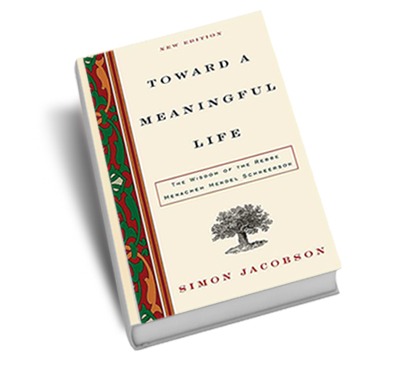
Buy the best-seller, Toward a Meaningful Life starting at $13.99, from our MLC Shop, Amazon or Kindle. Or sign up for our weekly email to receive a dose of meaning every Thursday night.



MY NAME Z FELIX AKINLLU. WHO QUALIFIES FOR MIRACLES
Miracles are special <3