Toward a Meaningful Life with Simon Jacobson
Radio Show Transcript – December 5, 1999
Mike Feder: Hi. I’m here with Rabbi Simon Jacobson and this is Toward a Meaningful Life with Simon Jacobson.
Rabbi Simon Jacobson: Happy Chanukah to you.
Feder: And to you too. It’s appropriate that we talk about Chanukah tonight, so our topic is “Chanukah: Finding Light in the Deepest Darkness.” Now I need some help here, and maybe Chanukah can help me because I’m one of those people who has that miserable feeling when it gets dark in the fall and the winter. Actually, there’s a name for it: Seasonal Affective Disorder. It’s when people get depressed because it’s so dark and they look for some light.
Jacobson: Yet another disorder.
Feder: Yes. Well I’m an encyclopedia of disorders. That’s why I’m here to be cured.
Jacobson: No, I don’t mean you. I mean yet another…
Feder: Oh, I thought you meant it personally. Anyway, tonight we’re talking about where you look for any kind of light, and where do you find light in the midst of darkness. And I was thinking, as the resident skeptic and seeker, that we should define what Chanukah is, because a lot of Jews (and people who aren’t Jewish) have a very small idea, if they have any idea at all, of what Chanukah really is, what its historical antecedents are, and what its religious meaning is.
So I think a good definition would be a nice place to start.
Jacobson: A very good place. Let me ask you something, Mike, about this seasonal thing. How does it work exactly?
Feder: It’s called Seasonal Affective Disorder, and maybe they call it that on purpose because the acronym works out to be SAD.
Jacobson: SAD.com.
Feder: Right. You never know with psychologists whether they’re being too serious for their own good. Now this is not news to people who suffer from it, but apparently in the fall and the winter, beginning in October when the days start to get shorter and it gets gloomier and grayer, there’s a certain kind of depression which borders in some people on somewhat of a clinical depression which overcomes people. It’s not unnatural that human beings would miss the light (you see it’s an interesting connection to tonight’s theme), but in the winter, hundreds of thousands of people suffer from this, and they take anti-depressants or they’ll have certain full spectrum lighting or lamps to get over this. So it’s an interesting phenomenon.
Jacobson: I find it fascinating for another reason: because Chanukah, in this hemisphere, as well as in Israel where it originated, is called the Festival of Lights, and it always takes place in the beginning of the winter season, where we have the shortest days and the longest nights.
We’ll discuss this throughout the show, but one of the key elements that makes Chanukah unique—and this may be a good segue into a discussion about the holiday itself—is that you light the flames right after sunset when it’s dark.
The Talmud says, mi’she’tishka ha’chama, that you light the Chanukah flames as the sun sets, and it’s unique in that way. One of the reasons is that it illuminates darkness, both literally and figuratively, physically and spiritually, and psychologically, and I never thought of it that way, that it begins when the nights are very long, when they begin very early. So in a way it is an antidote and a way that G-d preempted this syndrome or disorder that you described.
Feder: It’s as old as mankind itself, this need for light when it’s the darkest.
Jacobson: And Chanukah’s power is exactly that, which we’ll discuss. So let’s backtrack. Well, often I like to begin from the beginning, but if I do that the show will be over before we get to the story of Chanukah.
Feder: But do give some idea of the history and meaning.
Jacobson: What strikes me when you say that people don’t know what the holiday means is that it’s not just Chanukah. I don’t think that people know altogether what the holidays are, and often we traditionally experience holidays and family get-togethers with warm nostalgia withoutknowingthat there is anything deeper happening.
Feder: Presents…
Jacobson: Right. And for others, as we discussed a few weeks ago, when home doesn’t really feel like home, it’s really a time for dread. I wrote an article recently about Chanukah about when you feel like the holiday is almost like a cheerful veneer, while beneath the surface it’s really a miserable time for many.
So I see the holiday as a message from G-d, if you wish, like a letter to your soul, where when it comes to a certain period in time, in this case, Chanukah, a special message is sent to us like nourishment. It’s almost as if at this same time and same station in the year a door opens up, a window of opportunity opens up between a person’s spirit and their Divine connection. And if we tap into that channel, that window of opportunity, through the various customs and traditions, mitzvahs of that particular holiday, those are like the tools that help draw down the energy of that particular time of the year.
So it’s not just a commemoration of events that once happened. It’s actually an opportunity that’s happening right now. And each holiday has its particular message.
So when you say Chanukah, it’s not just a question what kind of potato latkes we will be eating…
Feder: The special thing you eat on Chanukah? You know, I didn’t even know that much.
Jacobson: It’s healthier for you that way.
Feder: You mean because of the potato latkes?
Jacobson: Potato latkes saturated in oil.
Feder: Sounds good!
Jacobson: Well, when they’re made well they’re good. As they call it, decadent! For many, Chanukah is associated with a time of gift giving. For others, they may be familiar with the dreidel playing—where there’s a little top that you spin. There are family get-togethers. It’s commemorating a miracle that happened several thousand years ago in the time of the Second Temple, where the Greeks had desecrated the Temple and there was a general oppression of the Jews at that time, trying to eradicate the sanctity of Jewish faith.
The Greeks were great scholars and great ethicists themselves; however, they were opposed to the Jewish way of connecting ethics and morality to G-d. In one of the prayers that we say on Chanukah, we say that they wanted to eradicate Toras’echa, the Torah that is G-d’s Torah. They said, “Why not a book of wisdom, a book of inspiration, a book of meditation? But why are you connecting it to G-d?”
They wanted to erase and eliminate chukei ritzon’echa, G-d’s laws. Why are they G-d’s laws? Why aren’t they just laws between man and man?
Feder: Let me ask you about that. Why would that bother anyone? What disturbed them so much about that?
Jacobson: It’s hard to analyze and I think it’s a discussion of its own. But I think when people have self-worship… You know, everyone’s worshiping something. Some are worshiping themselves. Some are worshiping money. And others are worshiping other people and images, illusions, and then there are those who worship G-d.
I believe when people are so into themselves and into self-worship, they are very disturbed that a people, a nation, refuses to bow to what they consider to be important, to their value system.
Feder: So it’s an insult to their narcissism, in a way.
Jacobson: In a way, but they won’t call it narcissism, they’ll call it the good of the community, the greater good.
Why was it that Marx had to write that religion is the opiate of the masses, or communism found it necessary to eradicate any religious beliefs?
In some way, they saw religion as a threat. As Haman (in the Purim story) who was so upset and infuriated when Mordechai would not bow to him. It’s the same story throughout history: Pharoah in Egypt.
But getting back to Chanukah, that is what the Greeks disliked. They weren’t interested in killing the Jews like Haman was, or Hitler. They were interested in killing the spirit. They wanted it to be more of a human, man-made system.
Anyway, the battle was not just a philosophical one, but it took the shape and manifested itself in a real conflict and a real conflict of interest of standards and values. Essentially the Greeks saw the Holy Temple as being the enemy, because that was where the Jewish people went to worship and to pray and to serve G-d. The Temple was desecrated to the point that they could not light the menorah. — Every day in the Temple, the menorah, the candelabra, was lit with its seven branches. The flame is called a ner tamid, the eternal flame, representing the eternity of the soul (the flame being like a soul).
Feder: Now this is something that predates the holiday of Chanukah.
Jacobson: Yes, during the time of the Second Temple, which we’ll say is approximately 2500 years ago, the Greeks had taken control and had desecrated the Temple. And there was no oil to be found to light the menorah. The miracle of Chanukah was that they found one little flask of oil that was untouched by the Greeks so it maintained its purity. This oil was called shemen zayis zach,and it needed to be pure, virgin olive oil, and it was just enough to light the menorah for one night, but instead it burned for eight.
And that is the symbolism with which we commemorate the festival and holiday of Chanukah, the Festival of Lights: that we light the menorah for eight nights of Chanukah which began last Friday evening and will continue until next Friday evening.
Feder: So then on a deeper and a higher level, the meaning of that is…
Jacobson: Okay. Perfect. The meaning of it is the power of light. That light can pierce even the deepest darkness. Now, the miracle of Chanukah was not just about the flames of the menorah being lit and burning miraculously for eight days, but there was also a victory—as we know, the Maccabees, a small band of Jews resisting the Greeks, who were the “few over the mighty.” There was actually a war and they didn’t just find some oil and light the menorah, they actually won the battle over the Greeks.
Feder: So this is a small group of fighters who overpowered a larger force.
Jacobson: Exactly. And the real question that’s asked is, so why is the miracle commemorated or celebrated through light? It should be celebrated through perhaps other ways: light was only one element, perhaps an important element, but it’s one of many events that happened at the time.
Feder: If it was a fight, what about a military parade?
Jacobson: And the answer is, the victory, even of the Maccabees, was one of light over darkness. Quality over quantity.
I always was very moved by this Chanukah message of the power and faith in light.As a child (my birthday is also around Chanukah time, so maybe that’s some psychological connection) I was always taken by light. There’s an expression that King Solomon writes in the Book of Ecclesiastes, where he says, “I have seen the dominance and the superiority of wisdom over folly, as the power and superiority of light over darkness.”
And there’s an expression in Jewish holy books that m’at ohr doche harbeh choshech, even a little light dispels a lot of darkness—and it does so naturally. Naturally, without any effort. Let me explain.
If you had a body of water and a fire, and you put them near each other, they’re adversarial forces. If there’s enough water, it will put out the fire. If there’s enough fire it will evaporate the water. And they will battle. That’s why you hear the crackling of the fire as it battles to survive the moisture. There’s a very physical battle that’s going on between these two antithetical forces in nature.
Now, place light near darkness and that doesn’t happen. Darkness is dispelled naturally and automatically in the face of light. Obviously if it’s a very large dark room, you’ll need a lot of light, but in the area where you bring a flame, where you shine a light, suddenly the darkness is dispelled. And this is seen as a very deep and a very philosophical message that darkness, in a sense, is really the absence of light. Ignorance is an absence of knowledge, not necessarily a power of its own.
Now an ignorant person can do a lot of destruction, a lot of damage. But ignorance is not a competitive force.
Feder: Would hate be the absence of love, then?
Jacobson: Initially yes. As a matter of fact, in Jewish philosophy there are two opinions whether darkness is an entity of its own, or if it’s only the absence of light. You could say it’s two dimensions—that it begins with the absence of light, but once it becomes an entity in its own mind, it suddenly gets its own personality.
So I would say that hate begins with an absence of love and then can turn into a monster of its own.
Therefore, the message of Chanukah—when this small group of partisans called the Maccabees battled the Greeks and the fact that they had such hope and faith and they didn’t look at numbers—in a way they were saying that our passion and commitment and faith, even of the few, will overpower the many. That, in essence, was also the battle and the victory and conquest of light over darkness, where darkness represents quantity and materialism and light represents spirit—quality over quantity.
So we celebrate Chanukah when we light a flame—it’s not just a flame to commemorate something (people often light flames to commemorate things)—it actually has a message in itself. As one of the Chassidic Rebbes said, “When you light the Chanukah flames, listen to the story that the flames tell you.”
If you look at a flame, it’s a very interesting phenomenon; it’s a very interesting creature. It’s always flickering. It defies gravity. It illuminates. Now some of these messages are very valuable in finding hope in our own personal lives, as you titled the show: Finding Light in the Deepest Darkness.
Feder: The main candle—you’ll have to pardon my abysmal ignorance, because we celebrated Chanukah when I was a kid in the most casual way, but basically it was just about giving presents, which is what Xmas is for a lot of Christians, too—but the main candle has a special name and you use that to light the other candles, right? I’m interested in the details because I forgot them already.
Jacobson: That’s called the shamesh. The shamesh in Hebrew actually means a servant.
Feder: That gets lit first.
Jacobson: It’s like the master flame. The pilot flame. You light that first with a match or from another shamesh, another servant, and then you use that to light the actual Chanukah flames. But the interesting thing about the shamesh is, that though it is the root, so to speak, from where you light other flames, the real Chanukah lights are the other flames, not the shamesh. The shamesh stands as a witness on the side “watching” and “having pleasure” in its children or its students being lit. Because one of the messages of the flame is one of education, where we teach our children or our students to be flames that rise on their own, that stand on their own feet.
You see, there are multiple, multiple messages and lessons that you can take from Chanukah that are very personal and profound.
Feder: Okay, now, does each light, each candle, have a separate meaning that’s been given to it over time, or do they just equally represent a totality of the eight days of the miracle? Maybe I’m getting a little arcane and specific, but I’m interested.
Jacobson: Well, I would pose the question this way. In the candelabra in the Temple, there were seven branches. So why is it on Chanukah that we light eight? Why was the miracle eight days and the Chanukah candelabra has eight branches and not seven?
Feder: That’s excluding the shamesh?
Jacobson: Right. The reason is that, particularly in Jewish mysticism, the number seven represents the cycle of life, seven days of the week, seven colors on the color spectrum. The number eight represents the ability to pierce darkness, to transcend the cycle. That is, when things don’t go right, you have the ability to transcend that as well. So eight also represents the light that pierces darkness.
Seven represents the natural cycle of things. In the Temple the menorah was lit every day, that was the way it went and it was a smooth ride. However, when there’s a challenge, we need to have an eighth dimension that suddenly emerges that can help pierce the darkness.
So getting back to the theme of it, which is often overlooked, is that Chanukah is really a spiritual message to our souls. Our soul is compared to a flame. It says that in the Book of Proverbs, ner Hashem nishmat adam:the soul of a human being is a flame of G-d—the reason being that the body is like a wick that grounds the soul. If you look at a flame, it defies gravity, it’s always aspiring for more.
We have a restlessness inside each of us. If you want to see a real approximation of what you look like, Mike, and what I look like, our spirits, look at a flame, because a flame is always restless. It’s always looking for more, licking the air, searching, only to be pulled back down by the wick.
Feder: And it gets blown in any direction by any wind that comes along.
Jacobson: However, when it’s focused and it’s connected with other flames, you see that they gravitate toward each other.
So there are many, many messages in the flames, including the one I mentioned earlier, which actually strikes me as being a very important one, which is that even in the darkest moments, one can find light. Even in anxiety and despair, the message of Chanukah is that there is a light at the end of the tunnel.
Feder: You know, I don’t know what your life was like before this showand maybe you don’t know much about my life before, I mean, we talk on the show here in front of everybody and we assume everybody’s listening. But it seems like, for you, it’s easy to say, “In the deepest darkness, if you just know that there will be light, if you just think that there’ll be light….” But when people are in the deepest darkness, actually the definition of their darkness is that they can’t see any light, so in other words, maybe I’m speaking for other people, it almost seems like an irritant in a way to hear someone say, “Look for the light in your deepest darkness.”
I mean, I wouldn’t be in the darkness if I could see the light. Maybe that’s a little too…
Jacobson: No, it’s not a little too anything. I think you should be even stronger in making that case. My response is twofold. Point number one, and I would welcome people to call in about this…
Feder: Okay, let me give people the number here so they can call in. The number is 212-244-1050. You’re listening to Toward a Meaningful Life with Simon Jacobson. This is Mike Feder and we’re talking tonight about Chanukah and especially about the idea of finding light in the deepest darkness which is one of the great significances of Chanukah.
I’m engaging the rabbi in a difficult conversation here because he seems to find light everywhere. I know you for a while now, and you seem to find light in almost any kind of darkness and I succeed in finding darkness in almost any kind of light, and so it’s an interesting combination. So I’m speaking for all the people out there who do feel surrounded by materialism and despair, despondency, and psychological problems when they look at the world. The light is not so apparent to everybody and what I want to get from people who call us is their comments and questions.
Join us tonight, participate in the conversation. A lot of people, I have to mention this over and over again, that around the holidays, and including Chanukah, feel dismal, they feel surrounded by darkness. Maybe somebody has a question that they can ask you, a way that they can get out of their own personal darkness. So give us a call.
But really, the darkness is very heavy.
Jacobson: Well, your question is right on target and I appreciate it, and particularly representing those who are in those deepest darkest moments, even on a Chanukah night, even in the long, winter evenings, and in the deepest throes of despair.
So my response is twofold. First of all, we learn from Joseph in the Bible, when he predicted as the interpretation of Pharaoh’s dream that there would be seven years of famine following seven years of plenty, that he suggested that we should hoard and save the grain in the years of plenty so we should have enough when the famine strikes.
And they said, “Brilliant!” and they appointed him viceroy, second in command, and he’s the one who actually handled the grain trade at the time. So the question I’ve always had is, what’s so brilliant about it? I mean, it seems so obvious. If you’re going to have seven years of plenty, you prepare for the worst because you know the famine is coming—seven years of famine is a serious matter.
Do you know what was brilliant about it? Not the idea. Not the suggestion. It was following through and doing it. Because the fact is, people live in a way that when things are going well, they take it for granted. And we always say tomorrow is forever and we take it for granted. And we don’t prepare for times of darkness.
That’s why you need all these kinds of things like forced savings, where people actually have the banks take automatically from their money… Why not, every month, be disciplined and write a check to your bank or to your mutual fund, or whatever it is…
Feder: That’s what we do in my house. My wife does it. (That’s why it happens!)
Jacobson: But you still see that most people can’t maintain it. Because what happens if you need a little cash and you don’t have any. So you say, okay, next month I’ll write two checks and then in three months three checks, and at the end of the year I’ll do it all. It just doesn’t happen.
There’s something about human nature that even though we understand that the darkness may be coming, we just don’t prepare and we think that we have a little more time. You know, “I’ll do it a little later.”
And I think that that’s my response to you. It’s true that just to say to a person who’s lying in deep darkness that there’s light and there’s hope, they can’t even hear what you’re saying. They’re so desensitized I don’t even think they’d be upset.
Feder: You can’t pierce certain types of darkness with words.
Jacobson: However, everybody has moments when they do come out, and there are times when there’s a little more hope. And when they are in that place, they’d better prepare themselves well. Because when you prepare yourself and you know beforehand that when you do end up in the darkness you’ll need help, you almost build in certain life rafts, that when I’m there you have a friend say, “I will go into a darkness like that. I want you to come and I will tell you, ‘Don’t come to my basement or don’t speak to me,’ I just want you to be there.” And you prepare yourself. That’s the key.
So it may be difficult to reach a person who’s in deep darkness with the message of Chanukah, but it still should be said to him, because we believe that the power of light can reach even the deepest darkness. He may not respond, but it speaks to his subconscious. In addition, we must say it to a person who may be in that place tomorrow, but now he is able to listen, because everyone has moments when their ears are open and they are able to listen. And that’s when they have to prepare themselves with these messages because it’s like the analogy of the spiral staircase. As you climb the staircase and you get closer to the top, you have to make a 360º turn and you can’t see the destination.
Someone six steps down can say, but it’s right there, but you say, I don’t see a thing.
Feder: I would never walk up a spiral staircase because I can’t see where I’m going. I can’t believe anyone would even do a thing like that.
Jacobson: Well, sometimes no one asks you. You said before, despair is nothing that someone wishes upon themselves. You’re suddenly on this staircase and you’ve got no choice. But seeing it through and making that last turn is sometimes the most difficult process.
So I totally agree with you that there’s a paralysis and a complete blindness. Now to use the Baal Shem Tov’s words: he says there are two types of darkness. There’s a darkness where you know it’s dark and the light will come. But then there’s a darkness that is so dark that the darkness obscures the fact that it’s dark. You don’t even know that it’s dark.
Feder: You’re just living with it inside of you.
Jacobson: And you can imagine and deceive yourself into thinking that it’s light because you get so accustomed to it. What it means in modern psychological terms is called “denial.” Denial that there’s a problem. You may say, “What problem? This is my natural place.”
For many people, crisis becomes their natural place. They consider that to be their most comfortable place—to be uncomfortable.
Feder: Let me refine something you just said so that it makes more sense to me and maybe to somebody who is listening for whom it’s a little fuzzy. Now I just got through abridging a book, which is what I do to make a living partially—it’s one of those personal growth books and the author is a famous psychiatrist and he advises in the book to “look on the bright side.” Of course, he puts it in a more complex way, not so Pollyanna-ish. But he says, “You can’t think bad thoughts all the time.” It’s very well known that if you think decent, bright, sunny, happy thoughts, you will generally improve your disposition if you’re not being stupid about it.
But I guess you have to walk a fine line in a way between knowing that the darkness will come later and dwelling on it, right? That’s a very ticklish line to walk, isn’t it? I mean you could teeter over into one or the other. It sounds like what you’re saying is that you should know that it’s part of life but you’re not saying that people should dwell on it.
Jacobson: Well I’m saying something beyond that. I’m saying that there are moments or glimmers of hope and it’s important then to accumulate hope and lighten your life, and that will in some way keep you alive when you experience your darkest moments.
Feder: So if it’s like a spark, you have to blow on it to get it to become a fire, right?
Jacobson: Precisely. As I said, even the people who are in the deepest despair have moments when they come out of it. And when they do come out of it, that’s when it’s critical that they learn the message of Chanukah to help then when they may once againenter their darkness. In addition to the fact, as I stated earlier that Chanukah teaches us that even the deepest darkness is pierced by light.
I remember reading something that really touched me: I forget what his name was, a Bolshoi dancer in Russia who went mad…
Feder: Nijinsky?
Jacobson: I don’t remember. Did Nijinsky go mad?
Feder: Oh, absolutely.
Jacobson: Maybe that’s him but I don’t remember his name. Anyway, he was in an insane asylumand no one could get through to him. Years later he had a visitor who was very inspired by his dancing, and while he visited him in his room at the asylum (he was a complete lunatic at that point), the visitor began doing a dance a move that he had been inspired by. And something clicked and the dancer began to do a beautiful dance in the room that was amazing. He went back 20 years as if time had not elapsed. Something was triggered in him, something that was deeply embedded in his subconscious.
I have another story… I have a friend who’s a rock and roll musician, and he tells me that when his grandmother had already become senile, nothing could get through to her except a certain Yiddish song that she would sing when she was young and he, as a musician (he doesn’t even know the Yiddish words), would just repeat like a parrot to her and that got through, and suddenly she would become lucid.
The point that I’m making is twofold. First of all, for the record, it’s true that perhaps you can’t get through to people in despair, but it’s important to know that Jewish faith dictates, and faith in G-d dictates, that even in the darkest moments there is light somewhere.
The question is, how do you get that message through to someone who’s in that place? That’s an important question. However, the faith in the light is important. When I hear about mothers who did not give up hope for their autistic children (by contrast to those that are ashamed and simply don’t want to have any relationship with their children), and that child is in some way turned into something that no one would have expected, that’s a mother’s absolute faith that deep in that child there’s something there. There’s a human being there. There’s a Divine spirit and there’s a light in there.
Doctors will say, “You can’t get through to this child!” I would totally agree that at the time, medically, you can’t, but the mother’s hope and faith was there and something got through, something that the child hears.
Now, it may not work out or end up the way we’d always like it to, but that is what I call the ultimate of human dignity. It’s beyond human dignity. It’s Divine. It’s the ability for a human being not to be disturbed and intimidated by seemingly the natural circumstances of things. That there are miracles. And a miracle doesn’t mean that there’s a bolt of lightning suddenly on Fifth Avenue.
A miracle may mean the hope that within the deepest darkness there’s light.
Chanukah is that message. Like the mother that sees light in her child. And I think it would be vulgar or arrogant for anyone to challenge the mother’s hope and faith in the light inside of her child.
Will it always work out the way she wants it to? Maybe not. But that still doesn’t take away the dignity and the commitment of hers—and who knows what the child hears? Even if the child doesn’t respond, who knows what that child picks up? So that firm belief and faith that there’s something embedded, that some light is embedded in the darkest moments.
Question two, which may be a more difficult one or maybe equally problematic, is how do you get that through to someone who’s in that dark place?
Feder: I’d love to know the answer to that one.
Jacobson: Well, let’s backtrack to what I said earlier. First of all, everyone has moments when they emerge, and when they emerge, it’s important to build their arsenal, because they’ll really need it when they go under again.
For a person who never comes out of it…
Feder: And there are a lot of people like that…
Jacobson: Then it’s a similar scenario that I gave with autism or madness—that the people who love them do not give up hope. They talk to them and they have the firm belief… I am a firm believer in projection. Let me explain. Since there is a soul in there somewhere and there’s a light in there somewhere, even if you don’t see it emerging or you don’t see it peeking its head out, if you believe that it’s there, then somehow that belief is having an effect on the person that you are having a relationship with.
It may not be apparent to you. The person may not show it. But I believe that something inside of them hears it. And it’s not a question of whether or not I can prove it medically. That firm and absolute belief will have an impact and do something to that human being.
Whereas a person who doesn’t have that faith, then you’re guaranteed that it will have a demoralizing effect, because in a strange way…
Feder: Because then it will have the opposite effect. If you don’t have that faith, that’s contagious in a bad way.
Jacobson: Right. Or even with a neutral attitude. As they say in subatomic physics, there’s the concept that the observer has an impact on the subatomic particles and in some bizarre way, the subatomic particles sense what the observer is projecting.
Feder: I remember when I read that I thought, now there’s something almost impossible to grasp.
Jacobson: Correct, we all can’t grasp it, but it’s been proven, so why can’t we say the same that if that’s true about inanimate objects (inanimate in the sense that they’re not human beings) why can’t we say the same about human beings who have hearts and souls. As King Solomon writes, “As a face is reflected in a body of water, so too one heart is reflected in another.”
And the fact that the heart doesn’t respond consciously or in a revealed fashion doesn’t mean you haven’t had an impact. And that is a message that I think is powerful and relevant, and a Chanukah message that’s extremely relevant to our times, where there is such despair and there is such darkness.
Now I’m not naïve and suggesting here that this is the solution: that you can bring any person who’s in deep darkness to a Chanukah flame, and they will suddenly come out of it, but I do believe that Chanukah teaches us that the light does have an effect, and you have to do everything you can to reach the person—recognizing that there’s a G-d in this world. That ultimately there are things we don’t understand in how things will evolve and why some people come out of things and why some people don’t.
Feder: So the message here is, to repeat, don’t give up hope. I mean, if we take it back to the historical or the religious antecedents of this holiday, there were these people in a Temple, there was not that much oil, the people were surrounded, overpowered by a larger force, and yet they didn’t give up hope and achieved a real result—that the flame burned for eight days and this group of fighters overcame a much larger army. A lot of people who are in darkness don’t have an identifiable quantity of things, like a number of swords, a number of fighters, or an amount of oil or a number of flames to burn—what they have is that they are lost at sea, in other words, they’re in an abstraction here, which is even more dismal in a way. I’m not denigrating what happened at this miracle, but you know what I’m saying: these are real things, as real as anybody wants to believe them, that actually happened to real people that had a real result.
The great darkness of the modern age is that this kind of psychological, soul-malaise is not quantifiable, it’s not identifiable. If there are people in darkness right now, or if you know someone who’s in darkness, it may not be because they don’t have something to eat or they don’t have this or they don’t have that, or they don’t have some triumph over something. They just have some sort of unidentifiable, psychological hole that they can’t get out of. It’s a different thing.
Jacobson: Well, we have to distinguish between a clinical and a medical oriented type of depression, which may not be able to just be dealt with through natural methods—meaning not through philosophical and psychological therapy. It may require medication or other forms of intervention that helps create a balance in order that a person can see clearly.
I’m not really talking about that, because that’s another story, that that person may require medical intervention and that is fine. It’s like diabetes may need insulin and each of us needs our supplement of vitamins, and that’s the case similarly with other chemical imbalances.
However, I think coupled with that is the issue of hope and faith. I mean, you see today that people who are ill and are lying demoralized in the hospital who have visitors who come to see them, people who love them, that has a positive healing effect on them. You say people are lost at sea. Yes, it’s critical to have friends and family who are there for you and to know that you’re not lost at sea. So you may not have, as you put it, flames and swords and so on, but you have family who loves you. And if you don’t, it’s critical that a person like that find a support group, find someone who can call them. I see that there’s power when someone in that type of despair has a friend that is there for them.
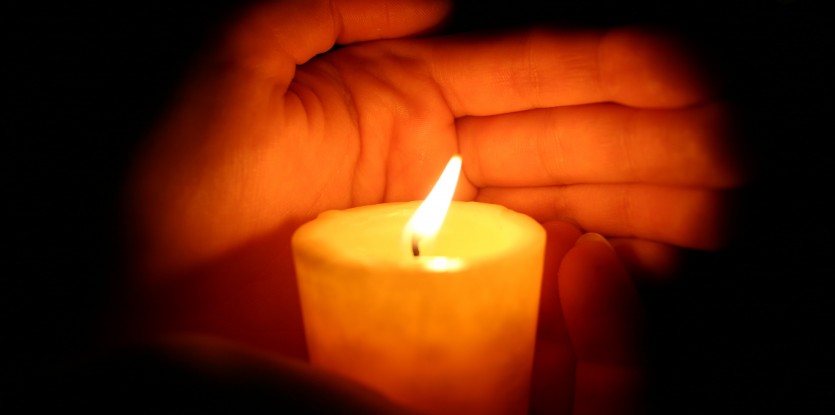
Take the message of Chanukah. It’s dark at night. The sun has set on a person’s life. So what do you do? You don’t go to sleep, and you don’t ignore it. You go and you light a flame. And the flame shines. In the little area of the room it shines and illuminates. Here’s the personal message. Someone’s in despair and darkness somewhere. You know that they’re there. They called you. You’re part of their support. You get on the phone and they say, “I don’t want to talk to you. I don’t want to hear your voice.” But you say, “But I want to speak to you. Just give me five minutes.” And you speak. You light your flame and you speak to them with love and kindness and gentleness. There has to be an impact on their darkness. It may have only melted away one percent of it and there are 100 layers, but one out of a hundred is also a step. Maybe they need another 99 calls.
And it’s a process. It’s not easy to understand and we don’t have full answers to this. I empathize with that type of situation, however, because it’s very dark…
You see, in a way, I almost find it like a subconscious battle where a person who’s in that kind of darkness almost wants to write the script that everybody will give up hope on them and they’re going to make sure that they do. They will do everything possible to allow it.
Feder: And yet at the same time the person who fights that…
Jacobson: The person who fights that says, “Listen my friend, I believe that light is more powerful than darkness. I don’t care how angry you are or how insane you are, or how dark you think it is, I will not succumb.” That’s true, true love. Because you don’t always see the results, but there is the hope.
Feder: You know, it’s amazing that you mention that right now. We have a few calls which we’ll go to in a second. What you just said is fascinating to me, because often I see the world in a dismal way, maybe because of the way I grew up, maybe the way I was born, and that’s why I’m here to talk to you, right? But what’s amazing is I never talk to my kids like that. When my kids have been telling me their whole lives, this is bad, school’s bad, my friends this, that and the other thing, I am always optimistic with them. I always encourage them to look at the bright side, and people who know me think it’s the biggest joke, but I do that because I love them.
Okay, we have Benita on the air.
Caller: Hello. I called once before. It’s very interesting that this subject came up because right before the program I was having a discussion with a friend of mine and we had a mutual friend who just passed away. We’re all about the same age, and we were having a little bit of a disagreement because my friend said that she felt that when it was obvious that our mutual friend was going to die, she should have embraced death, and I felt that as long as our friend had life inside of her, she should think about life. And I just don’t know how to go through that. It’s pretty interesting that we had different ideas about it. Do you face death in the face, or as long as you’re alive do you think about having hope?
Jacobson: Well, first of all, Benita, you should never know and have to face anything like that, and I’m really sorry about your friend. My heart goes out to you and to all the family. But I think that what you’re touching on is very relevant to our discussion.
I don’t know your friend and I don’t know you that well, however, I think it may be how you both see life in general—I’m sure that this difference between the two of you, how you faced that, probably manifests itself and reflects itself in other areas in life. I’d be interested to know how you and your friend deal with adversity altogether.
Caller: Well, it’s also interesting because my friend and I both lost our mothers at the same age—at the same age that our friend had passed away.
Jacobson: What age was that?
Caller: Well, her mother was in her forties and mine was in her fifties. I just felt that with my mother, we never discussed her death, even though it became apparent that she was going to die. I don’t think we were totally in denial, I mean maybe we were, but it never came up.
Feder: But it seems to me that life is not the opposite of death. I mean in some response to what you were saying it’s not as if you say to people, focus on life instead of death, because there’s no way that you can divide death and life and say that they’re two separate things.
Jacobson: Thank you for the call Benita. What I was going to say, in the message of Chanukah that we’re discussing here, obviously if it’s premature to address death, there’s no need for that, but if a person is facing the inevitable, either because of aging or other issues, I think that the focus on death is not so much on how to prepare for death, but how to appreciate that the soul is forever and that there’s an eternity to the soul. It’s not just a question of how we are going to bury this person, G-d forbid, or prepare the Last Will and Testament.
It’s an issue of addressing the future, in a sense. Where does the soul go after death? How will the family live on? Look for the positive elements, in other words, find the light even in a dark thing like death.
I think, Mike, that that’s what you were implying as well. It’s not like life and death are two opposites. In a way, death forces us to look at life in a new way. People appreciate their last days and have that type of hope and ultimately it’s always important, even if a person is told by doctors that inevitably they are dying, that they recognize that there’s a thing called G-d and we don’t always know how things work out. So I think that approaching deathis also part of the faith, not denying the situation and being oblivious, but recognizing that there’s a soul, and there are different ways, and there are mysteries to the way G-d runs this world.
Feder: Okay, we have Betzalel on the air.
Caller: Hi Rabbi Jacobson. I understood so far from your show that the way to deal with a person who’s in darkness is for that person to build up his arsenal before he goes into that darkness so that he has the tools to deal with the darkness when he’s there. I would like to cite the Talmud which brings down that Rabbi Yochanan told somebody when that person’s child died, “Well, it’s not as bad as what I had. I had ten children die.” And it seems from there that there is something you could do even while they’re in their darkness which is to let them know that other people have been there and it’s been even worse with other people.
Feder: You know, I think that really works with some people. Sometimes that’s worked with me, actually. Somebody once said, “You know, my life has been a lot worse. Listen to this.” And it actually, in a perverse way, actually made me feel better to hear that somebody else had suffered more than I did. Is there something wrong with that? But it actually made me feel that my life wasn’t so bad. In fact, it actually drew sympathy out of me for that other person at that moment of my self-involvement.
Jacobson: So maybe it’s like a distraction. It’s like when your knee is hurting you and someone gives you such a slap across the face, you can’t even feel the knee because you have a bigger problem to worry about.
But my question to Betzalel is, are you questioning the meaning of that Talmud?
Caller: Yes, it seems from the Talmud that there is a way to get to the person even in the darkness. You don’t just need to…
Jacobson: Okay, that’s a good point. The truth is, maybe the story is telling us not just something that I had worse—that you just lost one and I lost ten—because frankly, the question is this: Who’s counting? I mean, when a parent loses a child, do you think it’s less painful than somebody who loses many children? I mean, it’s not a quantitative thing, it’s a qualitative thing. Just like love for ten children is not ten times as much love as you have for one child.
I would think that part of the story is also saying that a person who’s in that position can empathize and communicate with a person in that position and has a certain credibility that another person doesn’t have. Like, I find it very insensitive when I see—and I’ve seen this—someone in real deep pain and they’ve lost a child, G-d forbid, or some other trauma or tragedy, and someone else who hasn’t experienced it comes along and tries to explain it philosophically: “no pain no gain,” or “every descent brings a person to a greater ascent,” etc. I think that the key is empathy, being able to hold that person’s hand and say, “I’m with you.”
So I’m sure that Reb Yochanan in this story in the Talmud didn’t just say, “Hey, you think you got it bad, look at what happened in my case,” I think it was also a matter of empathy.
Feder: He was saying, “I understand.”
Jacobson: “I am where you are.” And in that type of circumstance I would completely agree with Betzalel’s thought that there’s something that could be said in darkness from another person who’s been in that position. It’s not the words, it’s the person, it’s the whole body language, it’s the whole spirit, that I’m there with you. I would even go a step beyond that because a person who’s in that place can communicate with someone else who’s there; they have their own language. They’re traveling in a different orbit.
Feder: There are certain people who maintain what’s called “Crisis Hotlines” and they use people who have actually suffered with these things to maintain these lines.
Caller: Another point I would like to make is that we need to be able to tell a person in darkness: “It’s okay. You have that right to be in darkness. It does not make you bad.” We need to respect a person’s rhythms and coping skills.
Jacobson: Very vital point. Obviously, excessive darkness needs to be tempered with some hope. And there are times when we need to remind as person in despair of their light. However we do need to validate and respect the person’s darkness, at the same time that we respect their light.
Feder: Okay, we have Shira on the air.
Caller: Hi. I’ve been listening to the program and I’ve heard several interesting messages, most of them seem thematically psychological, and I’m wondering, since the Hellenists were good ethicists, but the Jews defeated the Hellenists, then there’s got to be some kind of ethical message in Chanukah as well. And I’m just wondering what it might be.
Feder: Well, don’t listen to Greeks. No, I’m sure there’s a better message.
Jacobson: Mike, please!
Feder: Oh, sorry.
Jacobson: As they say, I’m not responsible for Mike’s opinions!
Feder: Come on, I’m trying to bring a little light to the table.
Jacobson: Listen, some of my best friends are Greek. Don’t be a racist!
Now, back to Shira. It’s a good question, and in the spirit of Chanukah I think the message is that ethics, without G-d, ultimately equals anarchy, because the issue is moral relativism—you know, who determines ethics? Why were the Jews so adamant not to accept the Greek view? Why not just follow moral and ethical views without a G-d?
It was for the same reason that the Ten Commandments—though many commandments deal with ethical issues—begin with “I am your G-d,” because without that, what absolute bedrock and foundation does “thou shalt not kill” and “thou shalt not steal” rest upon?
If there’s a consensus, for instance, like there was 50 years ago, by approximately 100 million people, (I won’t even mention the country—it wasn’t the Greeks), that the Jews and the Gypsies and the mentally retarded are inferior and need to be eradicated and annihilated, if that’s the consensus, does that become ethical?
Some may say, yes that’s ethical because that’s the consensus. Many taboos keep falling in our own country and we have this problem. In moral relativism—and nobody wants to really address it because the question is, “Who then will dictate morality?”
But from the other side of the picture, the Torah perspective is that ethics rests on the bedrock and foundation that G-d commanded you not to steal (for example). And therefore, there is a certain absolute nature to it. Obviously, there are circumstances and conditions and stealing is also not a black or white issue in every circumstance, but it’s not human beings who have simply arbitrarily, or by consensus, determined certain boundaries.There are certain things that are simply absolutely wrong no matter how many people vote against or for it.
Feder: And things that are absolutely right.
Jacobson: Of course. Good! Coming from someone who always sees the dismal side.
Feder: I just think that you were getting so negative, I wanted to correct you.
Jacobson: And thank you to Shira for her call.
Feder: Yes, thank you Shira. Now, we are near the end of the program and I have to apologize to Greeks! That was a remark that came out of outer space. So you have my sincere apology. Secondly, we are at that point in the program where we want to remind you that you have been listening to Toward a Meaningful Life with Simon Jacobson and we’re on every Sunday night from 6-7pm. This is Mike Feder.
We’d like to mention that when you listen to the show, you’re listening to a show that is sponsored by you actually. We don’t have sponsors as you may have noticed, and we do receive requests from people asking how they can donate to the Meaningful Life Center, which is the organization that brings you all this, the radio show and the web site among other things. The Meaningful Life Center is a non-profit organization dedicated to bringing a sense of peace, light, inspiration and meaning into the world. All its activities are made possible by donations of listeners just like you who receive the center’s publications and tapes and who listen to this program and visit the website (www.meaningfullife.com).
When you contribute to the Meaningful Life Center, you become a partner in the work that we’re doing here, so we ask you to please consider funding these radio programs, sending us money. It’s a great opportunity for honoring someone you love perhaps, or bringing meaningful inspiration to thousands of people that we’re trying to reach. At this time of year when people give presents to each other, think of giving some money to the Meaningful Life Center.
You can dedicate a program to the memory of a loved one, someone’s birthday for instance, wedding, or any kind of occasion. But the spiritual value is there. That’s what you’re investing in. And believe me, we really do need your help. A donation of any sort, a dollar, or we’ll take $100,000, would be greatly appreciated.
Please call us at 1-800-3MEANING (1-800-363-2646). When you pledge, make sure you ask to receive our newsletter, Meanings. And remember, we don’t have commercial sponsors, you are our sponsors. We count on you the listener to make this show possible. Also, for a $50 donation to our work, you can receive free a 90-minute tape that Rabbi Jacobson recently did on the Millennium, which will be the subject of one of our programs perhaps too.
Okay, we’re at the end of our program and we only have a couple of minutes left. Are there any closing remarks that you’d like to make?
Jacobson: This topic always touches me personally for many reasons, and particularly for people who are in that type of darkness, but Chanukah, the fact that we light the flames after sundown, and we light them in the window or a door in order to illuminate the world around us, has a very powerful message that we’re not just here to take care of our own lives. I often use the analogy of what they call “a tzaddik (a righteous person) in pelts.” When it’s cold, there are two ways to warm yourself. One is to put on a fur coat and the other way is to light a fire, light a flame.
In the first way, you get to keep warm, but no one else does. In the second way, everyone is warm around you.
So Chanukah’s message is multifold. Number one is the idea that even in the deepest darkness, even when it’s getting dark and the sun does set in every person’s life at different times, when people go through personal traumas and losses, you know that even when the sun is setting, you do light a flame. And not only do you light a flame, you add an additional flame every evening; you don’t only maintain the light of yesterday, the light grows. Light breeds light, clarity breeds clarity.
In addition, you also remember that even when you are in a warm home celebrating with your family and friends with joy and gifts, there’s a cold world out there outside your door, and the Chanukah lights are kindled at the door or window to illuminate the world around us, knowing that as long as there’s even one person who is not warm, who is not illuminated, it in some way affects us, even those of us who are brightly shining.
And when we do that, we bring light to those people, one way or the other. Because I think life is a cycle; we’re all bound to each other. When there’s a little light brought into one area, in some way it spills over. And darkness also spills over. So since light dispels darkness, the more light we bring into the world, it counterbalances the darkness. I want to wish all our listeners, to you Mike, and to myself as well, that we should have as many light experiences in our life as possible and remember that light dispels shadows and darkness.
Feder: Thank you very much. Happy Chanukah to you.
Jacobson: Happy Chanukah to you.