Category: Miracles

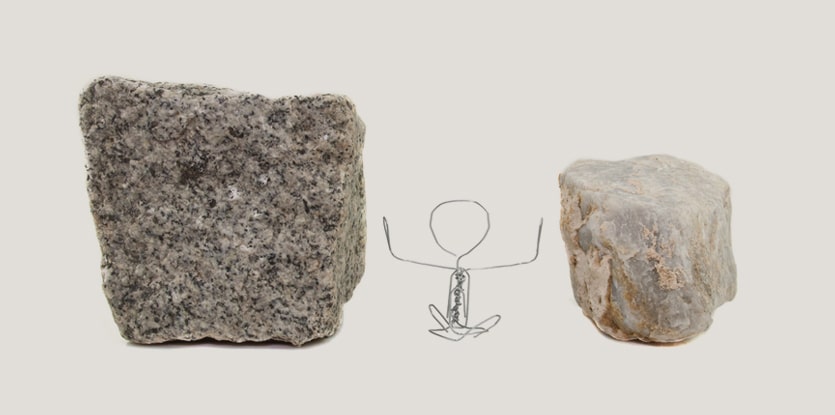
The difference between a miracle and nature is frequency. If the sun would rise once in a lifetime, it would be miraculous; if the sea would split every day, it would be natural. The deepest miracles are when nature becomes transcendent and when transcendence becomes natural. Ordinary people doing ordinary things often lead to ordinary results. Extraordinary people (you and I) doing extraordinary things (righteous acts) always lead to extraordinary results (a naturally miraculous, miraculously natural world).

  • Beyond Structure

    Beyond Structure

    We must believe in free will; we have no choice – an old saying

    Is the universe indeterministic or deterministic? Random or designed? Are our lives predestined or not?

    At first glance, one would assume that the answer to these questions is dependent on belief in G-d. Acceptance of G-d as Creator of the universe would seem to imply that the universe was created with design and purpose. If however, one does not accept that premise, than existence could very well be a result of a random set of circumstances, with no particular plan and direction.

    Religion too would appear to be predicated on a clearly defined and even absolute structure: Immutable laws that define and regulate human behavior. By contrast, many secular schools of thought embrace a more relativistic approach, e.g. moral relativism, which rejects rigid guidelines.

    Yet, upon further thought the lines are not that clearly drawn; both approaches overlap. Even according to the circumstantial argument, the universe is clearly driven by an extraordinary inflexible order. From the physiological to the cosmological, we live in a world of fundamental systems ruled by defined and unwavering laws (the so called “laws of nature”). Conversely, belief in G-d and religion dictates the concept of free will, that our choices are not predestined, allowing for surprises and an unexpected future.

    Indeed, a strong argument could be made that a world controlled by “natural law” is airtight with no room for spontaneity. As French philosopher Laplace and others have written in advancing the probability theory, if we were to know all the data about any phenomenon we could accurately predict all the events that were yet to come. Since we live in a causal world, defined by cause and effect, there is no room for true randomness. In other words, randomness and probabilities are not an objectively measurable phenomenon but rather just a measure of our lack of knowledge. A coin toss, for example, is not necessarily characterized by randomness: if we knew the shape and weight of the coin, the strength of the tosser, the atmospheric conditions of the room in which the coin is tossed, the distance of the coin-tosser’s hand from the ground, etc., we could predict with certainty whether it would be heads or tails. However, as this information is not available to us, it is convenient to assume it is a random event and ascribe probabilities to heads or tails.

    Yet, paradoxically there are those that use this same scientific approach to see all of existence as random. It would seem logical that thinkers who leave no room for randomness in existence should also embrace the fact that existence itself was put in place by a Grand Designer…

    Ironically, a G-d based approach to life allows for indeterminism based on free will more than a scientific approach does.

    So how do we make sense of these contradictory approaches? What part of our lives is predetermined and what part is determined by our choices?

    The question most relevant to us, of course, is whether we are victims of circumstances or whether we can control the destiny of our lives.

    Purim provides us with the fascinating answer. Purim – the name of the holiday – is so called because Haman cast lots to determine the date to kill the Jews. “Pur” in Persian means “lot.”

    Strange name to call a holiday: Lots. Is there anything more random than a lottery? Why would we give such a name to a holiday that commemorates the salvation of an entire people from genocide?

    It is because Purim teaches us a radical message. Not order but indeterminism is the essence of existence. G-d, Creator of the cosmic order and of all rules of nature, is not bound by these or any laws and structures. On His essential level, G-d transcends any form of structure and definition. Yet, this same G-d and His inherent indeterminism chose to create and manifest in a highly deterministic universe. Indeterminism chose a very determined set of laws. The essence of G-d is beyond determinism and indeterminism, and therefore can combine both.

    There is randomness and there is randomness. There is a randomness that is beneath structure and laws – when things get out of control and result in an arbitrary type of existence, directionless. This is what we call being a victim of circumstances – circumstances have taken control of your life and you are left lost and aimless. But then there is a randomness that comes from a “place” that is not bound by laws, a place that transcends and is beyond structures.

    The structure of existence, the mystics tell us, originates from the Essence of Reality that is beyond any structure. Sometimes our own structures block us from seeing that essence. Our plans, schedules, organized systems can get in the way of experiencing the core. Our challenge is to discover the transcendent within the systems.

    Purim embodies this power. Purim reaches a place that is “beyond our structured perception” (“ad d’lo yoda”). Logic and the rules of existence should have dictated a tragic end for the Jews in Persia. After all Haman was in power and he had persuaded the King Achashveirosh to annihilate the Jewish people. Yet, it doesn’t work out that way. Despite all odds, defying all logic, the tables are turned and instead of tragedy the day becomes one of great celebration, with Haman hung on the gallows he built for Mordechai. Suddenly, unexpected, darkness is transformed to light.

    Purim is the true story of life – as it is behind the scenes. Not man-made plans but a Divine hand is at work. Amidst the seemingly random events of life, underlying forces are the true shapers of destiny.

    The same Purim force has been working throughout history. Many great nations have come and gone. They had great plans, powerful armies, super wealthy coffers, breathtaking culture – each empire in its heyday thought that it had it made. Yet, not one has survived. Not the Egyptians, not the Assyrians, not the Babylonians, not the Persians, not the Greeks, not the Romans, not the Byzantines, not the Spanish, not the Portuguese. What happened with all their structures, systems and plans for permanent world dominance? Man-made mortal plans can only create mortal, impermanent structures. Survival, eternal survival is dependent on a force that originates from a place that is beyond logic, beyond the odds, beyond defined structures.

    The consequences of this idea are far reaching. No matter how your life has been shaped, no matter how you may have been scarred by parents, peers and social attitudes, no matter what experiences have defined you – you are never a victim of circumstances; you always have a window to a place that defies structures. With all the determinism of life, with all its causes and effects, there is no conclusive, airtight determinism that controls your life. You always have an opening to an indeterministic place that opens you up to new possibilities.

    Purim tells us that it is not our logic and plans that runs the world. It is a higher force that may manifest in random experiences, but within the randomness lies the greatest power of all.

    Yes, we live in a world of structure. Yes, we are bound by its rules. But, at the same time when we learn to navigate we can use the structure to transcend structure. We must do everything we can within the laws of nature, within our parameters. Yet, simultaneously we must remember that the essence within is beyond our plans. When we do everything in our natural power, the deeper essence emerges.

    That’s what Purim is all about: Take your structures, take your defined reality and turn it inside out and upside down, and see new things emerge.

    Your life is dark, truly dark. Purim teaches us that in one moment darkness can be transformed to light.

    You feel limited, locked. Purim opens up new opportunities.

    You feel hopeless. Purim suddenly give you hope.

    You have a great life, but you wonder how high can you reach? Can we mortals touch the sky? Can we achieve immortality, create eternity? Purim tells us we can.

    All this – because within the inflexible structure lies a fundamental indeterministic freedom, that is not bound by any structures, laws and definitions.

    This paradox has now become recognized in modern physics. According to quantum mechanics a fundamental indeterminism exists on the microscopic level. On that level entities don’t have shape or form, they are in a “state of probability,” with the potential to go different ways. This probability or uncertainty is not a result of lack of knowledge, but it has been proven to be an inherent probability.

    What makes this even more fascinating and strange is the fact that, while the basic, subatomic structure that comprises all of existence is fundamentally indeterministic, simultaneously macroscopic existence is fundamentally structured and deterministic! How is it possible that an indeterministic core should produce such deterministic results? A key component, for instance, of computer chips is driven by the uncertainty principle of subatomic indeterminism. Yet, the computer chip produces absolutely deterministic results that we depend on daily.

    Where do the two worlds of determinism and indeterminism meet? Science has yet to find out.

    What science does not yet know, Purim has always known.

    So where does indeterminism meet determinism? At your doorstep. And on Purim the door opens between these two realities.


  • A Roll of Dice: The Purim Lots

    A Roll of Dice: The Purim Lots

    For Haman the son of Hammedata the Agagite, the enemy of all the Jews, had schemed against the Jews to destroy them, and had cast a pur—that is, the lot—to consume them, and to destroy them…

    Therefore they called these days “Purim” after the pur…

    Esther 9:24-26

    Many developments contributed to the salvation of the Jewish people from Haman’s decree: Esther’s replacement of Vashti as queen; Mordechai’s rousing the Jews of Shushan to repentance and prayer; Achashveirosh’s sleepless night, in which he is reminded that Mordechai had saved his life and commands Haman to lead Mordechai in a hero’s parade through the streets of Shushan; Esther’s petition to the king and her confrontation with Haman; the hanging of Haman; the great war between the Jews and their enemies on the 13th of Adar.

    Each of these events played a major role in the miracle of Purim. And yet, the name of the festival—the one word chosen to express its essence—refers to a seemingly minor detail: the fact that Haman selected the date of his proposed annihilation of the Jews by casting lots (pur is Persian for “lot”).[1] Obviously, the significance of the lot lies at the very heart of what Purim is all about.

    Why, indeed, did Haman cast lots? Why didn’t he simply choose the first convenient day or days on which to carry out his evil decree?

    The Angel and the Drunk

    There is another day on the Jewish calendar associated with the casting of lots: Yom Kippur. In one of the most dramatic moments of the Yom Kippur service in the Holy Temple, the Kohen Gadol (High Priest) stood between two goats and cast lots to determine which should be offered to G-d and which should carry off the sins of Israel to the desert.[2]

    It would seem that one could hardly find two more dissimilar days in the Jewish calendar. Yom Kippur is the most solemn day of the year. It is a day of soul-searching and repentance; a day on which we connect with the inviolable core of purity within us—with the self that remains forever unsullied by our failings and transgressions—to draw from it atonement for the past and resolve for the future. So it is only natural that Yom Kippur should be a day of unfettered spirituality, a day on which we transcend our very physicality in order to commune with our spiritual essence. The Torah commands us to “afflict ourselves” on Yom Kippur[3]—to deprive the body of food and drink and all physical pleasures. Yom Kippur is the day on which terrestrial man most resembles the celestial angel.

    Purim, on the other hand, is the most physical day of the year. It is a day of feasting and drinking—the Talmud goes so far as to state that “a person is obligated to drink on Purim until he does not know the difference between ‘cursed be Haman’ and ‘blessed be Mordechai.’”[4] As our sages explain, Purim celebrates the salvation of the body of the Jew. There are festivals (such as Chanukah) that remember a time when the Jewish soul was threatened, when our enemies strove to uproot our faith and profane the sanctity of our lives; these are accordingly marked with “spiritual” observances (e.g., lighting the menorah, reciting Hallel). On Purim, on the other hand, it was the Jewish body that was saved—Haman did not plot to assimilate or paganize the Jews, but to physically destroy every Jewish man, woman and child on the face of the earth. Purim is thus celebrated by reading the Megillah,[5] lavishing money on the poor, sending gifts of food to friends, eating a sumptuous meal, and drinking oneself to oblivion.

    On Yom Kippur we fast and pray, on Purim we party. Yet the Zohar sees the two days as intrinsically similar, going so far as to interpret the name Yom HaKippurim (as the Torah calls Yom Kippur) to mean that it is “a day like Purim” (yom ke-purim)![6]

    Reason and Lots

    The casting of lots expresses the idea that one has passed beyond the realm of motive and reason. A lottery is resorted to when there is no reason or impetus to choose one option over the other, so that the matter must be surrendered to forces that are beyond one’s control and comprehension.

    Therein lies the significance of the lots cast by the Kohen Gadol on Yom Kippur. After all is said and done, implied the lots, no man is worthy in the eyes of G-d. We all stand before Him with our faults and iniquities, and by all rational criteria, should be found lacking in His judgment. So we impel ourselves beyond the realm of nature and reason, beyond the pale of merit and fault. We disavow all the accouterments of physical identity—food and drink, earthly pleasures, and our very sense of reason and priority. We cast our lot with G-d, confident that He will respond in kind and relate to us in terms of our quintessential bond to Him rather than by the existential scales of pro and con.

    Haman’s lot-casting was his attempt to exploit the supra-reality of the divine to an opposite end. The Jewish people, said Haman, might be the pursuers of G-d’s wisdom on earth and the implementors of His will, thus meriting His favor and protection. But surely G-d, in essence, is above it all—above our earthly reason and its notions of “virtue” and “deservedness,” beyond such concepts as “good” or “evil.” Ultimately, the divine will is as arbitrary as a roll of dice. Why not give it a shot? I might just catch a supernal caprice running in my direction. As the Talmud relates,

    “When the lot [cast by Haman] fell on the month of Adar, he greatly rejoiced, saying: ‘The lot has fallen for me upon the month of Moses’ death.’”

    [7] This is what I’ve been saying all along, exulted Haman. Moses might have given Israel the Torah, the document that so endears them to G-d, but Moses, too, is mortal. Moses, too, is part of the physical, rational reality—a reality transcended by the “lot” reality I have accessed. My lots indicate that I have superseded Moses—superseded Israel’s merit in the eyes of G-d.

    What Haman failed to realize, adds the Talmud, was that while Adar was the month of Moses’ passing, it was also the month of Moses’ birth. In the final analysis, the import of Haman’s lots was the very opposite of what he had understood. On the physical-existential plane, the lots were saying, there might be variations and fluctuations in G-d’s relationship with His people. At times, they might be more deserving of His protection and blessing; at times, less so.[8] On this level of reality, Moses might even “die.” But G-d’s relationship with His people transcends the fluctuations of the terrestrial reality. Also on the level on which “darkness is as light”[9] and “good” and “evil” are equally insignificant before Him, G-d chooses—for no reason save that such is His choice—the nation of Israel.

    In the words of the prophet, “Is not Esau a brother to Jacob? says G-d. But I love Jacob.”[10] Also when reality seems as “arbitrary” as a throw of dice—for the righteous Jacob is no more worthy (for “worthiness” is a moot point) than the wicked Esau—the divine lot invariably falls with His chosen people.

    Thus, the festival of Purim derives its name from the lots cast by Haman. For this is not some incidental detail in the story of Purim, but the single event that most expresses what Purim represents.

    Does Matter Matter?

    Yom Kippur is indeed “a day like Purim”: both are points in physical time which transcend the very laws of physical existence. Points at which we rise above the rational structure of reality and affirm our supra-rational bond with G-d—a bond not touched by the limitations of mortal life. A bond as free of cause and motive as the free-falling lot.

    But there is also a significant difference between these two days. On Yom Kippur, our transcendence is expressed by our disavowal of all trappings of physical life. But the very fact that these would “interfere” with the supra-existential nature of the day indicates that we are not utterly free of them. Thus Yom Kippur is only “a day like Purim” (ke-purim), for it achieves only a semblance of the essence of Purim.

    The ultimate mark of transcendence is that the transcended state is not vanquished or suppressed, but that it itself serves the transcendent end. The miracle of Purim was G-d’s assertion of His supra-existential choice of Israel, yet it was a miracle wholly garbed in nature. Everything happened quite naturally: Esther’s beauty pleased Achashveirosh, and he made her his queen; Mordechai happened to overhear a plot to kill Achashveirosh, and years later the event was remembered by the king on a sleepless night; Esther contrived Haman’s fall from grace in the royal court, had him hanged, and maneuvered Mordechai into his vacated position; and so on. But it is for this very reason that Purim is the greatest of miracles—a miracle in which the natural order is not merely circumvented or superseded, but in which nature itself becomes the instrument of the miraculous.

    The same is true on the individual level: the ultimate transcendence of materiality is achieved not by depriving the body and suppressing the physical self, but by transforming the physical into an instrument of the divine will. So “Purim” is the day on which we are our most physical, and at the same time exhibit a self-abnegation to G-d that transcends all dictates and parameters of the physical-rational state—transcending even the axioms “cursed be Haman” and “blessed be Mordechai.”

    Yom Kippur is the day that empowers the Jew to rise above the constraints of physicality and rationality. Purim is the day that empowers the Jew to live a physical life that is the vehicle for a supra-physical, supra-rational commitment to G-d.[11]

    Adapted from the teachings of the Lubavitcher Rebbe by Yanki Tauber

    [6]. Zohar, Tikkunim, 57b.

    [7]. Talmud, Megillah 13b.

    [8]. Indeed, the reason that Haman was given license to threaten the Jewish people in the first place was that they had bowed to Nebuchadnezzar’s image and had participated in the banquet given by Achashveirosh to celebrate the destruction of the Holy Temple (ibid. 12a).

    [9]. Psalms 139:12; cf. Job 35:6.

    [10]. Malachi 1:2.

    [11]. Based on the Rebbe’s talks on Purim 5718 (1958) and on other occasions (Likkutei Sichot, vol. IV, pp. 1278-1279).

  • Cosmic Sleep

    Cosmic Sleep

    As the soul fills the body, so G-d fills the world.

    Talmud, Berachot 30a

    The turning point in the story of Purim comes with the opening verse of Chapter Six in the Book of Esther: “That night, the king’s sleep was disturbed….” Achashveirosh’s sleepless night set in motion a series of events that led to Mordechai’s rise, Haman’s downfall, and the salvation of the people of Israel. Thus it is customary that in the public reading of the Book of Esther on Purim the reader raises his voice when he comes to this verse—to indicate that this point marks the beginning of the miracle of Purim.

    The Torah is more than a chronicler of events and a legislator of laws—within the external meaning of its verses lie layer upon layer of significance, describing the essence of the human soul, of creation and reality, and of G-d’s relationship with our existence. In the words of Nachmanides, “The Torah discusses the ephemeral reality and alludes to the supernal reality.”[13] The same is true of the events recounted in the Book of Esther: in the supernal version, “King Achashveirosh” is the “King Who the End and Beginning are His,”[14] and “Esther” is His bride, the people of Israel.

    The state of galut (exile), in which G-d’s chosen people are subject to alien powers and exposed to danger and persecution—in which “the righteous suffer and the wicked prevail”—is a state of “sleep” of the supernal King. Physical sleep brings about a distortion of the bond between body and soul and a topsy-turvy state of affairs within the human being: the sleeper’s higher faculties, such as his intellect and sensory tools, are fuzzy and incoherent, while his lower faculties are unaffected; some of them (e.g., the digestive system) even function better during sleep. Sleep is thus the metaphor for a state of affairs in which the connection between the Soul of the World and the body of creation is likewise distorted. G-d grants existence and life to His creations in a manner that is much like the soul/body relationship during sleep: the good inherent in man is unfocused and obscured, while the baser elements of man and humanity flourish.

    But “That night, the King’s sleep was disturbed.” That night the Almighty woke from His “slumber” restored His true priorities vis-a-vis the various components of creation.

    From a discourse delivered by the Rebbe on Purim 5743 (1983)

    Adapted from the teachings of the Lubavitcher Rebbe by Yanki Tauber

    [13]. Introduction to the Book of Genesis.

    [14]. Achashveirosh is an acronym of the Hebrew words acharit vereishit shelo—“the end and the beginning are His.”

  • On the Essence of Leadership

    On the Essence of Leadership

    Moses is Israel and Israel is Moses.… For the leader of the generation is as the entire generation, for the leader embodies them all

    Rashi, Numbers 21:21

    What is leadership?

    We expect our leaders to be wise: to be able to discern right from wrong and make the proper decisions on issues that affect our lives. To provide us with a vision of where we stand and where we are headed, and guide us toward the realization of our goals.

    We expect our leaders to be caring and committed: to empathize with our needs and aspirations and devote themselves to their fulfillment.

    We expect our leaders to be strong: calm and decisive in times of crisis, capable warriors and diplomats in the furtherance of our aims.

    We expect our leaders to be individuals of high moral character and integrity, bearers of an ethical standard for young and old to emulate.

    But the most important (and probably the most overlooked) function of the leader is to unite us: to knit diverse individuals into a single people and to inspire diverse–and often conflicting–wills to coalesce into a common destiny.

    A Chorus in Three Versions

    One of the first things we did together as a people was sing.

    The nation of Israel was born on the 15th of Nissan in the year 2448 from creation (1313 bce)–the day that G-d “extracted a nation from the bowels of a nation,”[1] freeing the children of Israel from Egyptian slavery. Seven days later, the Israelites witnessed the destruction of their former enslavers when the Red Sea split, to allow them passage and drowned the pursuing Egyptians. The Torah relates how, upon beholding the great miracle,

    Moses and the children of Israel sang this song to G-d, saying:

    I shall sing to G-d for He is most exalted;
    Horse and rider He cast in the sea.
    G-d is my strength and song; He is my salvation
    This is my G-d, and I shall glorify[2] Him
    The G-d of my fathers, and I shall exalt Him…[3]

    This song, known as Shirat HaYam–“Song at the Sea,”–goes on to describe the great miracles that G-d performed for His people, G-d’s promise to bring them to the Holy Land and reveal His presence among them in the Beit HaMikdash (Holy Temple) in Jerusalem, and Israel’s goal to implement G-d’s eternal sovereignty in the world. Its forty-four verses express the gist of our relationship with G-d and our mission in life, and thus occupy a most important place in the Torah and in Jewish life.[4]

    Our sages also focus on the prefatory line to the Song at the Sea, in which the Torah introduces it as a song sung by “Moses and the children of Israel.” Moses was obviously one of the “children of Israel,” so the fact that the Torah singles him out implies that Moses took a leading role in the composition and delivery of this song. Indeed, the nature of Moses’ role is a point of much discussion by our sages: the Talmud[5] relates no fewer than three different opinions on exactly how Moses led his people in their song of praise and thanksgiving to G-d.

    According to Rabbi Akiva, it was Moses who composed and sang the Shirat HaYam, while the people of Israel merely responded to each verse with the refrain “I shall sing to G-d.” Moses sang, “For He is most exalted,” and they answered, “I shall sing to G-d”; Moses sang, “Horse and rider He cast in the sea,” and they answered, “I shall sing to G-d”; and so on with all forty-four verses of the song. Rabbi Eliezer, however, is of the opinion that the people repeated each verse after Moses: Moses sang, “I shall sing to G-d for He is most exalted,” and they repeated, “I shall sing to G-d for He is most exalted”; Moses sang “Horse and rider He cast in the sea,” and they repeated, “Horse and rider He cast in the sea,” and so on. A third opinion is that of Rabbi Nechemiah: according to him, Moses simply pronounced the opening words of the song, following which the people of Israel all sang the entire song together. In other words, each of them, on their own, composed the entire–and very same–forty-four verses![6]

    Submission, Identification…

    These three versions of how Moses led Israel in song express three different perspectives on unity, particularly the unity achieved when a people rally under the leadership of their leader. [7]

    Rabbi Akiva describes an ideal in which a people completely abnegate their individuality to the collective identity embodied by the leader. Moses alone sang the nation’s gratitude to G-d, their experience of redemption, and their vision of their future as G-d’s people. The people had nothing further to say as individuals, except to affirm their unanimous assent to what Moses was expressing.

    At first glance, this seems the ultimate in unity: more than two million[8] hearts and minds yielding to a single program and vision. Rabbi Eliezer, however, argues that this is but a superficial unity–an externally imposed unity of the moment, rather than an inner, enduring unity. When people set aside their own thoughts and feelings to accept what is dictated to them by a higher authority, they are united only in word and deed; their inner selves remain different and distinct. Such a unity is inevitably short-lived: sooner or later their intrinsic differences and counter-aims will assert themselves, and fissures will appear also in their unanimous exterior.

    Thus, says Rabbi Eliezer, if the people of Israel achieved true unity under the leadership of Moses at the Red Sea, then it must have happened this way: that the people of Israel repeated each verse that issued from Moses’ lips. Yes, they all submitted to the leadership of Moses and saw in him the embodiment of their collective will and goals, but they did not suffice with a “blind” affirmation of his articulation of Israel’s song. Rather, they repeated it after him, running it through the sieve of their own understanding and feelings, finding the roots for an identical declaration in their own personality and experience. Thus, the very same words assumed two million nuances of meaning, as they were absorbed by two million minds and articulated by two million mouths.

    This, maintains Rabbi Eliezer, is the ultimate unity. When each repeats the verses uttered by Moses on his own, relating to them in his individual way, the singular vision of Moses has penetrated each individual’s being, uniting them both in word and in essence.

    … and Unity

    Rabbi Nechemiah, however, is still not satisfied. If Israel repeated these verses after Moses, argues Rabbi Nechemiah, this would imply that their song did not stem from the very deepest part of themselves. For if the people were truly one with Moses and his articulation of the quintessence of Israel, why would they need to hear their song from his lips before they could sing it themselves?

    No, says Rabbi Nechemiah, the way it happened was that Moses pronounced the opening words of the song, following which each and every Jew, including “the infant at his mother’s breast and the fetus in the womb,”[9] sang the entire song themselves. Indeed, it was Moses who achieved the unity of Israel, as evidenced by the fact that their song could not begin until he sang its opening words. Were it not for his leadership, they could not have risen above the selfishness that mars the surface of every character. Had not the people of Israel abnegated their will to his, they could not have uncovered the singular core of their souls. But once they made that commitment, once they unequivocally responded to Moses’ opening words, each independently conceived and articulated the very same experience of the historic moment in which they stood.

    Each and every individual Jew, from the octogenarian sage to the unborn infant, expressed his deepest feelings and aspirations with the very same 187 words. For in Moses they had a leader in whom the soul of Israel was one.

    Based on an address by the Rebbe, Shabbat Beshalach, Shevat 11,[10] 5748 (January 30, 1988)[11].

    Adapted from the teachings of the Lubavitcher Rebbe by Yanki Tauber.


    [1]. Deuteronomy 4:34.

    [2]. Or: “house Him”—see My G-d, Week in Review, vol. VI, no. 35.

    [3]. Exodus 15. Rabbi Chaim ibn Attar points out in his Ohr HaChaim commentary that the words “I shall sing” are in first person singular, implying that the people of Israel sang the “Song at the Sea” “as a single man, without difference and separation.”

    [4]. The Song at the Sea is recited daily in the morning prayers. The annual Shabbat on which this song is read in the synagogue as part of the weekly Torah reading is given the special name of Shabbat Shirah, “The Shabbat of Song.”

    [5]. Talmud, Sotah 30b.

    [6]. Rashi on Talmud, ibid., as per Mechilta on Exodus 15:1.

    [7]. Cf. Mechilta ibid.: “Moses being the equivalent of the children of Israel, and the children of Israel being the equivalent of Moses”; See also Rashi on Numbers 21:21 (quoted at the beginning of this essay) and Tanya, end of ch. 2.

    [8]. The census taken one year after the Exodus counted 600,000 males between the ages of 20 and 60; a rough demographic estimate makes for a total of 2-3 million Jews.

    [9] Talmud, Sotah 30b.

    [10]. At a farbrengen (gathering) marking the passing of the previous Lubavitcher Rebbe, Rabbi Yosef Yitzchak Schneersohn, on the tenth of Shevat, 5710 (1950), and the Rebbe’s formal assumption of the leadership of Chabad-Lubavitch on the same date, one year later.

    [11]. Likkutei Sichot, vol. XXXI, pp. 69-76.

  • Between a Rock and a Hard Place

    Between a Rock and a Hard Place

    When dealing with adversity there are four different approaches:

    1. Escapists
    2. Conformists
    3. Fighters
    4. Believers

    Would you believe that all four options are limited?

    The first time in history when a people were “stuck between a rock and a hard place” was when the Jewish people stood before the Reed Sea with the Egyptians pursuing them close behind. What to do? The people were divided into four groups:

    1) Some said: “Let’s jump into the sea; it’s simply not worth the effort.”

    2) Others argued with resignation: “We should return to Egypt where we lived for so many years. A known evil is better than an unknown one. True, we were enslaved, but anything is better than this place where we will either be killed by the Egyptians or drown in the sea. The challenges of life are just too overwhelming. Conformity, surrender, assimilation is the only realistic option.”

    3) Yet another group felt: “Let us go to war with the Egyptians.”

    4) And finally the religionists: stated: “Let us pray to G-d”

    All were wrong. Not only escapism and conformity, but also battle and prayer are not complete options. Was life given to us so that we spend most of our time doing battle, involved in conflict and strife? And is prayer enough when faced with challenge? We are blessed with resources to deal with every challenge. So coupled with prayer we must do our utmost to rise to the occasion.

    What was the correct approach?

    “Move forward.”

    And when they did, the sea parted before them.

    G-d told them: I who have given you life, and promised you that you can and will achieve your objectives and reach Sinai and the Promised Land, have also given you all the faculties and resources necessary to fulfill your life’s mission.

    When faced with challenge, with adversity, with the difficulties each of us encounter in life, instead of spending time ruminating about any or all of these four options, instead of being paralyzed by doubt –  FORGE AHEAD. Movement is the key to success. Moving forward will bring a breakthrough. How, we may not always know. But move – and things will open up.


    SOULGYM I MASTERCLASS
    Live with Rabbi Simon Jacobson
    How to Deal with Adversity: A 4 Step Plan
    Wednesday, December 7, @8:30pm
    Live Stream | Podcast

    Add to Calendar
      

  • The Blow

    The Blow

    How to describe the feeling of a parent who has just been told that a malignant tumor is destroying the brain of his ten-year-old child? The doctor had suggested several possible approaches to treatment, but had been brutally honest about the chances. All that Eli and Sharon (not their real names) could realistically expect was a few more painful months of life for their Menasheh.

    And then, in the wee hours of a sleepless night, Eli thought of the Rebbe. Both he and Sharon were raised in non-observant homes, but in recent years they had found themselves becoming more involved in Torah learning and practice. It all began at a lecture they had attended at the Chabad House in their Paris neighborhood, where they had first been exposed to the Rebbe’s teachings. For the first time in their lives, the faith of their fathers was presented to them as a vibrant guide to a life of meaning and fulfillment. While Eli and Sharon would scarcely describe themselves as “religious,” much less as “Chassidim,” they developed a deep respect for the Rebbe and began keeping several basic mitzvot such as Shabbat, kashrut, and tefillin.

    Eli had heard the stories of those who had been helped by the Rebbe’s blessing. Now he grasped at the idea of writing to the Rebbe as his only hope in a sea of despair. If only the Rebbe would promise a speedy recovery for Menasheh!

    A few days later, the telephone rang in Eli’s home. It was Rabbi Groner, the Rebbe’s secretary, who reported that the Rebbe’s reply to their note was, “I will mention it at the gravesite.”

    “What does that mean?” asked Eli.

    “It means that the Rebbe will pray for you at the gravesite of his father-in-law, the Previous Rebbe, where he prays for all of those who send in requests for a blessing.”

    “But I wanted the Rebbe’s blessing… I wanted him to tell us that Menasheh will recover…”

    “But the Rebbe has given you his blessing. This is his standard reply to such requests. Chassidim regard a promise from the Rebbe to pray for them as a guarantee that everything will be all right.”

    Eli replaced the receiver somewhat reassured. Still, he had expected something more definitive, more committal. But if the Rebbe’s secretary says that he has received the Rebbe’s blessing…

    Meanwhile, Menasheh’s condition continued to deteriorate. The treatments brought much pain and little relief. Soon he had to be hospitalized. Helplessly, the parents watched the life drain out of their child.

    Eli called Rabbi Groner. “Look, I know that we already received the Rebbe’s blessing, but it doesn’t seem to be helping. Menasheh has gone from bad to worse. The doctors say that every day is a miracle… Perhaps we can ask again? Maybe the Rebbe can say something more definite…” Rabbi Groner agreed to send in a note.

    The reply came within an hour, but it was the same reply as before—“I will mention it at the gravesite.” And the doctors had nothing good to report.

    The following evening, Eli entered his darkened apartment for two hours of fitful rest. Sharon was at the hospital. Soon he would replace her, so that she could catch some sleep. He sank into the sofa, kicked off his shoes, and scanned the disordered room. Medical papers on the table, clothes strewn about, half-finished meals. Then his eyes lighted on the Rebbe’s picture, hanging above the mantelpiece. The Rebbe was smiling.

    A great tide of rage rose in him. Menasheh lies dying in the hospital, and you’re smiling! Unthinkingly, Eli reached for one of the shoes on the floor. There was a crash, a spray of shattering glass, and the picture tumbled to the floor…

    Two years later, on a Sunday morning in Brooklyn, a father and son stood in line together with thousands of others who were waiting to see the Rebbe. As the long line snaked past the Rebbe, the Rebbe handed each a dollar bill to give in his name to charity, uttered a few words of blessing, and turned to the next in line. In this manner, the Rebbe devoted a second or two to each of the tens of thousands who came from all over the world to meet him.

    The Rebbe gave the father a dollar, and then turned to the child. “So this is Menasheh,” he said with a smile. “How is he?” It took Eli several seconds to respond. How does the Rebbe know them? This was their first time in New York, and except for those two brief letters back then… “He is fine, thank G-d,” Eli finally managed, “a complete recovery. The doctors said it was a miracle. Thanks to the Rebbe’s blessing.”

    “Thank G-d, thank G-d,” said the Rebbe, and then, quietly: “But I still feel the blow…”

  • The Prisoner

    The Prisoner

    Rabbi Schneur Zalman of Liadi was arrested on Thursday night, 25th of Tishrei, 5559 (1798). A contingent of imperial soldiers, under the command of a high-ranking officer, placed the Rebbe in the closed, black coach designated for prisoners accused of treason against the Czar, and set out on the several-hundred-mile journey from Liozna to Petersburg.

    On the following afternoon, when the clock showed six hours before candle-lighting time, the Rebbe requested that the coach stop for Shabbat. The officer refused. There was a loud crack, and the coach ground to a halt: an axle had snapped. Unperturbed, the officer sent to a nearby village for a wheelwright to make repairs.

    When the coach was fit to travel on, one of the horses fell dead. The officer sent for another horse. Four horses pulled and strained, but could not move the coach forward a single inch.

    At this point, the officer turned to the Rebbe and asked if he would allow them to travel to the nearest settlement to spend Shabbat there; the Rebbe refused. “Can we at least move the coach off the roadway?” The Rebbe agreed, and the horses easily pulled the coach to a shady spot on the side of the road. There, a mile from the village of Saliba-Rudnia, near the city of Nevel, the Rebbe and his “imprisoners” spent Shabbat.

    Rabbi Yosef Yitzchak of Lubavitch (Rabbi Schneur Zalman’s great-great-great-grandson) related that the old chassid Rabbi Michael of Nevel knew chassidim who could point to the exact spot where Rabbi Schneur Zalman spent his Shabbat at the roadside. Rabbi Michael himself went to see the place; years later, he would speak of the experience with a fervor and awe usually reserved by chassidim for the deliberation of a sublime concept of Chassidic teaching. “Along both sides of the road,” Rabbi Michael recalled, “were old, broken trees. But one tree stood out from the rest: tall, majestic, its leafy, far-spreading branches shading the spot where the Rebbe spent that Shabbat.”[9]

    Adapted from the teachings of the Lubavitcher Rebbe by Yanki Tauber.

    ________________________________________________

    [9]. Likkutei Dibburim, vol. I, pp. 75-76.

  • The Oath

    The Oath

    In one of the narrow lanes of the Jerusalem neighborhood of “Beth Israel” stands a large, handsomely built synagogue. For a hundred years, a marble plaque affixed to its north wall has borne the legend:

    “For everlasting remembrance in the House of G-d. This synagogue has been erected by the generosity of a donor, whose name shall remain hidden and concealed, who contributed the sum of 110 napoleons of gold.”

    For many years, it was presumed that the funds were provided by one of the wealthy citizens of Jerusalem who wished, through anonymity, to preserve his good deed from the taint of pride. Few knew the true identity of the donor and the story behind his donation.

    Rabbi Shlomo Zalman Porush was a man of modest means, though large sums of money passed through his hands. He was the secretary of one of the “kollel” societies which supported the poor Jews of Jerusalem with funds collected for that purpose throughout the Diaspora. Rabbi Shlomo was responsible for the sustenance of several hundred families whose support had been pledged by the Jewish community of Minsk and its environs in White Russia.

    One year, as Passover approached, the arrival of funds was delayed. Rabbi Shlomo knew that the money would be forthcoming, but in the meantime, the families for whom he was responsible had to be provided with matzot, wine and other festival needs. He therefore turned to a neighbor of his, Reb Faivish Stoller, a carpenter who worked hard all his life and had managed to put aside a considerable sum. Faivish agreed to loan him his life-savings—200 napoleons of gold—until he could be repaid with the money arriving shortly from abroad.

    Soon after Passover, the long-awaited messenger arrived from Minsk. The purse he brought contained only 110 napoleons, but an accompanying letter promised that the remainder was on the way. Rabbi Shlomo lost no time in bringing the money to his neighbor.

    Several weeks later, the rest of the money arrived. But when Rabbi Shlomo brought the 90 gold coins to Reb Faivish, a most unpleasant surprise awaited him. The elderly carpenter, whose memory had begun to fail him, had lost all recollection of the first payment and was adamant in his insistence that he had received nothing of the 200 napoleons owed.

    No written contract recorded the loan or the payment, for the two men had had absolute trust in each other. Now they had no recourse but to present their case before the bet-din (rabbinical court) of the venerated chief rabbi of Jerusalem, Rabbi Shmuel Salant.

    From a halachic standpoint, this was a textbook case: the borrower admits the loan, but claims that a partial payment has been made, which the lender denies. This is a classic example of modeh b’miktzat (“one who partially admits” an otherwise insupportable claim); in such a case, the burden of proof rests with the lender, but the borrower must take a “biblical oath” in affirmation of his argument.

    Upon hearing the verdict of the bet-din, Rabbi Shlomo turned pale. Never in his life did he imagine that he would be required to take an oath in court, never mind a “biblical oath” performed upon a Torah scroll! He begged to be given several days to think over the matter.

    When the bet-din reconvened, Rabbi Shlomo announced that he was prepared to pay the disputed 110 napoleons out of his own pocket rather than take an oath. He only asked that he be given a few weeks to raise the money. Faivish Stoller agreed, and it appeared that the matter had been settled. But Rabbi Shmuel Salant would not allow this arrangement. “I’m sorry,” he said to Rabbi Shlomo, “but this is not a private matter that can be settled between the litigants. It involves communal funds. As one who is entrusted with charity moneys, your honesty must be beyond reproach. Unless it is decisively established that the money was paid as you claim, people will talk. I therefore insist that you take the oath.”

    Again Rabbi Shlomo requested, and was granted, a short respite. For three days he fasted, wept and recited psalms. On the fourth day he came before the bet-din and swore that he had paid 110 napoleons to Faivish Stoller.

    Shortly thereafter, Rabbi Shlomo put up his modest home for sale. To his family he explained that he had intended to sell the house in order to avoid taking the oath, and now he did not want to benefit from money he had “saved” by swearing on a Torah scroll. To the proceeds of the sale he added almost all of his savings to make the sum of 110 napoleons, which he presented to a committee that was raising money to build a new synagogue. His only stipulation was that no mention be made of the source of the money.

    Several months later, Faivish Stoller appeared in the small apartment to which Rabbi Shlomo had moved after the sale of his home. Without a word, he placed on Rabbi Shlomo’s table a purse containing 110 napoleons of gold, which he had uncovered in a drawer in his workshop.

  • The Covenant

    The Covenant

    The following story was told by Rabbi Israel Spira, the Rebbe of Bluzhov, who had witnessed it firsthand in the Janowska Concentration Camp:

    Each morning at dawn, the Germans would lead us out of the camp for a day of hard labor that ended only at nightfall. Each pair of workers was given a huge saw and expected to cut their quota of logs. Because of the horrendous conditions in the camp and starvation rations on which we supposed to subsist, most of us could barely stand on our feet. But we sawed away, knowing that our lives depended upon it; anyone collapsing on the job or failing to meet their daily quota was killed on the spot, G-d forbid.

    One day, as I pulled and pushed the heavy saw with my partner, I was approached by a young woman from our work detail. The pallor of her face showed her to be in an extremely weak physical state. “Rebbe,” she whispered to me, “do you have a knife?”

    I immediately understood her intention and felt the great responsibility that rests upon me. “My daughter,” I begged, concentrating all the love and conviction in my heart in the effort to dissuade her from her intended deed. “Do not take your own life. I know that your life is now a living hell, from which death seems a blessed release. But we must never lose hope. With G-d’s help, we will survive this ordeal and see better days.”

    But the woman seemed oblivious to my words. “A knife,” she repeated. “I must have a knife. Now. Before it is too late.”

    At that moment, one of the German guards noticed our whispered conversation and approached us. “What did she say to you?” he demanded of me.

    We both froze. Conversing during work was a grave transgression. Many a camp inmate had been shot on the spot for far lesser crimes.

    The woman was first to recover. “I asked him for a knife,” she said. To my horror, she then addressed her request to the guard: “Give me a knife!”

    The German, too, guessed her intention, and a devilish smile flickered on his lips. Doubtless he had seen the bodies of those who, out of desperation, threw themselves during the night at the electrified fence that surrounded the camp; but this would be a new, novel sight for him. Still smiling, he reached into his pocket and handed her a small knife.

    Taking the knife, she hurried back to her work station and bent to a small bundle of rags that she had placed on a log. Quickly unraveling the bundle, she took out a tiny infant. Before our astonished eyes, she swiftly and skillfully circumcised the week-old boy.

    “Blessed are You, G-d our G-d, King of the Universe,” she recited in a clear voice, “Who has sanctified us with His commandments and commanded us to enter him into the covenant of Abraham our Father.”

    Cradling the child in her arms, she soothed his cries. Then, she addressed the heavens: “Master of the Universe! Eight days ago you gave me a child. I know that neither I nor he will long survive in this accursed place. But now, when you take him back, you will receive him as a complete Jew.”

    “Your knife,” she said, handing the holy object back to the German. “Thank you.”

    Adapted from the teachings of the Lubavitcher Rebbe by Yanki Tauber

  • Garments

    Garments

    “The righteous emulate their Creator,” say our sages.[1]

    If you want to know how to behave in a given situation, see what G-d does.

    On the whole, G-d chooses to run His world in accordance with a series of unchanging (and thus predictable) behavior patterns—what we call “the laws of nature.” It would be just as “easy” for Him to rain down manna from heaven as to cause grain to grow and flour and water to bake into bread; but with the exception of one forty-year period in our history, G-d has consistently chosen to nourish us via natural bread from the earth rather than miracle bread from the heavens.

    So we, too, manage our lives in accordance with the rules of nature. While we believe with complete faith that G-d is the sole provider of life and sustenance, we labor to construct the natural vehicles through which His providence may flow. We know that to be nourished by a piece of bread supposedly produced by human hands is no less a “miracle” than to be nourished by “bread” falling from the heavens; nevertheless, we do not sit around waiting for manna to rain down upon us, but devote hours, energy and talent—resources that could have been devoted to “holier,” more spiritual pursuits—to plowing, sowing, milling, kneading and baking, or to earning the money to pay others to produce our bread.

    In the 12th chapter of Genesis, we find our model for this approach to life in the behavior of the first Jew, Abraham. G-d had commanded Abraham to take up residence in the Holy Land; but when shortly thereafter a famine swept through the land, Abraham journeyed to Egypt, where there was bread to be had. Approaching Egypt, a land notorious for its depravity, Abraham realizes that he is in mortal danger on account of the beauty of his wife, Sarah, and he tells her to say that she is his sister, lest he be killed by an Egyptian coveting her beauty.

    The famine in the Holy Land and Abraham’s travails in Egypt are counted among the “Ten Tests” which established the depth and invincibility of his faith in G-d.[2] At first glance, however, it would seem that Abraham “failed” these tests: he did not stay in the Holy Land, trusting that G-d would provide for him even under conditions of famine; he did not assume that if G-d desired that he live, no lust-maddened Egyptian could take his life.

    In truth, however, a disavowal of the natural tools of life does not imply a greater faith in G-d. Indeed, to do so is to go against the divine desire that we live within the natural world as G-d’s “partners in creation.”[3] The true test of faith lies in how a person regards his natural activities. Does he consider them the source of his achievements? Or does he recognize that they are merely “garments” within which G-d enclothes and disguises His essentially supra-natural sustenance of our lives?

    Abraham’s faith did not prevent him from going to Egypt when the natural sources of nourishment ceased to function in the Holy Land, or from resorting to connivance and deceit to ensure his safety when his life was threatened. Indeed, the fact that he could take these actions and experience their apparent success in bringing him material gain and, at the same time, relate to G-d as the sole source of his safety and enrichment, was the ultimate proof of his faith in G-d.

    Joseph

    But G-d, on occasion, does perform “miracles”—events in which the cloak of consistency and predictability is swept away and His involvement in our lives stands denuded from the garments of nature. In this, too, we are enjoined to emulate our Creator: there are occasions in our lives that call for a “miraculous” response, for a mode of behavior that utterly disregards the dictates of nature and convention.

    These, however, are the exception rather than the rule, to be employed under exceptional circumstances in our lives, or by exceptional individuals whose entire lives emulate the miraculous dimension of G-d’s relationship with our reality.

    Such an individual was Abraham’s great-grandson, Joseph. When Joseph was incarcerated in an Egyptian prison and did a good turn for a fellow prisoner, the chief butler of Pharaoh, he availed himself of the opportunity to request of him:

    In three days’ time, Pharaoh will lift up your head and restore you to your station…. But remember me when your situation is improved. Pray, do me a kindness and make mention of me to Pharaoh, and have me taken out from this house.[4]

    Joseph, however, is criticized for his behavior; indeed, he is punished for placing his trust in man rather than relying solely on G-d. “The chief butler did not remember Joseph, but forgot him,” and he was left to languish for two more years in Pharaoh’s dungeon.[5]

    What for Abraham was desirable behavior and a demonstration of his faith in G-d, was a breach of faith for Joseph. For Joseph belonged to that select group of righteous individuals whose mission in life is to emulate their Creator in the miraculous, rather than the natural, plane of His relationship with His creation.

    The Many and the Few

    These two approaches to life were personified by two great Talmudic sages— Rabbi Ishmael and Rabbi Shimon bar Yochai. In the words of the Talmud:

    It is written: “And you shall gather your grain.”[6] What does this come to teach us? But since it says, “This book of Torah shall not cease from your mouth [and you shall study it day and night],”[7] I would have thought that one must take these words literally; comes the verse to teach us, “you shall gather your grain”—conduct yourself also in the ways of the world. These are the words of Rabbi Ishmael.

    Rabbi Shimon bar Yochai said: If a person plows in the plowing season, sows in the sowing season, reaps in the reaping season, threshes in the threshing season, and winnows when there is wind, what shall become of the Torah? But when Israel does the will of the Almighty, their work is done by others, as it is written, “And[8] strangers will stand and graze your sheep…” [9]

    The Talmud concludes: “Many did like Rabbi Ishmael, and succeeded; like Rabbi Shimon, and did not succeed.”

    In every generation, a few elect “Josephs” rise to a state of utter aloofness from the ways and cares of the material world, exemplifying the truth that, in essence, there is literally “none else besides Him.”[10] But for the vast majority of us, the path through life is the path blazed by Abraham: a path in which G-d clothes His involvement in our lives in the garments of nature and we employ the resources and norms of our physical existence as the implements of our relationship with Him.

    Based on a letter by the Rebbe dated Kislev 2, 5707 (November 25, 1946)[11]

    _____________________________________________

    [1]. Midrash Rabbah, Bereishit 67:8; cf. Sefer HaMitzvot, Positive Commandment #8.

    [2]. Ethics of the Fathers 5:3 and commentary of Bartenura there.

    [3]. Talmud, Shabbat 10a; 119b.

    [4]. Genesis 40:13-14.

    [5]. Ibid. v. 23; Rashi on verse.

    [6]. Deuteronomy 11:14.

    [7]. Joshua 1:8.

    [8]. Isaiah 61:5.

    [9]. Talmud, Shabbat 35b.

    [10]. Deuteronomy 4:35.

    [11]. Igrot Kodesh, vol. II, pp. 179-181.