Tag: questions

  • Lonely Man

    Lonely Man

    If you could choose to meet one person in history, who would it be?

    There’s a part of me that is very curious to meet a man who was derogatively called ‘Acher’ (‘someone else’ [sic]) after he turned apostate upon leaving the famous ‘garden.’

    The story goes like this: His original name was Elisha ben Avuya, one of the greatest sages of his time. Elisha together with three of his colleagues, Rabbi Akiva, Ben Azai and Ben Zuma once went into the ‘garden,’ i.e. they had a mystical experience. Ben Azai died in the process, Bem Zuma went insane, Alisha became an apostate. Only Rabbi Akiva came out intact.

    After he became a heretic, his crime was considered so terrible that his colleagues no longer referred to him by name. Instead, they called him ‘Acher,’ the unmentionable ‘other.’ Alisha was considered the epitome of “one who knows his Master and intentionally mutineers against him.”

    A related story that contributed to Acher’s rebellion is when he saw a father tell his child to perform the mitzvah of ‘shiluach hakan’ (sending away a mother bird before taking her eggs). The child in effect preformed two mitzvot (shiluach hakan and honoring your parents) both of which carry G-d’s promise for a reward of long life. Instead, what happened? The child climbed a ladder to fulfill his father’s wish, and he fell to his death. When Elisha saw this he ripped his clothes and cried out: “There is no Judge and there is no justice…”

    Acher’s story is both fascinating and mysterious. I am strongly tempted to meet and ask him what he saw there in the ‘garden’ that so disturbed him. It would be amazing to hear his experience. To hear what he felt like when they changed his name. And when his great student Rabbi Meir would study with him and would justify it to his colleagues by saying: I eat the fruit and discard the peel, I suck out the juice of the fruit and discard the pits. What did Acher think about that? Did he agree? And what did he feel when he was finally allowed into ‘hell’ (yes, even hell didn’t want him) and then into heaven? And what does he think today – thousands of years later – about the issues of justice and corruption?

    Indeed, who among us has not been plagued by the question of justice in this world? When we see tragedy strike good people – and recently there has been a spate of these around the entire world – when we see good people suffer – we all wonder where is the Judge and where is the justice?

    We all wonder where is the Judge and where is the justice?

    So, Acher would be an intriguing person to get to know.

    But that’s in my more rascalish mode. In a more sober moment, I think that today I would like to meet Moses. A far more complicated individual. One who spoke to G-d ‘face to face as one speaks with a friend,’ and he not only maintained his faith, but he is the ultimate symbol of faith and dedication, the quintessential man of G-d.

    Moses was no less a sage than Acher. And he too was in the ‘garden’ – like no other person in history, and he too witnessed the suffering of the innocent, and confronted G-d on the topic (“Why do You do evil to this nation!?”), yet he maintained his deep faith. What did he know and what did he see?

    I am absolutely infatuated by the journey Moses took on Mt. Sinai. First he spends 40 days receiving the Torah (from Sivan 6-Tammuz 17). Then he returns for another 40 days to pray that G-d pardon the people for building the Golden Calf (Tammuz 18-Av 29). Unsuccessful, he returns for yet another 40 days (Rosh Chodesh Elul-Yom Kippur) and he finally secures complete forgiveness on the holiest day of the year.

    We are actually now in the second week of Moses’ second climb on the mountain. These days are not considered such great ones – “days of wrath” – which include the Three Weeks when we mourn the destruction of both Temples and a series of other tragic events in history.

    What was Moses doing up there all this time? What did he see and what did he learn? What did he say and what was said to him?

    From the account in the Torah (primarily at the end of Exodus, and a bit in Deuteronomy and in other places) we know that his hands were full. We know that he did not waste any time and immediately confronted G-d. We also know – from a series of cryptic verses in Exodus (33:12 and on) — that Moses got straight to the heart of matters by asking G-d to show him His (G-d’s) ways and His personality. And G-d complies. Moses learns about the Essence of G-d and G-d’s mysterious ways in running the universe.

    In a most intimate exchange, Moses asks G-d to see His face. Instead G-d shows him His ‘back.’ G-d places Moses in a ‘crevice in the mountain, placing My hand over you until I pass by. I will then remove My hand and you will see my back, but My face you will not see.”

    What did Moses see?

    Perhaps we may never fully know. Perhaps you have to be a Moses to know. Yet the Torah does document it. I am sure that many other things took place on that mountain that the Torah does not share with us. The fact that this is shared with us means that it must be relevant to us, and that we can in some way understand it.

    Whatever the explanation – and we have plenty of time to analyze it – the entire journey of Moses is just so compelling.

    One thing we do know: Moses did not give up. 40 days, another 40 days, another 40 days, and he prevailed!

    He must have heard every possible reason from G-d why the Jews deserved what was coming to them. He must have learned all the complexities of Divine justice and the balance of things above and below. Yet, single-mindedly, with no support system, he hammered away again, again and again…

    No matter what actually happened up there, what we do know is that Moses – as opposed to Acher – was not only undisturbed by what he learned, but he came back with the biggest gift of all: There is always hope. Even when things break – and how they did break! – the human spirit is endowed with the power of persistence, and sheer and absolute persistence can break down any door.

    Acher may help legitimize and lend credence to our doubts and questions, but then what are we left with? The same questions and confusions that have disturbed countless generations before us. Great! As if we didn’t have enough doubts and fears…

    What does Moses leave us with? He leaves us with confidence in ourselves, belief in the future, hope in our children and grandchildren.

    What does Moses leave us with? He leaves us with confidence in ourselves, belief in the future, hope in our children and grandchildren. Yes, to believe – what a concept, what a force! And to believe even when there seems no reason to – that takes guts, that takes courage, that takes real power.

    So, though we don’t really know what Moses was doing up there, day after day after day for 120 days, what we do know is that he left us an eternal legacy – the ability to face our deepest questions about justice and injustice, about the innocent and their suffering, about G-d and His mysterious ways – and come away stronger, more confident than ever.

    Perhaps what he ultimately learned is that our questions, doubts and fears don’t weaken reality, just as our answers and courage don’t strengthen it. So why spend the rest of your life agonizing, justifying, excusing, cowering (of course, with a courageous masquerade) – spend it better on growing, building, perpetuating. Even when the going gets tough, hold on to the future, rather than be victimized by the past.

    What else can be said when I see friends and colleagues suffering senseless loss.

    Yes, while the people were suffering below Moses was experiencing a parallel reality above. He did not succumb to the resignation and the quiet — or loud – desperation from below. He wasn’t interested in the millions of arguments making a case for despair and hopelessness. He had no time for that; he knew that anyone can come up with such arguments. With half a brain (or less) in your head, every conceivable argument can be made – and a strong one at that — that we are going nowhere, and the more things change the more they stay the same. A strong case can be made for a life of complacency and mediocrity.

    Moses wasn’t interested in repeating all the arguments for negativity that came before him and that would inevitably come after him. He wanted something unique, something legendary, something unprecedented – something that would instill hope in humanity, hope in our future, hope in our destiny.

    Ahh, Moses. What a character! He would be a great person to meet for a drink…

  • In Defense of Anarchy

    In Defense of Anarchy

    Dear Rabbi Jacobson,

    A friend just forwarded me your article How to Find a True Rabbi. What a brilliant piece!

    Your powerful and moving words left me in tears…

    Above all, you have made us all proud by courageously addressing an issue that so few want to approach. You cut to the heart of the cancer of divisiveness that has so pervaded society, and I cannot thank you enough for restoring to me a sense of hope.

    But getting back to a more philosophical mode, I do have a question: If one were to say that many (most?) Rabbis today (and for that matter, other clergy as well) simply don’t “get it,” where does it leave us? The fact is that people do need leaders and authorities, and cannot go it alone. So where are individuals to turn when they need direction?

    To play devil’s advocate: Some even argue that the masses are simply too simple and busy with their own survival to be able to make true life choices. The public lacks the intelligence to even choose leaders. If we allow laypeople to challenge the Rabbinate and all forms of authority we are left with anarchy.

    So, yes many rabbis may be corrupt and many others may be ignorant about the basics of the soul, but then what should people do if they cannot find a true Rabbi? Couldn’t the argument be made that better an inadequate Rabbi than no Rabbi at all?

    Thank you again,

    [Signed]


    Dear [Signed],

    Since you mention anarchy, I must make a confession. I have always been obsessed with anarchy, and I must admit, that I have been accused in my time of being an anarchist.

    After writing an article on the nature of leadership, one fellow angrily dismissed my words by saying that I simply can’t handle authority. While that may be true, that doesn’t mean authority per se is always a good thing. As they say, “Just because I’m paranoid doesn’t mean nobody wants to get me.”

    Ok, so what exactly is anarchy. Webster’s defines it like this:

    Etymology: Medieval Latin anarchia, from Greek, from anarchos having no ruler, from an- + archos ruler. Date: 1539.

    1 a : absence of government b : a state of lawlessness or political disorder due to the absence of governmental authority c : a utopian society of individuals who enjoy complete freedom without government
    2 a : absence or denial of any authority or established order b : absence of order

    No doubt that there is an unhealthy form of anarchy – especially in context of one who simply has no rules in his/her life and just follows his own heart’s desire, destructive or not. They call that nihilism.

    Etymology: German Nihilismus, from Latin nihil nothing. Date: circa 1817
    1 a : a viewpoint that traditional values and beliefs are unfounded and that existence is senseless and useless b : a doctrine that denies any objective ground of truth and especially of moral truths
    2 a (1) : a doctrine or belief that conditions in the social organization are so bad as to make destruction desirable for its own sake independent of any constructive program or possibility (2) capitalized : the program of a 19th century Russian party advocating revolutionary reform and using terrorism and assassination

    But allow me to submit another translation of anarchy: Rebelling against corrupt systems and the mediocre status quo, in search for truth. Not accepting the way things are just because people and so called ‘authorities’ say so. In other words: the search for G-d – not anything man-made – but a true G-d, Who transcends all our structures and definitions.

    Not an anarchy that is driven by reckless abandon or plain narcissism. Not an anarchy that is a smoke screen for doing whatever you like. But an anarchy that is revolutionary. It may not always know how to be channeled, but it is driven by the desperate quest for something higher – something more – than our conventional pedestrian diet.

    Conformists don’t change the world. Anarchists do. That is, anarchists according to my definition, when they channel their energy into positive revolution.

    There is a thin line between true faith and true anarchy – a very thin line. Just like there is a thin line between genius and madness, between faith and heresy, between tragedy and comedy. That’s how extremes work. Passion can go both ways. In Hebrew it’s called shtus d’kedusha – holy insanity, separated by a thin line from unhealthy insanity. [In another context, the Talmud says: The greater the person, the greater his yetzer hora (evil inclination)].

    Though this doesn’t answer your question, I just couldn’t resist the temptation to get in a few words about anarchy.

    Now to your actual question.

    Let me begin with a great analogy I just heard from my old time friend and colleague, Rabbi Yossi Shemtov, the Chabad shliach (representative) in Tucson, Arizona. After chastising me for not calling him when I was in Scottsdale, he shared with me the following reply he gave someone who asked him about the distinction between different Rabbis.

    Some Rabbis, he said, are like surgeons and others are like pilots. What is the difference between a surgeon and a pilot? When someone is in need of surgery, G-d forbid, he will be very cautious and search around for the best possible surgeon. Why? Because his life is at risk, and he wants to ensure that whoever is cutting him open is the most qualified expert in performing this particular surgery.

    Why then is it that when the same person books an airline flight, with all the risks of air travel, he doesn’t go searching for the best pilot in the world?

    The answer is because the pilot is flying together with you on the airplane, and he is exposed to the same risk as the passenger. The surgeon, on the other hand, is not lying on the slab with the patient. If the surgery doesn’t go well, G-d forbid, the surgeon remains intact [except for possible malpractice suits].

    Some Rabbis are like great surgeons. They are brilliant scholars, erudite legal experts, eloquent orators. Many of us who see a Rabbi as an ‘outsider,’ one who is not in the ‘same boat’ with us, will go searching for the best surgeon. We will look for the greatest scholar and expert. However, there are Rabbis who are like pilots – they may not be the best, but they are in it with us. Our problem is their problem. Our celebration is their celebration.

    We are not looking for ‘perfect’ Rabbis; we are in search of Rabbis who humbly appreciate the value of Divine souls and know that we are all sacred souls struggling in an agnostic world.

    As I wrote in the first part of How to Find a True Rabbi, we are never given a challenge that we cannot overcome. The mere fact that we live in a world like ours and that many of us are confused as how to recognize a true mentor, this in itself tells us that G-d has built in an ‘immune system’ that allows us to overcome this challenge and that we can and must be able to find the right answers and the true mentors.

    Perhaps this is the calling of our times – to ask the right questions and discover our true Rabbis. I would even go one step farther. Even if we don’t have all the knowledge, even if we are ignorant and were not given the best educational opportunities, our calling today may be at least to use the knowledge we do have to understand the criteria for a true Rabbi, and demand – yes, demand – that standard for our communities and families.

    I for one can simply not accept the resigned approach that because of public ignorance we have to suffice with mediocre Rabbis. Yes, I would prefer anarchy to that choice. But I don’t believe that we need to resort to anarchy. We must believe in the ability that our generation can discover truth, and do not have to be brainwashed or programmed like blind sheep.

    Nothing is more dangerous than the elitist approach, which insecurely believes that a few ‘keepers of the flame’ must dictate the rules for the ignorant masses. We must respect the dignity of each person’s individual soul and believe in the fact that we are all together ‘in the same boat’ and the ‘same plane.’

    Frankly, if you don’t believe in that, what then do you believe in? To believe in G-d and not believe in the Divinely ordained spirit within each human being and that each person can access this soul is, at least in this humble writer’s opinion, ludicrous. If you don’t have confidence in G-d’s creatures you basically don’t have confidence in G-d.

    So, yes, we are in need of teachers, leaders, Rabbis, but we also have the ability to identify the true standard of a Rabbi and demand of our rabbis to live up to that standard.

    If you call that anarchy – so be it.

  • Purim: Joy on Demand?

    Purim: Joy on Demand?

    Dear Rabbi Simon Jacobson,

    Purim always intimidates me. Serious days I can handle – days of study or introspection. Fast days and days of mourning are also accessible – I can always find something to feel sad about. But Purim and Simchat Torah, these are the holidays that I find daunting. I’m supposed to be joyous, happy and exuberant! How do I access joy? Do I have joy inside of me that I can turn on like a tap for 24 hours – joy on demand? Happiness on demand! Bottled Joy! People may suggest using alcohol but I’m concerned that either I’ll fall asleep or be a melancholic drunk.

    Sometimes I walk down the street and I say to myself, “Be joyous, get in touch with your joy,” and I immediately think of at least ten reasons not to be joyous: eg. “I’m not married, I’m not married, I’m not married … ” (ten times)

    As I understand it, on Purim, I should be joyful because 2,500 years ago, a nice Jewish girl (Esther) married a non-Jewish king (Ahashverosh) whose viceroy (Haman) decided it would be a good idea to kill all the Jews. 2,500 years ago, the Jews were saved and so I am here today. I guess that’s a fair reason to celebrate – that I exist. But really 2,500 years is a long way to travel back in time in order to find a reason to be happy. Isn’t there an incident a little more current in Jewish history about which I can feel unadulterated Joy?

    Seriously though, how do I access Purim?

    Eda Rozensweig

    —–

    Dear Eda,

    Great question. This would make for an excellent topic for discussion at the Purim table.

    Here are some of my thoughts: For one, Purim allows us the opportunity to ask the questions you pose: how can we have joy in our lives, especially when we are not in the mood of it and have many reasons not to be joyful?

    There is a short-term solution and a long term one. First the long term. The question is why are some people naturally happy and others not? Is joy genetic? Natural and inherent or acquired? Nature or nurture?

    The answer of the Torah — which I believe is the blueprint for life — is that joy is natural and inherent to every person. Just witness the natural happiness and cheerfulness of a young child. The bright joyous face of a child is something that any adult vies for. A child begins to lose his natural cheer due to external causes. His inherent joy starts to erode when he begins to experience the disappointments and tragedies of life events, the despondent attitudes of parents, educators and other adults affecting the child.

    Purim is the time of year when the window of opportunity of accessing our inner joy opens up. The celebration of Purim is not merely due to the historical events that occurred 2500 ago, but a celebration of an event that is happening in our lives today, on the day of Purim. (Time is a cyclical energy. Each day recreates the energy flow of that respective day in years past). The Baal Shem Tov puts it this way: If one reads the Purim Megillah as if it is an event that happened in the past and not in the present, the mitzvah has not been performed.

    How do we access the inner joy innate in each of us? By accessing the cheer and enthusiasm of our inner child — the part of us connected to God that precedes the sadness that life circumstances imposed and continues to impose upon us. That is what Purim is all about: the celebration of our inner child. The enchantment and magic of our souls.

    Purim is a day of joyous abandon that transcends conventional boundaries. We are told to celebrate “ad de lo yado” – which means to be joyous until you reach a place beyond the doors of perception, where we transcend dark and light, even the pains and disappointments of our lives. The story of Purim teaches us that despite how dark it gets, even when all hope seems to be lost, the joy of the inner child surfaces in an eruption of joy. It is a delight that transcends any pain you may be dealing with in life, whether it is the lack of a marriage or a challenging marriage.

    Long term — one needs to cultivate the inner soul child. Purim is a day when a window opens up that allows us deep inside of ourselves. Meditating and internalizing the feeling that God put you on Earth for a unique purpose, that you have an indispensable contribution to make, realizing that all else in life pales in comparison to the essential power of your soul — is a sure cause for being joyous. Short term — on Purim day listen to the Megillah, participate in a Purim festivity meal, send food gifts to friends, and give charity to the needy. These are all methods and tools to excavate the inner resources of our soul child that are available to us on Purim.

    Joy is contagious. Often when we can’t access it on our own, a way of igniting it is by celebrating in dance and song with others. Behavioral change, acting joyous (even when you don’t feel like it), coupled with the fact that deep inside (or not so deep) lies a reservoir of pure joy, is a way to actually become joyous.

    May God give you the strength to see your child, to access the inner joy, and to celebrate.

    Happy Purim,

    Simon Jacobson


    PS. Please feel free to email me with further questions at wisdomreb@meaningfullife.com

  • Two Futurists

    Two Futurists

    Who is wise? He who foresees the future

    Talmud, Tamid 32a

    Chassidim ask: What is the difference between a wise man and a Rebbe?

    And answer: A wise man foresees the future; a Rebbe makes the future.

    Adapted from the teachings of the Lubavitcher Rebbe by Yanki Tauber

  • Whose Moshiach?

    Whose Moshiach?

    After his release from imprisonment in Petersburg, Rabbi Schneur Zalman of Liadi passed through the city of Vitebsk, where he was received by the city elders and community leaders. “Tell us, Rebbe,” he was asked, “when will the tribulations of Israel end? When will the redeemer finally come?”

    Rabbi Schneur Zalman lowered his eyes to the ground and said softly: “But how can he come? The Moshiach that everyone wants will never come, and the true Moshiach, no one wants….”

    Adapted from the teachings of the Lubavitcher Rebbe by Yanki Tauber

  • Historical Fact

    Historical Fact

    Dear Editor

    I greatly enjoy your publication, and avidly read it whenever I come across it (I am not a subscriber, but my sister is). I am impressed that the Rebbe’s philosophy is both intellectually stimulating and spiritual at the same time. My question to you is as follows: everything the Rebbe says can be predicated on a single fact: that the Torah is the word of G-d, communicated to the people of Israel at Mount Sinai more than three thousand years ago. I understand that to every believing Jew this is a matter of faith, and that for the believer it makes no difference that there are many others who believe different or even opposite things. My question is: Is there any objective way that this can be proven as a historical fact? Has the Rebbe ever addressed the issue in such terms?

    James Schechter
    LA, California

    Dear James

    “Proving” the revelation at Sinai, or any of the other fundamentals of the Jewish faith, is not an issue in the Rebbe’s philosophy and teaching, or in chassidic teaching as a whole. Never did the Rebbe deliver an address or write an essay the objective of which is to prove G-d’s existence, the divinity of the Torah, the coming of Moshiach, etc. These are givens, as real and as absolute (indeed, more real and absolute) than the fact that “I am alive,” “I love my children,” “winter will end and spring will come,” and the countless other facts we never even consider the need to prove. Rather, chassidic teaching comes to illuminate these givens and integrate them into our lives. G-d exists; what can we understand of the nature of His existence and His relationship with His creation? G-d gave us the Torah; what is the nature of this “gift” and how do we receive it? Every word of Torah is the revealed wisdom and will of G-d; what is the deeper significance of this particular biblical verse or talmudic saying, and what is its relevance to our daily lives?

    However, the Rebbe did address such questions on several occasions, in direct response to individual queries in writing or in person. In these cases, the Rebbe’s answer was usually based on the traditional Torah works that deal with these issues (R. Saadiah Gaon’s Emunot v’De’ot, Maimonides’ Guide for the Perplexed, Rabbi Judah ha-Levi’s Kuzari, etc.), punctuated, of course, with his unique style and approach. What follows is based on four letters [1] the Rebbe wrote in response to the question you raise: is there any way to “prove” the revelation at Sinai?

    The first thing that must be established is what constitutes “proof.” Often, people requiring that something be proven to them (especially if it is something they would rather not accept) employ a double-standard: the degree of proof on which they rely in their daily lives, including their most crucial decisions, is suddenly insufficient.For example, people often say: “I don’t rely on what others tell me; I insist on seeing something with my own eyes before I’ll accept it as true.” But is this, in fact the case? Say you needed to fly from L.A. to London. You walk into a travel agency, pay several hundred dollars, and walk out with a slip of paper in return. How do you know that this slip of paper will get you a seat on the plane? This is the first time you’ve used this agency, but a friend has told you that it is reliable; furthermore, the travel agency has an established office in the center of town, and every day, many people rely on its credibility. Without even thinking twice about it, you have relied on the “hearsay” of a few hundred people, most of whom you have never met and probably never will. This was “proof” enough for you to part with a full week’s salary.

    What’s more, you get on the plane! Did you check the engine, the fuel tanks, and the landing gear? Did you test the pilot’s ability, or even ask to see his certification? But this is a well-known airline, which flies thousands of people safely every day. You’re therefore convinced that there’s a qualified team of mechanics somewhere who have checked whatever there needs to be checked, that the pilot is properly trained, etc., etc. On the basis of the fifth or sixth-hand testimony of people you’ve never met, you put your very life on the line.

    And what is “history” if not eyewitness accounts by anonymous individuals, passed by word of mouth and eventually set down in writing? A few hundred people saw George Washington crossing the Delaware River on the night of December 25, 1776, and the event’s repercussions were directly experienced by a few thousand others,  and two hundred years later no one “in his right mind” would contest that the event indeed took place. But we don’t even require that much evidence: it is enough that an archeologist unearths a tablet describing a battle purported to have occurred thousands of years ago, and that the said battle fits in with other similarly substantiated information we have about that period, for the event to be considered “highly probable”; if another tablet is unearthed in another part of the world in which another eyewitness describes the same battle in the same (or similar) way, it becomes historical fact.

    To summarize: In both our daily lives and our knowledge of the past, we rely on the testimony of other people. The greater the number of witnesses, and the greater the consensus among them, the greater the certainty. A historian will devote years of his life to research a certain event, and an airline passenger will allow himself to be lifted 30,000 feet into the air, based on such “proof.”

    Now consider the following event: six hundred thousand men between the ages of twenty and sixty, plus an equivalent number of women, plus at least that many children and elders, witnessed, firsthand, [2] the revelation of G-d at Mount Sinai and heard Him proclaim “I am G-d your G-d…” These included people from all walks of life—simple folk and scholars, rich and poor. They all saw and heard the same thing, and gave a detailed account of the event to their children, who, in turn, related it to their children, and so on to this very day. In the 3,308 years since then, there was never a single moment in which less than several hundred thousand individuals attested to a unanimous version of this event, including many who had been without contact with each other for centuries.

    It can therefore be unequivocally stated that there exists not a single event in the whole of human history that is as thoroughly proven and corroborated as the divine revelation at Mount Sinai. [3]

    Yanki Tauber

    __________________

    [1] . Igrot Kodesh, vol. XVII, pp. 388-393; ibid. pp. 490-492; vol. XVIII, pp. 388-391; vol. XIX, pp. 405-406.

    [2] . See following note.

    [3] . In contrast, the Christian religion is based on events witnessed by no more than a handful of individuals, and Islam is based on a single individual’s account of a revelation he experienced.

  • Chukat-Balak: Wealth Question

    Chukat-Balak: Wealth Question

    One of the gratifying and beautiful benefits of our work is the feedback we receive from you, our readers. As fascinating as they are diverse your comments, critique, questions, arguments and counterarguments reflect the rich multi-dimensional tapestry of our human race.

    Powerful insights emerge from the opinions of large, diverse groups of people. “The wisdom of crowds” is how it has been coined today in a book by the same name (authored by New Yorker columnist James Surowiecki), exploring the idea that large groups of people are smarter than an elite few, no matter how brilliant; they are better at solving problems, fostering innovation, coming to wise decisions, even predicting the future.

    The aggregative synergy of independent, decentralized opinions has the ability to reveal deeper truths about many issues. Even at its least optimal, the opinions of the masses on the ground definitely expose the state of the human condition, better than any analyst could ever predict from a pedestal (or ivory tower). Analysts, therapists and even marketers and advertisers – and for that matter, educators, clergies and leaders – would do well listening closely to the voice of the people.

    Students of human nature are actually students of G-d. There are ways to know the Divine through revelation and holy books. But there is a profound and intimate Divine wisdom that comes from studying our own “flesh” (“from my flesh I behold G-d”) and the natural universe (“how great” and “how many” are Your works).

    In this spirit, we are launching a new feature: The Meaningful Question of the Week. Its objective: To pose a timely question – addressing a relevant issue – in order to elicit your responses and comments and those of anyone you pass this question on to. The questions will be culled either from your correspondence with us or from current news and other sources.

    Our goal is to create a platform of dialogue for the widest possible audience, to address the most important challenges facing us today.

    We therefore invite both your responses as well as suggested questions for future postings. We also encourage you to welcome your friends, associates and anyone you see fit into this ever-widening loop. The more people responding – the greater the synergy and wisdom of the crowds.

    WEALTH

    As a follow-up to the many responses we received to last week’s article on Givers and Takers, addressing Warren Buffett’s unprecedented charitable commitment, the question for this week is this:

    “What does wealth do to families?”

    Here are some opinions out there.

    The great philanthropist Andrew Carnegie felt that wealth should not be passed on to families. In his 1889 essay “Wealth” (later named “The Gospel of Wealth”) Carnegie wrote:

    “The most injudicious” method of disposing of wealth is leaving it to the families of the descendents. “In monarchical countries, the estates and the greatest portion of the wealth are left to the first son, that the vanity of the parent may be gratified by the thought that his name and title are to descend unimpaired to succeeding generations. The condition of this class in Europe today teaches the failure of such hopes or ambitions. The successors have become impoverished through their follies, or from the fall in the value of land. Even in Great Britain the strict law of entail has been found inadequate to maintain an hereditary class. Its soil is rapidly passing into the hands of the stranger. Under republican institutions the division of property among the children is much fairer; but the question which forces itself upon thoughtful men in all lands is, Why should men leave great fortunes to their children. If this is done from affection, is it not misguided affection. Observation teaches that, generally speaking, it is not well for the children that they should be so burdened. Neither is it well for the State. Beyond providing for the wife and daughters moderate sources of income, and very moderate allowances indeed, if any, for the sons, men may well hesitate; for it is no longer questionable that great sums bequeathed often work more for the injury than for the good of the recipients. Wise men will soon conclude that, for the best interests of the members of their families, and of the State, such bequests are an improper use of their means.

    “It is not suggested that men who have failed to educate their sons to earn a livelihood shall cast them adrift in poverty. If any man has seen fit to rear his sons with a view to their living idle lives, or, what is highly commendable, has instilled in them the sentiment that they are in a position to labor for public ends without reference to pecuniary considerations, then, of course, the duty of the parent is to see that such are provided for in moderation. There are instances of millionaires’ sons unspoiled by wealth, who, being rich, still perform great services to the community. Such are the very salt of the earth, as valuable as, unfortunately, they are rare. It is not the exception however, but the rule, that men must regard; and, looking at the usual result of enormous sums conferred upon legatees, the thoughtful man must shortly say, “I would as soon leave to my son a curse as the almighty dollar,” and admit to himself that it is not the welfare of the children, but family pride, which inspires these legacies.”

    In our own time, Warren Buffett, who just declared the largest charitable pledge ever made, argues that estate taxes should be increased, not eliminated. Mr. Buffett says the estate tax helps build a vibrant economy of innovators and strivers — a true meritocracy — and that repealing it would risk a stunted economy controlled by aristocratic inheritors. Repealing the estate tax, he has said, would be the economic equivalent of “choosing the 2020 Olympic team by picking the eldest sons of the gold-medal winners in the 2000 Olympics.”

    Bill Gates, a founder of Microsoft and close friend of Mr. Buffett, has not taken a public position on the estate tax, but his father leads the movement to keep it. Few ultrarich families agree, and 18 have spent $500 million since 1994 lobbying for estate tax repeal, according to disclosure records examined by Public Citizen and United for a Fair Economy, which want to keep the tax.

    Almost alone among rich Americans, Mr. Buffett and Mr. Gates position echoes Carnegies’ philosophy in the abovementioned essay.

    What is the Torah opinion?

    The Torah specifically states that children inherit the wealth of parents. What would the Torah answer to Carnegie’s arguments, and the facts on the ground, that inherited wealth in most cases does not serve the children well? Clearly, the Torah is speaking about healthy situations in which the bearers of wealth understand that their blessing carries responsibility; they know that it is meant to be shared and they fulfill their charitable obligations of distributing 10% or 20% of their wealth to tzedakah.

    But the question is what would the Torah say about wealth that is being hoarded, squandered and/or corrupting and tearing apart families? What about children who do not understand the great responsibility that comes with wealth, and instead become spoiled by their gift?

    What do you think?

  • The Education Crisis

    The Education Crisis

    Present and Future

    Educate the youngster according to his way; then, even when he grows old, he shall not depart from it — Proverbs 22:6

    Raise the flames; kindle them until the flames rise on their own — opening of this week’s Torah portion (Numbers 8:2)

    There is an educational crisis in guaranteeing a Jewish future.

    Check out the following fascinating statistic: Worldwide intermarriage is currently over 72%. In some places it has reached an astronomical 90%. Ten cities (outside of Israel) have a substantial lower rate of intermarriage: Manchester, Toronto, Baltimore, Melbourne, Sydney, Johannesburg, Cape Town, Antwerp, San Paulo and Monterey. One common denominator distinguishes these cities from all others: Over 75% of Jewish children receive a Jewish education. In New York by contrast, the largest Jewish city in the world, only 12.5% of the Jewish children attend a Jewish school. Only 6% of all Jewish children in the United States attend Jewish Day Schools.

    The evidence is clear and conclusive: Education of the young is the key to preserving spiritual identity.

    But how? How do we change the current state of education? What practical steps can we take? And who will lead the way?

    Half the cure of a problem is identifying it. Wise questions are half the solution.

    Any unsuccessful institution – in our case, Jewish education which is failing our youth – is flawed in one or both of two ways: 1) The institution itself is not working. 2) The target audience it is trying to reach is not interested.

    As a framework, let us break down the problem into several categories, which can actually be seen as a type of survey, questions that welcome your answers:

    First the institutions:

    1)     Is the problem with the institutions themselves? Are they not serving the needs of – or communicating their services effectively to – the wider population? Or are the existing institutions simply unequipped to serve the secular Jewish population?

    2)     If so, what types of new institutions need to be created that will attract wider audiences?

    Now to the target audience:

    3)     Why do most parents not see Jewish education as a priority?

    4)     How do we make it a major priority?

    Which brings us finally to the education system itself: What exactly is wrong with our educational systems and methods that simply do not speak to the masses?

    For one, many stereotypes, some fed by continuing attitudes, haunt Judaism. The prevailing opinion is that Judaism, and religion in general, is archaic, primitive – a throwback to the past. In one word: Irrelevant to contemporary life. Even those that feel a need for religion and faith do not find the need met in existing institutions.

    The problem becomes infinitely compounded when you add into the equation the decelerating cycle of lack of education, and resulting ignorance and assimilation. In its ruins, we are left with a vicious cycle of symptoms feeding the root problem, and vice versa.

    Here are some of the most common problems in – or attitudes to – the current educational system:

    1)     Fear vs. love

    Some argue that there is a lack of discipline in our educational institutions. Citing the verse, He who spares the rod hates his son, but one who loves him is careful to discipline him (Proverbs 13:24), they advocate the need to instill fear and respect in our children.

    The problem with this approach, of course, is considering that most Jewish children don’t go to Jewish educational institutions in the first place, more discipline will not solve the problem of low enrollment. Even if more discipline may be needed in the existing institutions, this will hardly help get more children into these schools.

    Others therefore argue that the exact opposite is true. Judaism – and religious education – is plagued with a fear-driven approach, instead of one infused with love and sensitivity. Fear may work for the short term, but it does not imbue students with an internal commitment and yes, love for the tradition.

    2)     Dogma vs. relevance

    Religion is preached rather than taught. The perception is that religion is all about rules and rituals – logical or not – that must be accepted or else. Many feel programmed and imposed upon, reinforced by family, community and peer pressure that keeps people in line. Dogma also leads to condescension.

    Religion often appears divorced from personal relevance, warm spirituality, psychological introspection and overall character refinement. Religious people are not necessarily seen as more sensitive, loving and caring. Which explains why 90% of Americans consider themselves somewhat spiritual, but only 40% identify with religion.

    When you consider the millennia-old history of “religious” dominance and crusades imposing their authority on the masses, the distrust of religious dogma is quite understandable.

    3)     Divisiveness vs. unity

    Many people feel that religion creates divisiveness. True religion is all about creating unity in this universe. How then is it possible that religion be experienced as a divisive force? This too is a result of the profound distortion of religion appearing divorced of spirituality.

    4)     Knowledge vs. tools

    Are our children being taught facts and information? Or are they being empowered with methodology and tools to find happiness and meaning?

    5)     Conformity vs. individuality

    Does religious education help cultivate independence and self-actualization, or does it silence (or annihilate?) our individuality and induce conformity? Does it teach you to “rise on your own” or to always be dependent on others?

    6)     Passivity vs. passion

    For life to be lived to its fullest you need passion. For you to access your innermost resources, you need to feel driven and excited about your possibilities. Do our religious schools teach us how to find our passion, our mission – our vision of life?

    This is just a beginning. I would deeply appreciate your comments and suggestions as to other issues and questions that can be added to this list. Together let us begin a revolution, by identifying the questions, analyzing the dilemma, and then inevitably we will begin to recognize the changes that are necessary to be made.

    Provocation isn’t always wise. But when it comes to issues that desperately need attention and repair, to provoke is to evoke, to evoke a response and a will to create change.

    The Hebrew word for education is “chinuch,” which means both “beginning” and “training.” Essentially, true education sets the tone for one’s entire life. How that beginning looks and what type of training we receive defines our entire life. The past is the past – and results are “in the pudding.” Look at your own life and you can trace its genesis to your education.

    But how that beginning will look for our children and what type of training they will receive is not dependent on the past; it is up to us to create change and improve the entire standard of education.

    Today, nothing less than a revolution is necessary in our education systems. The first step to initiate any change is: Awareness and the courage to confront our challenges.

  • Father: I Will Ask You

    Father: I Will Ask You

    Passover Yearnings

    “Tatte, ich vel ba dir fregen fir kashes…” (Father, I will ask you four questions).
    This article was written by Rabbi Simon Jacobson in 2005, after the
    passing of his dear father, of blessed memory. 

    That is how I – and millions of other children – would begin asking the traditional four questions at the annual Passover Seder.

    This year, for the first time in my life, I do not have my father before me to ask him the questions. I will not sit at his table, as I did for so many years, watching him quietly smile as we would pose the four questions.

    I may be 49 years old, a father myself, but I will deeply miss asking my father the questions.

    Memories run deep. Deep memories are etched in the fibers of my being of Passovers bygone. Long nights, diverse conversations, special delicacies, grandparents, uncles and aunts gathering together – its all a vague fog now. But one thing that stands out, never to be forgotten, are the four questions: How we would go around the table, beginning with the youngest first, and ask the questions.

    I remember how excited I was to come home from school with a special hand-made guide with pictures and all, outlining the entire Seder. How my mother would turn over the house, how we would be dressed up for the holiday with a new set of clothes and enter our homes Passover night feeling clean and fresh. But above all, I will forever remember how we, as young children, would prepare ourselves weeks, months, ahead to memorize the questions.

    As we grew older, the enthusiasm perhaps waned a bit, but the tradition continued. The older I grew the more I would watch my father’s deep pride as he would listen to his children asking him the questions – something younger children simply don’t notice, or they have more important things to do than to observe others…

    The four questions remain a consistent barometer of our own growth. We don’t always remember the chronology of our personal evolution as we grow from child to adult; only highlights thereof. But the Four Questions experience remains a tangible gauge of life’s progression, year after year, stage after stage: The enthusiasm and exuberance of childhood; the awkwardness and silliness of adolescence; the self-consciousness and rebelliousness (sometimes also cynicism) of the teens – giggling your way through the questions; the self-awareness and epiphanies of maturity – sometimes taking yourself too seriously; the spirituality of as we grow with experience; the feelings of pride, and new-found appreciation of tradition as you become a parent and see your own children asking you the questions.

    And now, the intro and retrospection of remembering and missing my father – and all that he represents of my history and the pillars of my life.

    Yes, I will miss asking my father the questions.

    And then, after we asked the questions, I will miss my father’s resolute:

    “Itzt, kinderlech, vel ich eich dertzeilen dem entfer. Avodim Ha’yinu… (Now, my children, I will tell you the answer, and begin reciting the Haggadah: We were slaves to Pharaoh in Egypt…)

    But the custom is that even orphans ask the questions with the said preface, “father I will ask you…”

    Imagine, a 90 year old man, with great grandchildren, and many accomplishments to show for his life, sitting humbly at the Seder table, whispering “tatte” – father, remembering his father, his childhood years,

    The Passover Seder turns us all into children.

    Today I have many more than four questions to ask my father. But I guess these four include them all (after all, they correspond to the four cosmic worlds which encompass all of existence).

    But this Passover, when we come to the Mah Nishtana, I will sit quietly, contemplating how indeed this night, this year, is different. I will remember my father, and ask him the four questions.

    Tatte, oy tatte, and all the tattes (fathers) in heaven – your children never forget you. Thank you for being there. Thank you for telling us the story [1].

    And then I will conclude, as is the tradition:

    “Tatte, ich hob ba dir gefregt fir kashyos. Itzt, bite, gib mir a teretz” (Father, I have asked you four questions. Now, please, give me an answer).

    You see, no matter how old and mature we may be we are all in need of a father.


    [1] The entire Haggada is named for telling the story. Haggada in Hebrew means “the telling,” “the story” – based on the verse (Exodus 13:8) “V’higadito l’vincho,” you shall tell your child. And the telling of the story is generated through the child’s questions: “Ki Yoshalcho bincho” – When your child will ask you (Exodus 13:14).

  • Acharei: How Is This Night Different

    Acharei: How Is This Night Different

    Dear Rabbi Jacobson,

    I would like you to know that I attended a Passover Seder for the first time in my life last year as a result of your workshop at the National Arts Club, The Soul of the Seder: 15 Steps to Personal Freedom. A friend insisted that I come to the workshop, and frankly I went along begrudgingly, completely skeptical of any religious presentation.

    But to your credit I had, against my inclination, an illuminating and inspiring experience, which motivated me to attend a Seder. I had never imagined that the Seder had such a rich and profound spiritual structure.

    So now, as we approach Passover, I would like to challenge you to help me and others make the most of the Seder experience. What mindset should one have at the Seder? How do we bridge the traditional rituals – eating Matza, maror and drinking the four cups of wine – with their spiritual counterparts?

    Thank you for opening up the inner world of Jewish tradition to me and so many others.

    Blessings for a healthy holiday,

    [signed]

    —————

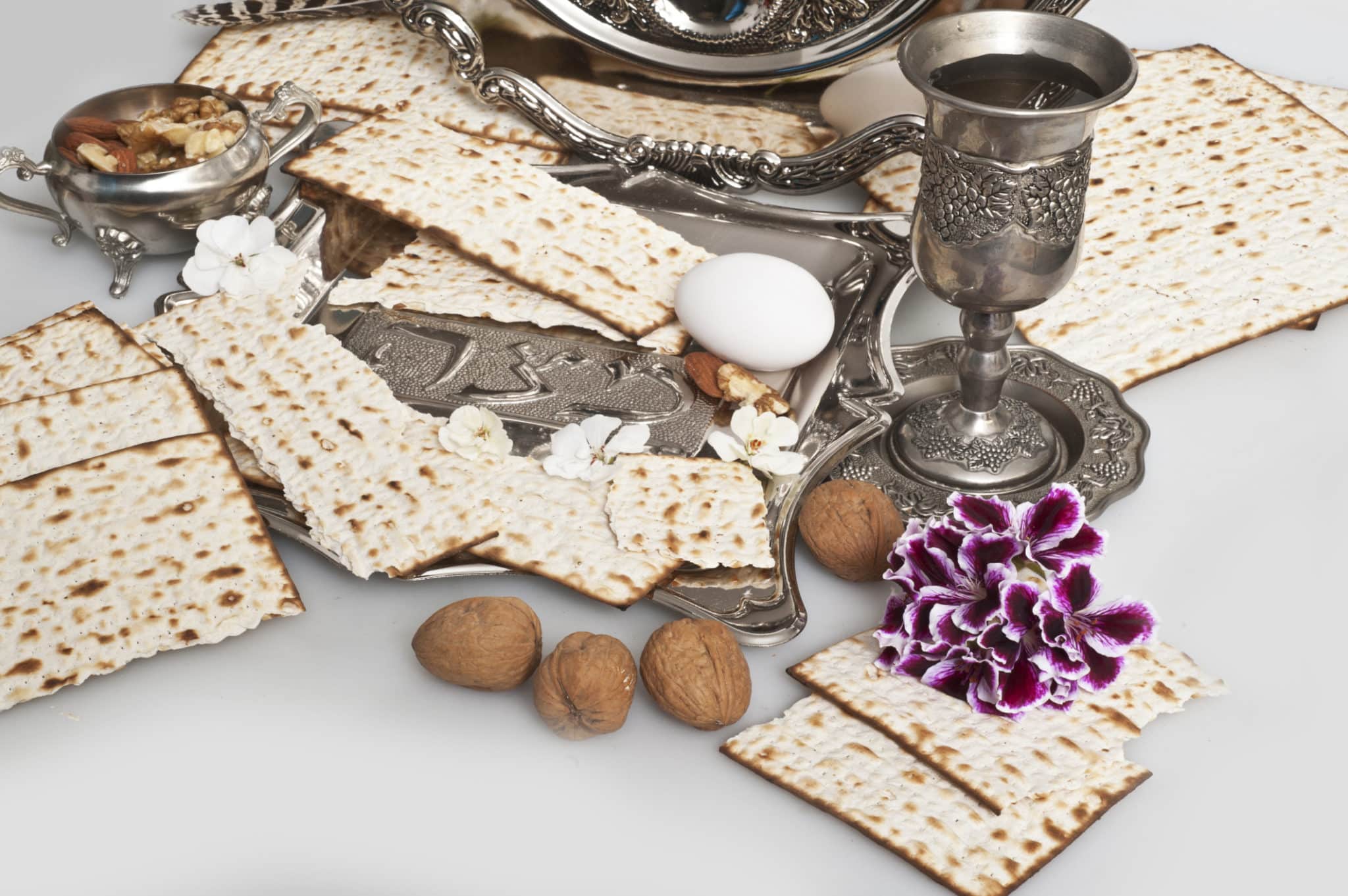
    No body can function without a soul. The body of the Passover Seder is well known and documented. We assemble a Seder plate, go through fifteen steps, eat matzo and maror (bitter herbs), drink four cups of wine, recite the Haggada, ask and answer questions. But what is the soul of all these activities?

    The objective of the entire Passover Seder and holiday is to achieve one thing: Transcendence. “Mitzrayim” (Hebrew for Egypt) means boundaries, constraints and limitations. Exodus from mitzrayim is freedom from bondage to our fears, inhibitions and addictions.

    How can we use the Seder rituals as tools to achieve personal transcendence; to experience emotional and spiritual freedom?

    To do so requires preparation and thought – setting the tone for the entire Seder experience.

    The entire Haggada is structured in question and answer form: The children begin by asking the four questions, and the adults respond by telling them the story in all its detail. Indeed, the word “Haggada” itself means “to relate,” to tell the story.

    Questions and answers are one of the most powerful tools we have to explore and probe, to unearth and discover the true nature of things. Often the right question is even more important than the actual answer. “The wise question” – we are told – “is half the answer.”

    So asking the right questions is crucial to accessing the powerful Seder experience and truly have a unique experience on this night, which is “different than all other nights of the year.”

    Like buckets that allow us to draw out precious fuel deeply embedded in the ground, good questions help us burrow into our psyches and our traditions and draw out life transforming experiences.

    In this spirit, here is a suggestion of some questions to ask yourself before and during the Seder to help you tap into the rich resources of the Seder night.

    The four questions asked at the Seder capture the primary ingredients that distinguish Passover night from all other nights of the year.

    These four questions have both a body and a soul.

    The body of the questions:

    “Why is this night different from all other nights?”

    1)     “On all nights we need not dip even once, on this night we do so twice.”

    2)     “On all nights we eat chametz (leaven) or matzah, on this night [we eat] only matzah.”

    3)     “On all nights we eat any kind of vegetables, on this night maror (bitter herbs).”

    4)     “On all nights we eat either sitting upright or reclining, on this night we all recline.”

    (This order of the questions is based on the Arizal’s order and the one that I grew up with. There are other equally legitimate orders).

    These four elements – Dipping, Matzah, Maror, Reclining – represent four fundamental soul searching questions that each us must ask of ourselves.

    Dipping is the sublimation of our material lives (symbolized by the vegetable, the “fruit of the earth”) to spiritual ends. Like immersion in a mikveh (a ritual bath), in which we submerge our bodies in a higher state of being.

    Matzo is the “food” of humility.

    Maror is empathy.

    Reclining is symbolic of comfort and freedom. Instead of the tightness of sitting upright, we let go and relax.

    Thus, the soul of the four questions compels us to ask the following questions:

    1)     Do I see materialism as an end in itself, or “dipped” – as a means to spiritual goals?

    2)     Do I have humility?

    3)     Do I have empathy and compassion?

    4)     Am I comfortable with myself?

    Obviously, each of these questions is but a mere headline to a series of more comprehensive questions that evaluate our psyches, and help us recognize what keeps us enslaved and what we need to experience transcendence.

    1)    Dipping – Evaluation of the balance between the material and spiritual dimensions of your life

        a.   Do I value the importance of “dipping”?
        b.   What are my spiritual goals?
        c.   How do I use my work or my other physical activities as a stepping-stone to higher objectives?
        d.   How do I maintain this “dipping” all year round? For example: Giving charity daily.
      e.   Why is it difficult for me to sublimate my body needs and instant gratification?

    2)    Matzah – Evaluation of your ego vs. your humility and modesty

        a.   Do I understand the importance of humility?
        b.   Do I appreciate that it is the single most important element in freeing myself from any fear and emotional resistance?
        c.   Are there any areas in my life where I feel more humble? Why? And what areas need special work to tame my ego?
        d.   What is the root of my arrogance? Is it due to my strengths or my weaknesses?
      e.   Is my arrogance just a smokescreen for my insecurity?

    3)    Maror – Evaluation of your level of empathy and compassion

        a.   How emphatic am I to others? To myself?
        b.   Does my compassion come with “strings attached,” i.e. my own personal gain?
        c.   When was the last time that I shed tears for another’s predicament?
      d.   Do I realize that empathy equals sensitivity – the very essence of being alive: feeling and experiencing the heartbeat of all life? That when I have no compassion to strangers, it will also impact the kindness I show to myself and to close ones?

    4)    Reclining – Evaluation of your self esteem

        a.   Why am I not always comfortable in my own skin?
        b.   Are there times or situations when I reach a deep calm? When I am sure of myself?
        c.   If yes, do I understand what brings that level of tranquility? And can I access it at will?
        d.   Are my friends and associates adding to my tension or to my peace of mind? Do I put myself in situations that feed my insecurity?
        e.   Can I for this one night lean back and recline, knowing that I put my trust in G-d?

    The questions go on. These are but a sampling of questions – a catalyst – that each of us can use to enhance our Seder experience. Allow yourself to ask ourselves as few or as many questions that help you personalize – really personalize – the Passover Seder.

    Remember, even if you cannot answer all these questions or answer them satisfactorily, the mere fact that you allow yourself to enter the arena of your soul and your emotions is in itself the first step of freedom.

    Also remember that every experience is only as powerful as your preparation for it. For this reason we begin the formal preparations to Passover (and all holidays) thirty day before the holiday. We begin to study its laws, and above all – to prepare ourselves spiritually to the special experience ahead of us.

    Therefore, it may be wise to prepare for the Seder with the following exercise:

    Before Passover begins – anytime this Friday before sundown – take a piece of paper and list:

    1)     Three inhibitions (chamatz; mitzrayim) you would like to rid yourself of. Make sure that these are three internal impediments or fears, not people or situations outside of yourself (like an intolerable parent or an obnoxious boss).

    2)     Four aspirations and dreams you would like to achieve. Four areas (like the four cups of wine) in which you wish to celebrate freedom. Here too focus not on the means (like making a lot of money) but on the ends.

    3)     Three areas in which you are especially egotistic, and three (like the three matzot) in which you have a special dose of humility.

    As you go through the Seder, drinking the cups of wine and eating the matzo and maror, think about these lists.

    May we all be blessed with a meaningful and transcendent Passover – one which allows us to “pass over” our fears and limits (perceived or real) and experience true, sweet and lasting freedom.

    We must always know that the ultimate secret to real emancipation lies in our sublimation, humility, empathy and self-respect – all made possible when we recognize that we are not self-made creatures, but part of a higher reality, as eloquently stated in the first and foundation of the Ten Commandments: I am your G-d Who freed you from Mitzrayim.

    A very happy Passover to you and yours,

    Simon Jacobson and all of us at The Meaningful Life Center