Tag: education

  • How to Personally Respond to Anti-Semitism

    How to Personally Respond to Anti-Semitism

    In situations of terrorism and anti-semitism attacks that you have no control over, the answer is to control what you can control: Your own life and destiny. The great mystic, the Baal Shem Tov teaches that you are like a mirror — everything you witness is a reflection of what you need to refine in your own world. When you witness violence, look carefully at the discord you experience (and perhaps perpetuate) in your own life. When you build a secure life, home, and family, you are building a secure world.

    “Harmony in our personal lives brings harmony into the world.” – Rabbi Simon Jacobson

    Concrete Suggestions for Bringing Peace Into Your Sphere of Influence

    1. Lead by example: Be proud of who you are. And act accordingly. You represent something greater than yourself and your actions and words must reflect that. Leading by example is one of the most effective ways to demand a higher standard from your family and community.

    2. Stand for something: Do you know what your ideology is? What you stand for? Define your values, and build a life around them.

    3. Educate others: Instead of complaining about ignorance in your world, shine light from your own corner. A small light dispels a lot of darkness. Teach love and light. Teach truth. And remember – teach; don’t preach.

    4. Connect to something eternal: Lasting security comes not only from external forces like governments and police, but also from your connection to a power greater than yourself. It bolsters your sense of personal agency by giving you a solid spiritual foundation to stand on.

    5. Engage with others: Reach out to people with different backgrounds than your own, and have a discussion about values and faith. Invite diverse guests to your home.

    6. Stop judgmentalism: Review whether your faith and value system helps you to inspire others or to criticize others.

    Every action you take has a ripple effect on the universe. Your acts of integrity, kindness, and generosity in your personal world have a transcendent power that anyone can imagine.


    SOULGYM I MASTERCLASS
    Live with Rabbi Simon Jacobson
    Is Anti-Semitism Ever Justified?
    Wednesday, November 15, 2023 @8:30pm
    Live Stream | Podcast

    Add to Calendar

  • Bamidbar/Shavuot: After 3336 Years How Far Are We From Sinai?

    Bamidbar/Shavuot: After 3336 Years How Far Are We From Sinai?

    Something is terribly wrong.

    Israel is under attack, yet again. After experiencing rockets, riots and rapes, missiles and mortals, kidnappings, killings and complete devastation on October 7… the world is calling for them to seize fire. The land that is defending itself against terrorism, the land that treats their Arab citizens with more human decency and respect than their own countries, is the bad guy, yet again.

    And this is by no means an anomaly. This has become a tragic constant in our times: Terrorism is all powerful and seem to have a great PR team behind them turning the terror they enforce on others into self-victimhood. They abuse and yet are the abused. Somehow the recipients of their anger and killings are turned into the abusers, while they come out the heroes. Forgive me if that’s a confusing read, but this is a confusing matter! Muslims commit atrocities against civilians on a sustained and ongoing basis, with very little global uproar. There is virtually no demand that the Muslim countries protest and once and for all eradicate this campaign of terror. You don’t hear any journalists trying to understand what type of environment is breeding citizens that brutalize innocent people, and do so in the name of G-d.

    With all the news streaming from the Middle East, once again it is Israel that is under physical and political fire. How are they the bad guys?

    What exactly is going on?

    Perhaps the true reason that we don’t hear outrage against Hamas, is precisely due to the success of the power of terrorism: It so lowers the ante, that we begin to find it acceptable. Like an abused wife who becomes so desensitized and detached that she denies (or minimizes) her husband’s beatings. The carnage has tragically become so routine, so common, that we just dismiss it. Instead of outrage and anger, we chalk it up to just “another day” in the Middle East.

    This is far beyond double standard. It’s chillingly reminiscent of Hitler, who deliberately convinced the world that the only way to deal with his madness was to appease him. Hitler kept pushing the envelope, betrayal after betrayal of his promises, until the world caught on. Even the equally cruel Stalin was fooled. Let alone Chamberlain, who infamously declared “Peace in our times. The great Hitler has been humbled.” As he was deplaning and waving the paper in his hand relinquishing the Sudetenland to Germany, the Nazis were brazenly marching into Poland. Churchill then said: “Appeasement is feeding the sharks in the hope that you will be eaten last.”

    Don’t get me wrong. No doubt that the majority of Muslims and Arabs could, and may want to, be peace-loving. But one could argue the same for the majority of Germans during World War II. Yet, we hold them collectively responsible for allowing the Nazis to come to power. In face of the genocide and atrocities taking place under their eyes even their silence was a crime. In addition to the fact, that the Nazis were not some foreign import; they were the children and products of German society.

    The Middle East is a breeding ground—a platform—for terrorism, for genocide (I don’t even have the right word for it). The schools are educating the children with certain ideas that are allowing for mass terror as a viable option to be exercised—or tolerated—in order to advance a cause. That simply is unacceptable.

    The time has come to finally call them on it.

    And this may be the ultimate reason why we don’t hear outrage: It’s just simply too unsettling to realize that we are dealing with a confrontation with 1 billion Muslims. A clash of civilizations is the last thing that people want to hear about.

    However there may be no choice. Just as over a billion Christians were tamed, the same goes for the Muslims. Humanity must live in a civilized way. Especially people claiming religious beliefs must comply with G-d’s universal laws.

    As we stand in proximity of Shavuot, when we relive the revelation at Sinai, this may be the best time to demand accountability of the Arab/Muslim world for their actions, and to call the rest of the world to demand a response.

    * * *

    The single most important event in history took place 3336 years ago.

    Sinai set in motion a series of events that would change the world forever, and continues to impact our lives today.

    At Sinai the human race received a Divine blueprint how to live our lives. This great gift was given for all of mankind, however at the time the nations of the world rejected it. As our sages tell us that the children of Esau and the children of Ishmael both were offered the Torah and they rejected it after seeing that they could not live up to its laws, namely the prohibition on murder, theft and sexual transgressions.

    It would take over 1000 years for the children of Esau—the Roman/Western/Christian world—to begin embracing the Sinai principles. It would take another 700 years for the children of Ishmael—the Muslim/Arab world—to do the same.

    Yet, even after the birth of Christianity and Islam both would struggle with these principles and wreak global havoc in the process. For centuries Christians terrorized the world in the name of their religion. The Crusades, the Inquisitions, the pogroms are a few examples of the awful horror the Christians inflicted in their search to eradicate so-called heresy. Only in the last few hundred years has Christianity been tamed.

    Islam too has had periods of aggression, now rearing its ugly head and terrorizing the world.

    The bottom line is that the children of Ishmael are still struggling with the message given at Sinai.

    What was it at Sinai that the children of Esau and Ishmael rejected, and what is its message today that they need to embrace?

    At Sinai the world changed. For the first time the human race was given the opportunity to bridge heaven and earth—to fuse spirit and matter. Until that point there existed an invisible wall between the transcendental and the material. A decree, a schism separated between above and below. “That which was above could not descend below, and that which was below could not ascend above.”

    Sinai opened a door, never again to be closed, that allows mortals in a material world to become Divine. It gave us the power to spiritualize the material, and to make our lives sacred, not just ethical.

    This was no small event.

    Philosophers, thinkers, theologians and lay people have all always asked the eternal question: How high can a human being reach? Are we humans just sophisticated beasts, with limited potential? Can we ever reach heaven and beyond or bring heaven down to earth? Can we integrate spirituality into our material lives? Can we fuse the finite and the infinite?

    The fact is that matter and spirit are in a perpetual struggle. Narcissism, greed, corruption are staples of life. When we look at ourselves each of us knows that we often feel that “I exist and nothing else” (“ani v’afsi oid”), to the detriment of others. When this feeling becomes extreme it can destroy lives of those around us.

    On the other hand, we also have a spirit inside of us. We have the power to live noble lives, filled with dignity and selflessness.

    So we have an inevitable clash. Matter by its very nature is selfish. Spirit is selfless. No wonder that people have always speculated whether these two worlds can meet, let alone merge.

    In general we find two approaches evolving in history: Asceticism and immersion. One states that in order to experience spirit we must separate ourselves from the material tentacles of life, and “climb the mountain” to meditate and become absorbed in a higher reality. Basically, one must deny the material life. An extreme version of this would be the ascetic life. To achieve the sacred the material life must be compromised. The infinite may be reached, but only by denying the finite.

    The other extreme is that we cannot really reach heaven. We must live ethically, build healthy homes and workplaces, and find spirit in limited ways within our limited lives. Because we are essentially mortal creatures, with inherent selfishness or even evil, we cannot expect anything more than the best an earthy creature can achieve. A variation of this includes the ability of achieving salvation but not through our own efforts but by embracing something beyond us. The infinite is not integrated into our own personal lives.

    Sinai opened the door of a third option. Sinai created an interface that bridged heaven and earth, giving us the power to integrate matter and spirit, utterly and completely, without compromising one or the other. The finite can become one with the infinite; matter one with spirit; the sacred one with the secular. Briefly, because G-d is neither spirit nor matter, He gave us the power to completely integrate the two.

    This third option, however, does not come easily. As limiting as the first two options may be, they seem simpler, while the Sinai option requires a continual straddling of the thin line between matter and spirit.

    That is why Sinai did not come easily. The nations of the world could not accept—nor understand—how one can bridge the two worlds. They therefore rejected the Torah at the time. Even the Jewish people did not reach Sinai effortlessly. Twenty-six generations of hard work, culminating with the terrible Egyptian slavery, was necessary before the people would be ready for Sinai.

    This struggle between heaven and earth has many manifestations, including the battle that we so often have witnessed between religion and secularism. If you are a firm believer how do you deal with the secular world? According to the two-abovementioned options you either have to wage a holy war against the secular, or your basically embrace the secular with limited sanctity.

    Therein lies the essential root of the religious wars waged throughout history. Recognizing secular heresy as an enemy, the Christians and later the Muslims, engaged in aggressive battles with the forces they perceive as threatening.

    These battles actually began in the home of Abraham. Abraham, father of all nations, was the one that began the process, which was consummated at Sinai, of discovering and embracing the method of integrating the Divine and the mundane. Yet this effort encountered many challenges, including the difficulties with his son Ishmael. “He [Ishmael] will be a wild man. His hand will be against everyone, and everyone’s hand will be against him” (Genesis 16:12). It came to a point that Ishmael had to be banished from Abraham’s home.

    This battle only intensified in the home of Isaac, son of Abraham, in the struggle between the twin brothers, Esau and Jacob. “Two nations are in your womb. Two governments will separate from inside you. The upper hand will go from one nation to the other. The greater one will serve the younger.” The brothers are diametrically different characters. Esau is a “skilled hunter, a man of the field.” “Jacob was a wholesome man, who sat in the tents” – a scholar who dwelled in the tents of study.

    The battle between Esau and Jacob represents the battle between the material and the spiritual, a struggle that would only be resolved at the end of times.

    What was the core of Ishmael and Esau’s difficulties, one that would later cause their children to reject the Torah, while the children of Jacob were embracing it?

    Chassidic texts explain that the problem was rooted in balance. Ishmael (son of Abraham) was an archetype of abundant chesed (love) without the discipline of gevurah (judgment and discretion). Esau (son of Isaac) was an extreme of gevurah without the sensitivity of chesed.

    Jacob, by contrast, was tiferet. Tiferet is beauty—harmony within diversity. Tiferet has the power to fuse love and discipline into one symmetrical unit. Tiferet possesses this power by introducing a third dimension—the dimension of truth, which is neither love nor discipline and therefore can integrate the two. Truth is accessed through selflessness: rising above your ego and your predispositions, enabling you to realize truth. Truth gives you a clear and objective picture of yours and others’ needs.

    Jacobs’ children were educated with this Tiferet balance. They thus were ready for Mattan Torah, to receive the Torah at Sinai, which is called Tiferet. This is why we don’t find the Jewish people embarking on any religious war against heretics, or converting the nations of the world to Judaism. Conversion is actually dissuaded in Jewish law. When you are a person of Tiferet—secure in your own beliefs; aware that all humans were created in the Divine image, and one need not be Jewish to serve G-d; maintain a perfect equilibrium between love and discipline; absolutely confident that the sacred and the secular can be integrated with the Divine, and that this integration will come to fruition; lacking any fear that evil may be more powerful than good—then you can maintain the highest standard of spiritual integrity without resorting to killing or terrorizing others to conform to your beliefs.

    Ishmael and Esau lacked this balance. Unbridled love and untempered discipline, even if they are driven for a good cause, ultimately become aggressive forces of destruction. Too much undisciplined love spoils a child and can create a monster, like too much rain that floods and destroys the fields. Unlimited judgment and severity, without underlying love, becomes tyrannical.

    Thus, at Sinai the children of Ishmael and Esau were not yet prepared to receive the Torah. But their time would come, and come it did. Maimonides writes that by the mysterious ways of Divine Providence, Christianity and Islam helped pave the way for the Messianic age by acquainting the world with the principle of Messiah, the Torah and mitzvot. As time would pass their beliefs would continue to refine and mature.

    In the centuries that followed Esau and Ishmael’s descendants would go through their growing pains in learning how to balance religious beliefs and daily life. This would not be an easy process; history is witness to the devastation and bloodshed wreaked by this journey. But slowly, slowly, Sinai would seep into the fibers of all people. The process concludes with the refinement of the last two powers, Edom (Esau) and Ishmael, which leads to the Messianic age—a world where there is no more destruction and terror and all children of Abraham serve the One G-d of Abraham in peace and harmony.

    After years of tyranny the Western/Christian world has finally bred countries like America that champion the fundamental principles of Sinai: All people are created equal with inalienable rights and freedoms. The children of Esau have come to embrace the teachings of Abraham, formalized at Sinai.

    The time has come for the children of Ishmael to do the same. We need to look at the education system, the curricula that Muslim children are being taught, and analyze it with the same rigor that we do in the media with far more superficial issues.

    I understand the risk of interfering in the sovereignty of another country’s education system. Yet, we must approach this with pure intentions, infused with humility, demanding of ourselves the same standards we expect of others. Then we have a right to demand of ourselves and others to live up to the standards that Abraham taught all his children and all of civilization.

    America today plays a special role in this work. The foundations of this country are built on absolute principles of faith and trust in G-d. This is not just a country of economic opportunity. The success of corporate America and unprecedented prosperity is a result of an unwavering mission statement: All equal, in G-d we trust, diversity and individual, e pluribus unum — under one G-d.

    This country must align itself with its mission – the business of this nation must reconnect to its higher calling. Then and only then does this country earn the right to hold itself up as an example to the world. Simply being a nation of great wealth and power does not by any means give it the moral high ground. Other nations, religions and peoples have much longer traditions and histories than the relatively new world of America. But America can demonstrate something unique to the world. As a country, it can rise above our own national issues and serve as a beacon of light teaching the world the universal principles of all humankind – the principle upon which this nation was founded – how to live in peace with G-d.

    3336 years ago the children of Esau and Ishmael rejected the Torah. Perhaps G-d could not impose it on them. But we can.

    Today we must call on them, and insist, that they finally accept what they rejected then – that they finally accept the Torah in its entirety.

    After all we have endured in the last three millennia, and with the current state of atrocity in the Middle East, we can appreciate the need for all nations to embrace the mandate given to us at Sinai.

    So, 3336 years later how far are we from Sinai? On one hand it seems quite far, but on the other Sinai may be just around the corner. It’s up to us to determine which one it will be.

    Is there a more powerful challenge to us as we approach Sinai?

    This is the call of the hour. The call of Sinai. The call that sounded 3336 years ago and resonated around the globe and throughout history. This call is still reverberating today, waiting for our response.

  • The Pure Ones

    The Pure Ones

    “Let the pure come and engage in the pure.”

    I will never forget something I witnessed over 40 years ago. In the midst of a lengthy discourse about the nature of existence, the Rebbe pointed to a child standing in front of me and asked him (in Yiddish): “Fuhn vanent veist du as es iz do a velt?” (how do you know that the world exists?) Without waiting for a reply the Rebbe continued: “er veist vayl es shtayt Bereishis boro Elokim es ha’shomayim v’es ha’oretz” (he knows, because the verse says “In the beginning G-d created the heaven and the earth”).

    The Rebbe was making the point that children see reality with pure, unadulterated eyes, unlike us world-weary, jaded adults. Children’s initial awareness of the vast universe is not through their experience but by being told about it. When they study Torah and read the opening verse of Genesis, they are enlightened to world’s existence.

    Essentially, it’s a message of purity: What a beautiful way to learn about the world – not via TV, not via adults, not via any distorted sources, but from the Divine Source of all life telling us children: Hear my children! The world in which you live is a Divine space. Do not allow the darkness, the corruption and the pain of the world to define your reality; always know that the world – your world – is Divinely inspired.

    One can only wonder what effect such a message would have on our children; what impact it would have as our children grow into adults. And how was the child affected by a Tzaddik’s trembling finger pointed at him those many years ago?

    *   *   *

    “Let the pure come and engage in the pure” – this is how the Sages express the earliest stage of children’s education.

    The Sages are referring to the established custom of beginning a child’s study with the book of Leviticus (which we begin reading this week):

    Why do young children commence [the study of Torah] with the Book of Leviticus [the Laws of the Priests], and not with the [Book of] Genesis? Surely it is because young children are pure, and the korbanot (offerings) are pure; so let the pure come and engage in the study of the pure.” (1)

    An additional Midrash takes this even further:

    Therefore [when the children study] I consider it as if they are bringing the offerings before Me. Though the Temple was destroyed and offerings are not brought [on the altar], were it not for the children reading the sacrificial laws the world would not stand.”

    Cultivating purity in our children is the underlying message.

    What exactly is “purity”?

    Often, the best way to understand a concept is by examining its converse.

    Ask yourself: How sacred do you feel your life is? How pure are your activities? How indispensable do you think you are?

    We live in a world in which we are being taught that people are essentially selfish creatures, driven by self-interest.

    In the Darwinian-Freudian model of life, which is the prevalent theory invading every aspect of our existence, our psyches are being continuously drilled with how insignificant are lives truly are. The driving ethos of all creatures is “survival of the fittest” and “natural selection” basically renders every human virtue, every noble act, every thing we hold dear, as a method for billion-year-old bacteria to adapt and survive.

    Purity – that’s for the naïve child, the foolish idealists unaware of mans’ cruelty and the harshness of existence. Wake up to the real world – in which “dog eats dog” and if you don’t protect yourself the predators lurking everywhere will get you.

    Is there such a thing as a good man? A pure spirit? “Realists” will argue that goodness and purity – with no strings attached – are for the fools or the dreamers. Skeptics will add that noble illusions of grandeur are for the desperate. I don’t even want to think what cynics will say.

    Now compare this with the statement “Let the pure come and engage in the pure.” One can not help but marvel at the stark contrast of this gentle description of our children (as the pure engaged in the pure) with the message inundating us in our homes, schools and media – that our lives lack intrinsic value; all the things we hold precious are simply brute forces of survival.

    Just follow the media trail of the last few decades and you will have a sample of the devaluation and depersonalization of life. In fact, I did exactly that with the venerable New York Times (is there a pattern here, conscious or unconscious?).

    First it was faith. Several years ago, in a cover magazine story, Darwin’s God: Why Do We Believe, Robin Marantz Henig documents how scientists are dissecting the DNA of faith. Basically, she writes that all scientists agree that:

    “Religious belief is an outgrowth of brain architecture that evolved during early human history. What they disagree about is why a tendency to believe evolved, whether it was because belief itself was adaptive or because it was just an evolutionary byproduct, a mere consequence of some other adaptation in the evolution of the human brain.”

    To the farthest extreme we have Richard Dawkins and company, who writes in his best-selling book The God Delusion:

    “Religious behavior may be a misfiring, an unfortunate byproduct of an underlying psychological propensity which in other circumstances is, or once was, useful.”

    But at best, even the so-called supporters of faith, are searching for the adaptive social benefits of faith.

    In other words, there is no validity to faith unless it helps creatures adapt for purposes of survival.

    Next it was humor.

    “Laughter, a topic that stymied philosophers for 2,000 years, is finally yielding to science,”

    Writes John Tierney in his column in the NYT Science section.

    “Occasionally we’re surprised into laughing at something funny, but most laughter has little to do with humor. It’s an instinctual survival tool for social animals, not an intellectual response to wit. It’s not about getting the joke. It’s about getting along.”

    Even our laughter – a tool that has soothed many a pained soul, and relieved many a pedestrian life – is being dehumanized into another adaptive survival device. We laugh not because it’s funny; a “sense of humor” is not due to us being privy to the human comedy, but rather a method to keep us dancing to the same tune. Tell that to stand-up comics and social satirists: We are laughing at your jokes not because you are witty or insightful, but because you are ringleaders helping us bond.

    Finally, morality. In another NYT Science section article Nicholas Wade reports on how scientists are seeing morality as simply another evolutionary force that allows for people to work better as a social group, and thus survive. Indeed, biologist Edward O. Wilson, suggested as much in his 1975 book “Sociobiology” that:

    “The time has come for ethics to be removed temporarily from the hands of the philosophers and biologicized.”

    Wade cites Dr. de Waal, director of the Living Links Center at Emory University, who argues that:

    “All social animals have had to constrain or alter their behavior in various ways for group living to be worthwhile. These constraints, evident in monkeys and even more so in chimpanzees, are part of human inheritance, too, and in his view form the set of behaviors from which human morality has been shaped.”

    As Dr. de Waal sees it:

    “Human morality may be severely limited by having evolved as a way of banding together against adversaries, with moral restraints being observed only toward the in group, not toward outsiders. The profound irony is that our noblest achievement — morality — has evolutionary ties to our basest behavior — warfare,” he writes. “The sense of community required by the former was provided by the latter.”

    So there goes morality, piled up in a heap together with humor, faith, hope, love, sincerity and all our noblest virtues – everything pure in our lives diminished into basic survival instincts of billion-year-old bacteria as they compete and evolve into beings that create stronger social bonds so that we can hunt, survive the elements and avoid extinction.

    Call me simple or old-fashioned. Call me emotional and non-scientific. But I prefer the description of my children – and your children – as pure souls, who are unconditionally pure, not in order to elicit in us compassion so that we better feed them to ensure their survival. They are essentially pure – a step closer, perhaps to the Divine.

    All the scientific theories may or may not have some basis. But one thing is certain (and not theoretical): They do not leave us empowered. Indeed, they leave us feeling weak, malleable, manipulated, controlled by forces outside of our choices, fearful, vulnerable and competing for survival with our own neighbors and friends. In one word: insignificant.

    They desanctify our choices and render our noblest features as essentialy selfish efforts to survive at all costs.

    What truly resonates is the sense that somewhere deep inside all of us – even in the most hardened, jaded, darkened and distorted psyches – lies an untouched purity that has the power to change the world.

    What is purity? Pure means an essential state of being, before it assumes any superimposed features. Purity is a state that is unpolluted by human devices and man-made institutions. It’s hard to describe purity with our conventional language which itself is far from pure, like all language that reflects the reality that language describes. To appreciate purity we need to access a place that is beyond conventional experiences.

    The face of a newborn child, the simple flower, the teardrop – any force in life that is untouched by humans – expresses purity.

    Raw material existence, divorced of spirit, is not pure, nor is it real. Naked materialism is but a surface layer of existence, shrouding the life force within.

    Purity is thus the soul:

    “The soul that You have given me is pure.” (“tehoreh hi”)

    In its essential form, every soul is pure. Then the soul begins a journey:

    “You have created it, You have shaped it, You have breathed it into me, and You protect it within me.”

    Because once the pure soul enters an impure world it needs all the protection it can get.

    Children are pure – they express the purest state of being, like freshly fallen snow, untouched, pristine, innocent. As the Midrash puts it, children are called “pure” because they are incapable of sin, “they don’t know the taste of sin and iniquity.” This is the ultimate purity – not out of naiveté or inexperience; quite the contrary. Children are closest to the true Divine nature of life.

    We look at a child and we see purity. We see our own quintessence – how we are at our best and our purest, unadulterated and unvarnished. And we must respect it – for in the child’s purity lies our salvation.

    When you are in a state of purity you feel like you belong. When a child sleeps peacefully in bed, knowing in her heart that she is in a safe home – nurtured, cared for, validated – she feels like a fish in water; she belongs. By contrast when we don’t feel nurtured and cared for, our norm becomes a state of “impurity,” which manifests in fear and insecurity. We feel detached from others and from our environment, a dispensable speck lost in a fragmented universe, with each unit looking out for its own needs.

    Therein lays the powerful message of our sages:

    “Let the pure come and engage in the pure.”

    The first two books of the Torah discuss the creation of the universe (Genesis) and the power of transforming the universe (Exodus). But when it comes to the first stage of a child’s education – the first exposure of a child that embodies purity with knowledge – we reach into a place that precedes and is beyond existence, the purest possible state. This pure state is the theme of the Torah’s third book – the book of Leviticus, also called the book of offerings (korbanot), which discusses how a human being offers himself and becomes close and intimate with the Divine (korban is rooted in the word korov, close).

    We begin, therefore, teaching a child not about Genesis (“In the beginning G-d created…”) – the child will have plenty of time to learn and experience the universe; we also don’t begin teaching a child about Exodus (2) and the power of transcendence – that too will come with time. We begin with appreciating the child’s essential purity and immersing the little child in his natural environment – “Let the pure come and engage in the study of the pure:” Inoculate the child with a full dose of purity, before he has to engage the less pure elements of life. Empower him with resources to purify his life and environment.

    That’s how we begin a child’s life.

    Indeed, Rabbi Yehuda HaChassid cites a custom of placing the book of Vayikra (Torat Kohanim) in a baby’s crib near the baby’s head when he is named at his Bris.

    The impact on a child surrounded by holiness and purity is immeasurable. Psychology today is just beginning to recognize the far-reaching effects of early childhood experiences.

    In the difficult world in which we live we can use all the help we can get to bolster our inner confidence and build an arsenal of pure innocence that will carry us through our lives.

    Imagine what we would be like if we never had an enchanted childhood. If we were thrust into the harsh world as hardened adults…

    So, as we enter the holy book of Leviticus – come gather together pure ones, and engage in a bit of purity.

    Thank G-d for our pure children. Thank G-d for the pure child within each of us. Now we must ensure that the child be engulfed in purity. Then, the world will stand firmly on a solid, unwavering foundation.

    And what about the child the Rebbe pointed those many years ago? I should know. He is my youngest brother.

    ———

    (1) Leviticus Rabba 7:3. Tanchuma Tzav 14. Cited in Kol Bo 74. Shach Yoreh Deah 245:8.

    Some find evidence of this practice in Tannaic times in Rabbi Judah’s permission to prepare scrolls, for use by children, in which the first five chapters of Bereishit and the first eight chapters of Vayikra were written (Gittin 60a. Soferim 5:9). In addition, the first piece of Torah that Rabbi Akiva studied after he had mastered the alef-bet was from Vayikra (Abot d’Rabbi Nathan 6:2). Rashi writes (Chulin 66A) that by the time students entered the Beit Midrash (academy), they were already well versed in the book of Vayikra (see Meir Ish Shalom’s introduction to Chapter 6 of Mechilta).

    Sefer Chasidim (sec. 1140) brings a custom of placing the book of Vayikra (Torat Kohanim) in a baby’s crib near the baby’s head when he is named at his Bris.

    (2) Which is how the Torah should have actually opened, as Rabbi Yitzchak says: The Torah, which is a book of Mitzvot, should have begun not with the story of Genesis, but with the first mitzvah: The blessing of the new moon (Hachodesh Hazeh Lochem) – Tanchuma (Buber) Genesis 11. Rashi Genesis 1:1.

    * * *

    Question of the Week: How does one reclaim a lost childhood?

  • How to Personally Respond to a Terrorist Attack

    How to Personally Respond to a Terrorist Attack

    This post is in honor of all the victims and survivors in Israel.

    In situations like terrorist attacks, that you have no control over, the answer is to control what you can control: Your own life and destiny. The great mystic, the Baal Shem Tov teaches that you are like a mirror — everything you witness is a reflection of what you need to refine in your own world. When you witness violence, look carefully at the discord you experience (and perhaps perpetuate) in your own life. When you build a secure life, home, and family, you are building a secure world.

    “Harmony in our personal lives brings harmony into the world.” – Rabbi Simon Jacobson

    Concrete Suggestions for Bringing Peace Into Your Sphere of Influence

    1. Stand for something: Do you know what your ideology is? What you stand for? Define your values, and build a life around them.

    2. Educate others: Instead of complaining about ignorance in your world, shine light from your own corner. A small light dispels a lot of darkness. Leading by example is one of the most effective ways to demand a higher standard from your family and community.

    3. Connect to something eternal: Lasting security comes not from external forces like governments and police, but from your connection to a power greater than yourself. It bolsters your sense of personal agency by giving you a solid spiritual foundation to stand on.

    4. Engage with others: Reach out to people with different backgrounds than your own, and have a discussion about values and faith. Invite diverse guests to your home.

    5. Stop judgmentalism: Review whether your faith and value system helps you to inspire others or to criticize others.

    Every action you take has a ripple effect on the universe. Your acts of integrity, kindness, and generosity in your personal world have a transcendent power that anyone can imagine.


    Go deeper into this subject: Balance | What Can We Do About the Recent Massacres? Lessons from Chanukah | The Plot Thickens: Jacob & Esau: Two Nation  | Massacre in San BernardinoThe Importance of Home & Family | The Antidote to Rage: Inner Security

    Join the Soul Gym to Unlock Your Trapped Potential
    Get free exercises to your inbox for self-mastery and growth.

  • Recognizing and Seizing Opportunities

    Recognizing and Seizing Opportunities

    In order to seize an opportunity, you first have to recognize it. While some of the opportunities given to you in life are obvious, others are hidden. What does it mean that an opportunity is hidden, and how can you find it?

    Generate Sparks

    A physical analogy: Picture a matchbook. If the matchbook is in working order (i.e. it is not waterlogged or missing a critical component), every match contains the potential to generate sparks and light flames. Although you do not see sparks when you look at the matchbook, you recognize the potential for sparks because you know the matchbook’s function. You know that all it will take to extract a spark from a match is the act of striking the match on an appropriate surface or igniting it with another flame.

    Everything you encounter in life — every situation and every person — is like that matchbook, in the sense that they contain sparks, which are generated through your actions. Dismissing any experience as useless is like looking at a functional book of matches and deeming it devoid of sparks. There is a kernel of enormous value in everything, even stuff that is frustrating and unpleasant. It’s up to you to look for the hidden opportunity, for that hidden spark.

    Your life is driven by a hidden choreography, far richer than you can imagine, with sparks of opportunities concealed in every step of your journey. It’s your role to uncover and ignite these sparks, connecting the dots and the coordinates of your life trajectory.

    Places Where Opportunities Hide

    Challenges: Challenges can be difficult, but they are rife with opportunities. If it seems like your challenges have not offered you any opportunities, change your perspective. Ask yourself: What have my challenges taught me? What strengths and skills have you acquired to deal with your setbacks? What good came from your overcoming a challenge? Have your challenges taken you to new places or introduced you to new people? Have you, at the very least, gained self-knowledge through the difficulties you have faced? Have you put that self-knowledge to work?

    Meetings: You might be through with your formal education, but the school of life is always in session. When you meet others, even for no special reason, always keep your eyes, ears, and heart open to new opportunities. Maybe someone will mention a situation which can open up new doors for you. Maybe you will discover that someone needs help with something. In every interaction look for ways to be of service — that’s where the opportunities are hiding.

    “Random” encounters: Every one of your encounters, even seemingly random ones, has a purpose. Every single person whom you encounter, even someone unpleasant, is put in your path for a reason. Always be open to hidden, unexpected possibilities in every one of your experiences. Every encounter, even the ones that ostensibly seem superficial, will offer you an opportunity to be kind, or be helpful, or to refine your emotional attributes. When you travel, even if its for business or pleasure, always be open for the spontaneous encounter that can change your life and the life of another.

    Your work: Your job is more than an opportunity to earn a living. The people you work with, the place where you work, and the actual work that you do are suffused with opportunities. What can your work teach you about being a better person? Are there people at work who you don’t yet know but who you might reach out to? Can you use your work as a means to fulfill your purpose in life, even if the actual work seems like it is not at all connected to it?

    Exercise: Think about your life. List three surprising opportunities you have discovered in areas where you otherwise would not have thought there existed new possibilities. Journal your list in MyMLC.


    Go deeper into this subject: Are You Reactive or Proactive? | The Journey Begins | The Chase

    Join the Soul Gym to Unlock Your Trapped Potential
    Get free exercises to your inbox for self-mastery and growth.


    SOULGYM I MASTERCLASS
    Live with Rabbi Simon Jacobson
    The Kabbalah of Graduating
    Wednesday, June 14, 2023 @8:30pm
    Live Stream | Podcast

    Add to Calendar  

  • A Chance Reading and Meeting

    A Chance Reading and Meeting

    I landed at Simon’s book signing after seeing his book Toward a Meaningful Life lying around on a table in a cafe where my boyfriend and I were getting coffee. I picked up the book and decided to open to a random page and read it to my boyfriend. It opened to the page about the two varieties of depression – one positive and one negative and I read it out loud to him. Not only was it exactly what I needed to hear at that time, but the gentleman drinking a coffee at the table next to ours came over with tears in his eyes asking what book I was reading from. We weren’t even sure ourselves, so we looked at the front cover together, and after writing down the title of the book and Simon’s name, he left the cafe to go to a local book store to find the book. We called the bookstore to find out about the book, and were thrilled to hear the Simon himself would be visiting for a book signing event.

  • Reach. Not Preach.

    Reach. Not Preach.

    Brazilian Educator Found School Based on Lubavitcher Rebbe’s Timeless Wisdom

    A traditional Chassidic leader, with teachings and insights grounded exclusively in ancient biblical reality, has become the inspiration and success factor in the recent establishment of a progressive school. This would almost be a paradoxical phenomenon were the reader not to remember that there is nothing new under the sun, and therefore the keys to human productivity always have and still will open to the same truths.

    Ms. Lilian Prist, an accomplished educator, writer, and linguist in Sao Paulo, Brazil recently founded a foreign language school for those ambitious children and even adults with their eyes on the future. With classes from early morning until late evenings, more than 150 students, ranging from the age of seven to seventy, come to expand their horizons in a pleasant and effective atmosphere.

    Ms. Prist, fluent in Latin, Italian, French, Portuguese, and English, has been involved in teaching foreign languages for the past 30 years. Her experience as a teacher for many years along with the training she received in the University of Reading in England, led her to realize that a second language must be taught as a tool for real use, not as an academic exercise. A foreign language should be learnt following the same priorities the brain sets for the mother tongue; drawing on rhythm, body language, and global understanding before focusing on the actual words, she explains.

    In 1984, she authored a book titled, “Personal Computer Shock” in which she compares the intimidating task of familiarizing oneself with a personal computer to that of learning a second language. It is that same culture shock which can overwhelm a person if not approached in the proper way, she explains.

    With these general ideas about education, and foreign languages in particular active in her mind, Ms. Lilian came across a book entitled “Toward A Meaningful Life, The Wisdom of The Rebbe,” based on the teachings and philosophies of the late Lubavitcher Rebbe, Rabbi Menachem M. Schneerson.

    Head of the Lubavitch movement for more than 44 years, and one of the foremost religious leaders of our times, Rabbi Schneerson taught that a life of virtue and meaning is not beyond the grasp of any human being. Applying age old truths to contemporary times, ‘The Rebbe,’ as he is called by many, offered universal definitions for fulfillment and happiness. By naming the truth in every issue, from something as trivial as fitness to something as fundamental as family life, the Rebbe brought into focus the moral way to perceive and react to our roles and responsibilities, thus allowing the earnest seeker to achieve a harmony and a consistency that is essential for a healthy and meaningful life.

    His teachings, as adapted by Rabbi Simon Jacobson, the director of Vaad Hanachos Hatmimim, the organization responsible for publishing the Rebbe’s talks, have been compiled in the above mentioned book that can claim worldwide distribution, with translations available in English, Hebrew, French, and Spanish. Featured on Publisher’s Weekly religion best seller list, and now in its sixth printing, this book has captured the interest of earnest individuals looking to improve the fiber of their life.

    Throughout his 4 decades of leadership the Rebbe established more than two thousand educational institutions across the globe. In 1978, the United States government designated the Rebbe’s birthday to be celebrated as Education Day USA, and continued this practice for every subsequent birthday. The Rebbe saw the urgent need for an effective educational system because he realized that the whole fabric of society depends on the moral quality of the education we offer our children. Education is more than imparting facts and skills to the next generation. True Education is when the child is taught the knowledge and is then given the sensitivity to use what they have learnt to better humankind and improve society.

    Reading this book was a revelatory experience, as Ms. Lilian puts it, finally putting her in contact with a world visionary who seemed to understand the human psyche and what it needs to function at its best. When she came across the sentence quoting the Rebbe, “True education is something that reaches deep inside a person empowering us to use the information we absorb to be more productive from within,” Lilian knew she had put her finger on the soul of her new-found school. This would be a different kind of school. A place where teachers would not be viewed solely as sources of information; they would not be talking textbooks, rather they would be responsible for training the students to think intelligently, morally, and independently. The student would be trained to find answers based on the principles he was taught, and not be dependent on a parent or peer to solve a dilemma. This school would operate on the educational and moral standards as defined by the Lubavitcher Rebbe.

    With this newly found inspiration, Ms. Lilian named her language school Reach, based on the above mentioned quotation of the Rebbe. In fact, in the entrance of the school stands a prominent plaque bearing these sagely words. ‘The Rebbe has captured in essence my purpose and reason in starting this school. There is no better way to say it,’ she explains.

    However. more than this one sentence has influenced the ambitious educator. ‘This whole book is simply amazing,’ she describes, at loss for a more descriptive word. ‘Any time I have a problem I flip to the relevant section and I find answers. Solutions that ring so true that they seemed to have come from deep within me.’

  • Chanukah celebrates what?

    Chanukah celebrates what?

    The miracle of Chanukah was completely unnecessary.

    Every Jewish schoolchild knows the story: The Greeks had defiled the Holy Temple’s store of olive oil. So when the Maccabees liberated the Temple, they could not find ritually pure oil with which to kindle the menorah. Then, a single cruse of uncontaminated oil was found, enough to keep the menorah alight for a single day. Miraculously, the oil burned for eight days, until new oil could be prepared. To this day, we commemorate the miracle by kindling the Chanukah lights on each of the festival’s eight days.

    Strictly speaking, none of this was necessary. The law which forbids the use of ritually impure oil in the Temple would not have applied under the circumstances which then prevailed. According to Torah law:

    “The prohibition of impurity, if affecting the entire community, is waived.”

    —If the entire community, or all the kohanim, or the all Temple’s vessels, are ritually impure, it is permissible to enter the Temple and conduct the Temple services under conditions of impurity.[1] Nevertheless, G-d wished to show His love for His people: He suspended the laws of nature in order to enable them to rededicate the Temple without any compromise on its standards of purity—even if it be a perfectly legal and permissible compromise.

    Going Overboard

    Every Chanukah, we reciprocate in kind. How many lights must be kindled on the Chanukah menorah? One on the first night, two on the second, etc. Wrong. According to the Talmud, this is he law:

    The mitzvah of Chanukah is [fulfilled with] a single light for each household. Those who do more than is obligatory, kindle a single light for each individual. Those who do more than those who do more than is obligatory… kindle one light on the first day and add an additional light on each succeeding day[2]

    There are Jews who buy the cheapest tefillin on the market, who give the absolute minimum that the laws of charity mandate, who employ every halachic exemption and loophole they can lay their hands on. But when was the last time you saw a single light in the window of a Jewish home on the sixth night of Chanukah? On Chanukah, we all “do more than those who do more than is obligatory” – after all, G-d did the same for us.

    Fanatical Educator

    The word “Chanukah” comes from the word chinuch, which means “initiation.” Chanukah celebrates the renewal of the service in the Holy Temple after it was liberated from the Greek defiler, purified, and rededicated as the seat of G-d’s manifest presence in our world.

    Chanukah thus serves as a model for all initiations, including the most significant initiation of all—education, a child’s initiation into life (indeed, chinuch is also the Hebrew word for “education”). The uncompromising insistence on purity and perfection which Chanukah represents imparts an important lesson regarding the essence of the educator/initiator’s task.

    Compromise is anathema to education. To a mature tree, a gash here or a torn limb there is of little or no consequence. But the smallest scratch in the seed, the slightest nick in the sapling, results in an irrevocable deformity, a flaw which the decades to come will deepen rather than erase.

    Virtually every life is faced with demands for compromise—some tolerable, others not. The educator who wishes to impart a set of values and priorities that will weather them all, must deliver, in word and example, a message of impeccable purity, free of even the slightest and most “acceptable” equivocation.

    Based on an address by the Rebbe, Chanukah 5714 (1953)

    Adapted from the teachings of the Rebbe by Yanki Tauber


    [1] Talmud, Pesachim 79a; Mishneh Torah, Laws of Entering the Temple, 4:12.

  • The Torah Attitude toward Women

    The Torah Attitude toward Women

    Toward a Meaningful Life with Simon Jacobson
    Radio Show Transcript – May 14, 2000

    Rabbi Simon Jacobson: Good evening. This is Simon Jacobson and welcome again to Toward a Meaningful Life. We’re on every Sunday evening (WEVD 1050AM) from 6-7pm. It’s been very gratifying to receive emails and communications from you, particularly in light of last week’s show which was touching a pretty controversial issue: the Torah view on homosexuality. This show is only possible and only successful due to the synergy and the cooperative give and take effort of the listeners and myself, so I continue to welcome your calls and communications.

    In the spirit of generally dealing with contemporary issues, and particularly ones that we hear a lot about—and as it also happens to be Mother’s Day on the secular calendar—I felt it would be appropriate to do a show on women. After looking for a really extraordinary guest who can discuss the issue in a way that sometimes a limited male perspective like my own could not (as a male discussing women’s issues sometimes lacks complete credibility), we asked Rebbetzin Leah Kohn from the Jewish Renaissance Center to be our guest and we’re very honored to have her here. Thank you for coming on.

    For those who may not know her (I hear about Rebbetzin Kohn from so many people that I know many already do know her), but there’s always one or two who may not, so Rebbetzin Leah Kohn is the director of the Jewish Renaissance Center, a unique institute that is focused entirely on Jewish studies devoted to women. I find that extremely encouraging because of the many different misconceptions and attitudes about women in Judaism—and to have something that really focuses on women and their particular issues is just a testimony to the universal and relevant appeal of Torah in general.

    I’ve also heard rave reviews of her classes. The Renaissance Center does offer a complete range of classes for women, afternoon and evening, summer and winter. I see from the program here that it covers the entire gamut. And there will be a Jewish Women’s conference taking place next Sunday, May 21st at the New York Bar Association, which I’ll give you more details about later on.

    But the main thing is that I’m honored to have Rebbetzin Kohn here, and I thought that it would be really valuable to have a discussion with a woman who lives in the modern, 21st century, coming from a traditional background, but at the same time able to communicate so well to women, and for that matter to men as well who are interested and want to know about this important issue: the role of women.

    The topic doesn’t need too much background and explanation because I don’t know if there’s anyone on this earth who hasn’t been affected by women’s issues, whether in the United States as the search and aspiration for equal rights, the ERA movement and the general feminist movement, or in other societies and communities where people feel that women have not been treated properly or in an equal fashion.

    So it’s a topic that is personal (and not just a theoretical, philosophical topic) and I’d like to begin first by introducing Rebbetzin Kohn.

    To set the tone, when you talk about this issue of women, in general, the perception that people have of women in Torah is somewhat of an archaic, old-fashioned one. So I would begin by asking you, how would you articulate the role of a woman in contemporary society from a traditional Torah perspective? How would you define that, particularly taking into account the many misconceptions and stereotypes that this usually evokes?

    Rebbetzin Kohn: I would say that the role of the woman in many, many ways is not any different from the role of the man. We are here to live a life that has meaning and a life of self-development, of contributing to others—and in this way there is no difference between a man and a woman.

    According to Torah, though, there is a division of responsibilities, the concept of a team, where certain responsibilities are distributed more to men and others to women. This doesn’t mean, however, they cannot help each other or shouldn’t be involved in each other’s areas of responsibility, but in every team, each member is responsible for a particular part.

    As any Jew today can be involved in any part of society and at the same time be a Torah observant Jew, it is true for women as well.

    Jacobson: I was reading today that Mother’s Day was instituted in the beginning part of last century as a result of some of the feminist activism. Reading that I realized that growing up in my own home, coming from a Torah background, every day is Mother’s Day. The value and the preciousness of a woman’s role and a mother’s role is always apparent. You don’t need one day in 365 days to make that point.

    Yet at the same time, when many women see, so to speak, a traditional Orthodox Jewish woman, their attitude is that they dress in an old-fashioned way, their role is seemingly exclusively motherhood, and they look down upon them as being career people. Living in a masculine-oriented society, many women feel that if they’re not treated as a man, with equal jobs or equal opportunities, they essentially become second class.

    And many feel that Judaism has done that. Many women have shared that with me about growing up in traditional homes where the girls were always treated as the ones who didn’t have to be educated and so on. So I’m glad to hear that it’s not that way, and I know it’s not that way myself. So how do you speak to a person like that, because I’m sure many of our listeners have that attitude. What do you say to a person who has such an experience?

    Rebbetzin Kohn: I think we have to understand a little bit some historical background. Jewish women, during history, definitely concentrated more on home and raising children. But let’s understand that raising a Jewish child is not just taking care of his physical needs, but it’s being a psychologist, a person who takes care of his spiritual development, and that is very, very challenging.

    I always say at my classes, “You know, I have one daughter, and she’s wonderful, but still, I was challenged by her much more than by any of my students, ever.” Because when you’re with somebody for 24 hours and it’s your sole responsibility to make sure that he or she grows up to be a good, productive human being and a good Jew, it’s a very, very challenging mission.

    During generations, this was very valued, and not only by Jewish people but by non-Jewish people too. Unfortunately, in our time, family is not valued as much as it should be, and we suffer for it in society. But it doesn’t mean, on the other hand, that the woman has to be in the family all the time, at home, and not have a career outside.

    What we would emphasize is that family is important, and raising the next generation to be a healthy, productive and good generation is essential for us, for society, and there is no greater contribution. But it doesn’t mean that the woman has to do everything. Technical things could be delegated to others. There are different stages when children are at home, different needs of children, and the woman can definitely develop herself and her career side by side with the family. At certain points she may develop her career part-time or do it in a way that won’t interfere with the major task that she has at home—and this is not necessarily the cooking or the cleaning, or this aspect, which can be done by somebody else—but making sure that her children will grow up to be good human beings. This is a very challenging job.

    Jacobson: I couldn’t say it any better than that, but my question is, we do live, as you said, in a society that doesn’t value home the way it should. And this is especially true in New York, where they call it an epidemic of single life (the mecca of singles). Being in the situation that we are, where family is not honored the way it should be, and therefore the woman’s role is also seemingly undermined and compromised, how do we address that? How do you begin to turn the tide and address it once society has fallen into that type of situation?

    Rebbetzin Kohn: I think the secret is education. In order to do the job properly, a woman has to know her stuff, and this was taught all throughout history. But in history, this was transmitted by osmosis, mother to daughter, but you cannot be a good Jew without knowledge. Women, men, it doesn’t matter. You have to know what you believe, what’s your view of life; you have to know how to live a Jewish life, you have to know current issues in order to know how to relate to them and react to them. You cannot be separated from the reality and be a good Jew at the same time.

    It’s only within the last hundred years that life for women in general has changed a lot, and we have to respond to it in the Jewish way of life as well. And that’s why Jewish education for women today is a prime concern of every Jewish community and a lot is invested in it.

    I, myself, even though I grew up traditionally all my life, I am teaching already for over 30 years, all ages, not only in the framework of school but after college as well, all ages of women are encouraged to come and study in a stimulating way. You can’t do your job as a mother, as a wife, or if you’re single, as a member of a community, and live Jewishly properly if you’re not inspired yourself, if you don’t know what it is all about.

    So being that today the way to educate is formal, women have to get a formal education as well. And you’ll find that women today are very involved in learning. Wherever they are in every society, even the most right-wing societies in Judaism put a very strong emphasis today on Jewish education for women.

    Jacobson: You were born and grew up where?

    Rebbetzin Kohn: I grew up in Jerusalem. My family is there for 12 generations on one side, six on the other side. It took my family a year to come from Europe to Israel with a lot of self-sacrifice. Here I am outside of Israel only because I feel that it’s a mission to teach outside of the land of Israel where assimilation is more of a threat than it is there. But it was not a simple decision for me to leave Israel and come here.

    Jacobson: Did you ever face any resistance from traditional men to what you do, essentially as a woman leader?

    Rebbetzin Kohn: I don’t think it’s a problem in any way today. Maybe 60-70 years ago when it was new, but women were leaders in the community even before. Maybe not in terms of teaching and educating, but they were always leaders of many organizations that helped in the community, like helping the sick or the poor, or helping people to get married or in any way or fashion, women were leaders but in a different area.

    Today they are leaders in education as well.

    Jacobson: I do find sometimes that men are intimidated by that, not necessarily for any good reason. Now I’m sure you hear this as well: Women go into certain synagogues and they feel uncomfortable. They don’t feel that they’re treated equally, whether it’s an issue of an aliyah, which means a traditional way of calling someone up to the Torah, or some other things.

    First of all, it’s very encouraging to hear, Rebbetzin Kohn, that you teach. That in itself makes you a role model and shows that you are at the forefront of the single greatest crisis which is the spiritual crisis, the educational crisis, knowledge of why we’re here on this earth. This is not exclusively men, in many ways I’m sure women can contribute in some ways even greater than men, but at least equal, this is really a joint effort.

    So women have these experiences of going into the synagogue or Jewish life in general, where they do feel condescension, of not being treated quite the same way as men. I hope that tide turns, and the more success you have the more that will change.

    But what do you tell someone who goes into a synagogue like that and says, “I can’t have an aliyah,” and gives a list of questions that you usually hear: “I can’t put on tefillin,” or “at some synagogues they lock me up behind a mechitzah,” (which is a partition like in the back or locked up some people call it in a cage). I don’t want to put you on the spot—there are so many questions and it’s hard to answer every one in detail—but how do you respond to that, particularly of course when the issue here is not an academic one, but an emotional one.

    Rebbetzin Kohn: Well, first I would generalize the question to go beyond the synagogue. All experiences that women have when they feel that women in Judaism are treated as secondary are real and need to be explained.

    I once had a student who knocked on my door at 10:00 at night with red eyes. She just happened to read something and it seemed to her that it was very discriminating against women. I opened the door and she told me, “Mrs. Kohn, let me tell you. If I would have been a man, I would have had no problem with Judaism. Being a woman, I don’t think I can make it.”

    So obviously I hear a lot about all those issues, and the reason I take it beyond the synagogue is that we have to first understand something before we go into the topic itself.  I’d like to tell a story that I heard once from Rebbetzin Heller from Israel. She once said in a lecture the following analogy: Somebody was on a train and next to him was sitting a person by the aisle, and a huge suitcase was next to him in a way that was really an obstacle for people to go by. One person went by and almost fell down and then another person. So the person next to him told him, “Please move it a little bit so people can pass by.” But he didn’t respond.

    Once, twice, three times, and the person really got angry. He said, “Listen, you see what’s going on. If you’re not going to take the suitcase away, I’m going to throw it out the window.”

    Anyhow, another person came and he also stumbled over it, so the neighbor picked up the suitcase and put it halfway out of the window hoping that now he’d move it. No response. So he really meant business and he threw it totally out the window.

    And he looked at him and he’s still totally indifferent so he said, “Now you also don’t say anything?” And the man replied, “No, because it’s not mine.”

    She gave this analogy to explain that many times women judge Judaism and the place of the woman in it based on what makes a woman important in the secular world: fame, money, equal salaries to man, and so on, positions that they can have.

    And even though those are important issues (I’m not minimizing the fact that if a man and a woman work in the same positions, they should get the same salary) but this has nothing to do with judging the place of a woman in Judaism, because what Judaism is all about is spiritual growth, bringing G-dliness into this world, the connection to G-d.

    And if they want to check if men and women are equal in this, we have to ask, do they have an equal opportunity to be close to G-d? And they do. Because the highest level of connection to G-d is prophecy, and there have been both men and women prophets in our history.

    So if this is so, why is it that when we go into a shul, many times we feel secondary?

    We have to understand that the synagogue in Judaism is not really the heart and soul of Judaism. It’s an obligation for a man to pray three times a day in a group of ten men. It’s an obligation for a woman to pray every day, but she can do it individually between herself and G-d.

    There are reasons for it that are beyond our scope of discussion. We cannot discuss it in five minutes, but there are reasons for it. Judaism, in other parts of the synagogue, in other parts of Judaism is really what Judaism is all about. It’s the place where all Jewish activities are taking place, and besides going to the synagogue, there are very few obligations. So when a woman comes with this perception to Judaism, and sees that in the synagogue she’s not treated exactly the same as the man, to her it means that she’s secondary in Judaism.

    But if we remember that praying in the synagogue is a very small detail in the Jewish experience of a woman, it will take on a different perspective. Even more than this, a few hundred years ago, there were no women’s sections altogether. It’s a new phenomenon which is to be encouraged, because with changes in the women’s place in history in general and in society in general, they need it today. Being that it is okay according to Torah to be there, why not? And I definitely agree that a women’s section in a synagogue should be respectful and she should feel comfortable there. I think this is changing in many synagogues already and will change more in the future.

    If you walk into a synagogue where you don’t feel comfortable, try to create a connection with the people. Maybe through this you’ll feel better, and if not, just change to another synagogue where you do feel comfortable and where the women’s section gives you a really good feel.

    Jacobson: The problem is that some people don’t have anywhere else to turn for their religious needs so they go to their local synagogue. I know that when Yom Kippur comes, many people who are not necessarily members go to the closest synagogue they see and just walk into it. Sometimes it’s not even a synagogue. But they may think it is.

    Obviously it’s an issue, I assume, of creating that awareness because your point is very well taken. What is the center of spiritual, religious life? But what do you tell someone who did walk into such a synagogue? If you are going to tell them, you should know that this is not the center. So where should they go?

    Rebbetzin Kohn: To a place of study. And there are places of study today all over the country. If you are in a place that doesn’t offer learning, there is learning over the web, there are tapes, phone numbers that you can call for a class which cost only one local call, there are partners in learning over the phone, and many, many other opportunities of learning that use modern technology if you don’t have real learning in your area.

    If you need information about learning in your area and what is available, you can call us at the Jewish Renaissance Center. We are in touch with many different organizations that teach all around the country, and if you call 212-580-9666 we’ll be very glad to direct you to a learning place in your area.

    Anyone can call from any background. We know about more advanced classes and beginner classes.

    Jacobson: What do you do when men call? Do you treat them equally?

    Rebbetzin Kohn: We try!

    Jacobson: Listen, I have to represent the underappreciated male. So that’s great to hear. As a matter of fact, I’ll be referring plenty of people to you.

    What would you say about the actual concept of an aliyah? Should I assume that you answered that question because an aliyah is just an extension of the synagogue?

    Rebbetzin Kohn: Right. And what I would say is as follows: As I said before, the obligation of prayer is also put upon a woman. With men it’s only the form of prayer that is the different for them, and it goes together with the role as it is perceived for a woman and a man.

    There are two aspects of spiritual growth. There is the person’s spiritual growth. Every human being needs to materialize his potential spiritually to the utmost, and grow constantly in his life as long as he is alive.

    There is also the aspect of the community or the Jewish nation as a whole and its relationship to G-d. Both are important for every human being, meaning, every Jew has to grow personally and also interact with society, with the community, with the nation, and with mankind at large.

    But being that not everybody can be in charge of everything at the same time, we’ll accomplish more if we divide responsibilities between a team, so men are more responsible to the communal, national aspect, while women are more responsible for the personal development of themselves, people around them, whether it’s their own family or people in the community.

    Being that this is the case, there will be some differences in the performances of mitzvos, commandments, between men and women. And in prayer it will express itself as well. While a woman is obligated to pray individually in front of G-d, men are obligated to pray three times a day in a form of ten, what constitutes a community.

    But obviously, men should approach G-d personally as well, and women, whenever they desire, or if it gives them a better connection to G-d, should obviously go to the synagogue as well and pray in this fashion too.

    But everything that has to do with the communal service, according to Jewish law, is given to men. Now I know that women sometimes feel really bad about the fact that they don’t go up to the Torah and read from it. They are going very sincerely in order to have a spiritual experience and feel deprived by not having it.

    Let me tell you, a woman might have many, many other spiritual experiences that men don’t experience, or other things that are mainly for women, like giving birth to a child. Nursing a child is definitely not just a physical experience; it’s definitely an experience on a spiritual level that can change a person’s life. You really stand in front of G-d at that moment and see His wonders first hand.

    Man cannot have this, so obviously we are a team. It’s not a matter of being better or being less, but everyone is responsible for his area and we are all together. We refer to ourselves as one body. It’s not two sides, where one is on one side of the table and one is on the other side and we try to get the best for ourselves.

    We are working together, harmoniously, hopefully, on a job. And we are very happy that we have our own assignment that we are doing, and somebody else takes responsibility for something else, as long as the job is working well and we interact with each other and make sure that we communicate and that we do the job as a whole properly.

    This is also true of the Jewish nation, not just of men and women. We have kings, we have Kohanim (priests), we have the Levites, we have the regular Jewish people, each of whom has a different role. Everyone is responsible for his own role, and together we accomplish our mission.

    Jacobson: I think a big issue is that once roles have become distorted in a society, and it’s become already a second and third and fourth generation, not just for Jews, but religious, spiritual values in general, and who does what and what does it mean to have a relationship with G-d. I guess once it becomes distorted, it becomes so difficult to sort it out. How do we get it back?

    Some people say, maybe we shouldn’t get it back. Maybe we should just start some new order, like creating a philosophy based on an illness instead of seeing it as a symptom.

    It’s just frustrating because as I hear you speak, and I relate obviously coming from an education that teaches what you’re saying, at the same time, the frustration is, how do you capture that in a short show like this?

    There may be people who are listening to this show for the first time. They may never have heard anything like this. I think it comes down to, if anything, to try just to shake somebody up that there may be a different way of seeing things from the perspective that most of us are accustomed to. Because that’s what growth is ultimately all about, that there is some opening.

    Rebbetzin Kohn: Right. I would also suggest, maybe, not to go by the stereotype, but to check for yourself. And it doesn’t have to be just through education, which is obviously the best route, but just to meet Jewish women who are lawyers, doctors, teachers, bankers, in any profession, who are definitely successful in their jobs, who are totally involved in American life, and at the same time lead a Torah way of life in the traditional way.

    When you speak to them, they’ll tell you that the real meaning of life, as important as their job is, is not their job but their role as a Jewish woman in Jewish society. And I think just seeing it is an opening and a way to maybe see it in a different light and have the desire and the stimulation to learn it on a different level.

    Jacobson: What I’d like to do now is to open up the phones and invite the listeners to call in and ask Rebbetzin Kohn a question, whether it’s a topic that we’ve touched upon or something we haven’t touched upon, or some particular challenge that you may have, particularly if you’re a woman. The number here is 212-244-1050.

    We have Leslie on the line.

    Caller (a male caller): I always thought the Jewish woman was higher up on the ladder than the male, and I really don’t see the argument of aliyahs other than once a month a woman is impure. I don’t know who’s making the argument and why they feel it’s so important. Is it the Conservative or the Reform Movement that’s making that argument? I know it can’t be Chabad or Ultra-Orthodox. Can you please explain that to me?

    Jacobson: You’re asking why people have a problem…

    Caller: With a woman not being called up to the Torah for an aliyah.

    Jacobson: It’s hard for me to answer that Leslie because I don’t have a problem with that. We need to get someone else on the phone who does have a problem. The Rebbetzin explained it quite well and so it’s hard, we’re all on the same team here.

    I think, Leslie, to be honest, the reason people have a problem is due to a misconception. The fact is, if you know nothing about the issue at hand, you come to a stadium, for instance, you walk in and one person is honored and one person is not, and you have no idea why, then of course you can be offended. The same with Judaism: If you have no idea what Judaism is, as Mrs. Kohn pointed out very clearly, then of course you’d be offended that some people get an aliyah and some do not. How come I’m never invited to come up to make a blessing, or whatever it is. So I think it’s a result of a misconception, and it shouldn’t be judged, because a person who asks that question sincerely—there are many who do—it may be out of ignorance, and it may be out of limited experience.

    We’re not trying to address malicious people, someone who has some other agenda. And the answer to that, as Mrs. Kohn said, if I could sum it up, is that we have to have a better understanding of what Judaism is and what the synagogue is. Yet, of course, if you’re invited to the White House and you’re not honored like a Senator is honored, you wouldn’t be offended because you’d know that that’s a Senator’s position and you’re a guest in that type of situation.

    The comparison is not exact, but the point is you have to have perspective when you come to a place like that. That’s the issue. So thank you for the call.

    Today, every generation has its unique challenges and everything is Divine providence. I’d like to believe, and I think any thinking Jewish person likes to believe, that even sometimes things that seem like negatives turn out to be challenges for the positive.

    In a way, the fact that there’s a call to women today to assume that type of leadership position you described, the need for education on all levels, is ultimately a blessing we have to believe, because although 50-60-100 years ago it may not have been necessary, today it is an absolute necessity.

    How would you define the unique challenges of our time, and how can the woman take not just a passive, but really an active leadership role once they do of course get some education?

    We live in a global village. Twelve generations ago in Yerushalayim, they knew about their little shtetl. I’m sure my grandparents had their little place. Today we live in an environment where both women and men can have influence on countless people due to technology, communications, people know about things. Information flows freely. So my question is, how would you define (I don’t want to lock it to one challenge—I’m sure we have many challenges) a way that women in particular can play a role in shaping the future?

    Rebbetzin Kohn: I think that even though the feminist movement has had some very positive achievements, like opening up positions for women, giving equality in terms of salary and other things as well, I think there is one thing that did not change, and this is that women are still perceived as an object, being other than a human being with a personality, etc.

    I think maybe that’s the calling today of Jewish women, because as much as we are out there and can get to the highest level in terms of career, still, when a car has to be sold, a woman is placed next to it in the advertisement as if that’s the selling point.

    And we still have sexual harassment and all the other issues as we had before, and maybe even more, because there is more access on some level.

    I think if there is a place were the woman is appreciated for who she is, for her personality, for her essence, for her attributes and not just for being an object, it is in Judaism. I think that’s the contribution that we can make with education through discussions with people that we know. Each discussion with any friend or co-worker is an opportunity and your personality comes across. I think that if there is dignity to women, it is in Judaism because one thing is for sure, by the way Jewish women dress, even if it sometimes looks old fashioned, we emphasize what is revealed, not what is covered, and what is revealed in a woman is the face, the reflection of her soul, of her intelligence, of her personality. We make sure in Judaism to give the woman the place that she deserves as a builder of the nation and I think this message could be transmitted to the rest of society through Jewish women today.

    That’s why it’s essential that women study about Jewish role models. Our first foremother, Sarah, was already a teacher to tens of thousands of people. When Abraham and Sarah came to the land of Israel, they came with tens of thousands of people and they taught them about monotheism and changed their way of life, and we still feel that contribution until today. We all can do it, each one in her way in her society in her environment in one way or another.

    Jacobson: Okay, let’s go to the phones again.

    Caller: Hi. My struggle for women in Judaism is my perception that it’s disempowering in terms of marriage—that they are acquired, and in terms of divorce, that their power in getting divorced in Jewish marriage…

    Rebbetzin Kohn: It definitely is a topic that needs to be discussed. It’s perhaps one of the most painful issues, the issue of women who are locked into a marriage. Their husband does not want, for whatever reason, to give her a divorce, sometimes just because he’s not a good person, and he’s definitely taking advantage, and they cannot go ahead with their lives because they depend on him to give a divorce.

    Now, first we have to say that the same way that the woman cannot go ahead with her life if her husband does not divorce her, today, a man can also not go ahead with his life; it depends on the agreement of his wife to receive the get, the divorce.

    But yes, you are right, there is a difference in Jewish law between men and women.

    Let me explain a little bit that the problem we have today is not on the same scale as it was in the past. In the past, a woman was unable to remarry usually when her husband disappeared, sometimes in a war or in any tragic way and there were no witnesses. So being that she could not get a divorce, and she did not have any evidence that her husband was not alive, she could not remarry. It was obviously a very rare situation but it did happen.

    Today we have big numbers of women who are married and who cannot receive a divorce, and their husbands definitely take advantage, either from money or some way to take revenge that they will not give a divorce.

    We have to understand why is it so, why it is so common today, or so much more common today than it was in the past. We have to understand that the Jewish community today is not what it was in the past. In the past, the community had the authority, sometimes even given to them by the non-Jewish authorities. The Jewish community was a close-knit community, and when a person did not want to do what he was supposed to do, there were ways to bring him to it without force.

    The problem according to Jewish law is that the divorce cannot be forced. It has to be dealt with very delicately until the husband does want to give the divorce. Communities today are not communities. We live among many Jewish people but it’s not one community with one authority that has the ability to enforce things that have to be enforced and it’s a sad situation.

    But we have to understand that much of it came because of our own choice; not necessarily the choice of the women who are suffering, but we went through different changes some of which were chosen by us because we wanted more freedom and we have the consequences, meaning, the fact that there is not enough structure in the Jewish community is the choice of the people who make the community and that’s unfortunate.

    Now, coming back to the woman. We can say that that’s what the Torah says and that’s the law. Obviously, the solution is not by changing the law because that’s not in our hands; it’s G-d’s law. We have to understand only that if we live according to Torah will there be more emphasis on educating people not to do something that is wrong. Maybe that’s the way to work on it. Especially we women as mothers, we have the education of the next generation in our hands, and I think it should start at a very young age that no matter what you have against a person, it does not allow you to do something that will hurt.  You have to teach that you don’t have to have a connection to the person if you don’t want. You can get divorced. But you cannot take revenge or treat a person in such a way.

    Now why is it that the Torah did it in this way? Maybe one way to look at it is as follows. Torah does tell us that marriage is not a trap,  meaning, under certain circumstances, when it’s not working, when you tried, tried hard, and it doesn’t work, you should go out of the marriage and you don’t have to be locked into it.

    On the other hand, when a way out is given, it’s also important to make sure that it won’t be taken lightly or that people won’t try hard enough. So by making sure that one person can give the way out and the other person cannot, maybe the Torah wanted to tell us that at least one of the two people in the marriage should be more concentrated on keeping the marriage. Yet, even with this being the case, there is still an option to get out.

    Jacobson: Well, the last call was definitely a great call and I think it’s an important question. I just want to qualify that in a show like this, it’s hard to exhaust such a topic. I’d like to see this show as a stepping stone, leading to further dialogue either through the Renaissance Center or, if somebody wants to write to us, I’ll give you some numbers as well.

    If a topic is brought up here, I’d like to see it turn into a larger dialogue, because you have to remember, Jewish thought is 4,000 years of scholarship. Literally hundreds of books have been written on just these and related topics, and there are many explanations, addressed on many levels particularly on this issue of who acquires whom in a marriage and the rights of divorce and who can get out of it. And ultimately, in a way, the question is addressed to G-d.

    Would G-d, who created human beings in a fair and equal manner, create inequality where one person has power over another with the potential to abuse another? The question could also be asked about parents who can hurt their children. That’s a fact. Children are vulnerable naturally. Why would G-d put children in a situation where the parents can abuse their children?

    So when you take it from a Torah perspective, one really has to understand and go deeper into the mind of G-d, so to speak, to understand how G-d’s system works. And I find that these questions are very important, because the controversial questions force us to dig deeper. And as the Mishnah says, if you dig deeper you’ll find the answers; and you’ll find deeper understanding of the dynamics and the psychology of men and women. As Rebbetzin Kohn said, to tamper with the law itself because we may not fully understand it is like tampering with the DNA of the universe.

    There are many things that scientists once thought were so logical and they played around with it and it actually created a lot of damage. I think this is a great opportunity to really understand what is the dynamic of a man, what is a woman, and why would G-d make it that way that a man, so to speak, acquires a woman? Why can a man initiate more in particular areas of marriage, and of course there are other areas where women initiate, and I think just to round it out, this is really an opportunity for more discussion on the topic and by no means should anyone think that we’ve closed the issue. There will be much more said on this.

    Let me just take a small break to reidentify who we are. This is Toward a Meaningful Life with Simon Jacobson. I’m here talking to Rebbetzin Leah Kohn from the Jewish Renaissance Center. You can call us here live at the studio at 212-244-1050 or you can send an email either on the topic of this show or any show to wisdomreb@meaningfullife.com or visit our website at www.meaningfullife.com and I would really love to hear from any listener who has some issues or questions to address on the topics that we’ve discussed.

    The Jewish Renaissance Center, which focuses on Jewish education for women, makes available an extensive array of classes. You can call them at 212-580-9666 and I should also mention that if any of you are looking to have a true woman Torah experience, as a leader in our generation, in being part of shaping the future in a very profound way, the Jewish Renaissance Center is having its third international Jewish women’s conference this coming Sunday, May 21st, at the New York Bar Association and you can get more information for that at 212-580-9666.

    Let’s go to Sarah on the air.

    Caller: Hello. Mrs. Kohn, I want to tell you that I totally disagree with your position. I do not attend a synagogue even though I’m an educated Jew. I left the synagogue because I’ve always found it a demeaning experience. I can give you many examples but there isn’t enough time for that obviously on the phone. But I’ll tell you briefly I’ve been to synagogues where women sat so far away from men they could not even hear the cantor, so that the women among whom I sat began to chat among themselves and the men would shush them. It was very annoying.

    I’ve been to a Rosh Hashanah service where I sat behind a dirty curtain, I don’t even want to call it a mechitzah, and I saw one woman, a very pious woman, placing a romance novel on top of her machzor and reading it, because we couldn’t hear what was going on. And there too the men said shh! because the women chatted.

    I don’t see why a woman who is Jewishly educated, who knows Hebrew, cannot have an aliyah, whereas a man, who has to read the berachot from a card with the English transliteration, because he’s so abysmally ignorant gets an aliyah and a woman doesn’t.

    These are just two or three examples that I’ve given you. That is why I don’t attend service and I would love to but I don’t know where to go and many women feel the same way I do.

    Jacobson: Sarah, thank you for the call.

    Rebbetzin Kohn: I would love to try to help you to find a synagogue that would give you a very positive, wonderful experience. I’ve been in synagogues like this too and I can relate to what you’re saying, but I’ve been in others as well that gave me a great experience. I invite you please to call me at 212-589-9666 and after you tell me where you live, I would try to direct you to places that I’m sure will change your feeling about it.

    The aliyah has nothing to do with Jewish knowledge. Men can really not know Hebrew and still get an aliyah. It has to do with responsibilities that the Torah divided between men and women. It’s the idea of a team effort and it has nothing to do with qualifications or connection to G-d or importance in Judaism. Please do call me tomorrow or any other day and I will give you some addresses so that you can have a very positive experience.

    Jacobson: So we have Sam on the air.

    Caller: I would like to make a comment on the aliyahs. Not only do I feel that women are classified according to obligations, I’m a man and I’m Jewish and I can if I want to feel like a third-class citizen. You know why? Because I never, ever can be called in the first place to the Torah. I have to be the third one. Because I’m not a Kohen and I’m not a Levi, and I’m a peshutah (simple) Yid, Yisroel. I can never go up to the bima to bless the congregation because I’m not a Kohen. So we have it not only in the world of women, we have it in the world of men also. There are differentiations in the whole world. Why can women not accept it? And that is my comment.

    I believe it should be emphasized. It was touched a little bit but the differentiations are all over. Thank you very much.

    Jacobson: Thank you Sam. I couldn’t agree more. I’m sure the Rebbetzin agrees as well.

    Rebbetzin Kohn: Yes, but I still can relate to the negative experiences that women have and I think they have to be addressed. They come from a painful place and there are explanations that need to be given and more has to be understood.

    Jacobson: But clearly Sam, there’s no question that on a philosophical level, diversity is what makes life beautiful, and unity doesn’t always mean everything is the same. Beauty means that there’s diversity, but there’s harmony within that diversity, which has been the eloquent message of Rebbetzin Kohn throughout the show, which is that in the relationship with G-d, everyone has his or her particular path.

    There are many areas where we’re similar, but there are many areas where we’re unique, and to compromise that uniqueness would be to undermine who you are as an essential human being, whether it’s a man or a woman.

    We have a few more minutes. So many questions come to mind and one thing leads to the next. But I’d like to first thank the sponsors of this show, Ivan Stux and James Garfinkel and James and Anne Altucher and some of the others who make this show possible. It’s made possible only by grants and your donations so I encourage anyone who finds this show interesting and wants to have future such programming to please call us at the Meaningful Life Center at 1-800-3MEANING (1-800-363-2646). We offer classes for men and women, and I welcome anyone wanting to attend every Wednesday night at 346 W. 89th St., corner of Riverside Drive in Manhattan at 8pm.

    I would definitely encourage the women listening to this show or if you have friends, to join or participate in some way in the Jewish Renaissance Center headed by Rebbetzin Leah Kohn. You’ve heard her live on the show so you know what kind of sensitivity she has that would welcome any person from any background, whether a skeptic or a seeker, whether you’re a believer, whether you’re questioning or you have no questions, you are definitely welcome at the Jewish Renaissance Center.

    We have time for one more call. We have Ronnie on the air.

    Caller: My question is that we have been recently hearing a lot that there’s some Reform Rabbis who are approving gay marriages. I want you to comment on that.

    Jacobson: Actually Ronnie last week I dedicated an entire show on that and that was the Reform movement’s approval or endorsement of gay unions. I addressed it somewhat last week and the truth is, there’s really not enough time to address it here. I could just say this. That the Torah, if you want to see it as a Divine blueprint for life, is basically as if somebody would tamper with your computer: you buy a computer and you come home with the computer manual. The manual tells you how to operate your computer. The Torah tells one how to live one’s life. And whether someone calls themselves a Rabbi, or a layman, we cannot tamper with that Divine manual or that blueprint.

    More discussion on that would really require more time and I would really welcome you to call or leave your number here with us and I’ll call you back or email us at wisdomreb@meaningfullife.com.

    As we wind down, Rebbetzin Kohn, would you like to say anything to the women or men listening? You know, we live in difficult times but at the same time we have radio to communicate.

    Rebbetzin Kohn: I think it’s a very interesting observation. On one hand we are bombarded with information. We have computers, we have email, we have the Internet, and we are bombarded with information. We know a lot today and we have access to unbelievable amounts of knowledge. Women and men are really educated today and can go as far as they want with their education. On the other hand, when it comes to Judaism, many times all that we had the opportunity to have was an education on a child’s level. Most of us, when we come to the age of bar or bas mitzvah, that’s the end of our Jewish education and it will be really a pity, that we have a limited education in what is essential in life.

    I really encourage you—it’s fascinating—to delve into the wisdom of almost 4,000 years of Jewish wisdom. It addresses every aspect of life, including being a woman and acting as a woman in modern life, as interesting as it is. Even though it’s an ancient Torah, it does address all the modern issues, and I would encourage anybody and everybody to seek Jewish knowledge. And as I said before, I would be very happy to connect you to places of Jewish learning wherever you are.

    Jacobson: Thank you very much Rebbetzin Leah Kohn. This has been Toward a Meaningful Life with Simon Jacobson.
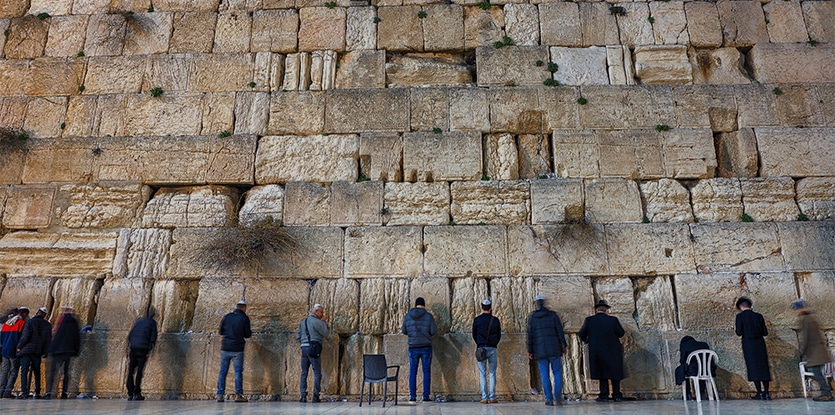

  • Spiritual Vaccination

    Spiritual Vaccination

    The following is a freely-translated excerpt from a letter by the Rebbe dated Iyar 3, 5715 (April 25, 1955): 1

    I was pleased to read that you have begun your holy work in the field of education…

    May the Almighty grant that you not be overwhelmed by the initial difficulties—as per the saying of our sages “All beginnings are difficult” 2 —that you will experience. On the contrary: these should arouse in you added vigor and provoke hidden potentials.

    Among the advances of medical science in recent times was the discovery of certain vaccines. In order that the body should be able to resist certain aggressive diseases, G-d forbid, it is injected with a similar and weaker specimen of the same disease; by this means, the body creates weapons and defenses against this disease, which prevent it from ever invading it. The same is true regarding spiritual medicine (as Maimonides, in his famed “Eight Chapters,” makes the correlation between physical and spiritual healing). By encountering a weak, so-called “hindrance,” the soul creates weapons and defenses with which to vanquish true hindrances and difficulties…