In every generation, a person is obligated to see himself as if he himself has come out of Egypt
Passover Haggadah
The Baal Shem Tov would eat three festive meals on the last day of Passover. The third meal, which would be held toward the evening, was called “Moshiach’s meal,” because on the last day of Passover there is a revelation of the light of Moshiach.
Rabbi Yosef Yitzchak of Lubavitch
True freedom is freedom from limitation—whether external or internal, whether physical, psychological or spiritual. Mitzrayim, the Hebrew word for “Egypt,” means “boundaries” and “constrictions”; yetziat mitzrayim, “going out of Egypt,” is the endeavor to transcend limitation, to rise above all that inhibits the soul of man.
One of the most constricting elements of the human condition is the phenomenon of time. Time carries off the past and holds off the future, confining our lives to a temporal sliver of “present.” But on the first night of Passover, we break the bounds of time, having received a mandate to experience the Exodus “as if he himself has come out of Egypt.” We recall the Exodus in our minds, verbalize it in the telling of the Haggadah, digest it in the form of matzah and marror. As we passover the centuries, memory—those faded and anesthetized remnants of past that generally constitute our only answer to the tyranny of time—becomes experience and history is made current and real.
Leap to the Future
Passover is an eight-day festival, with two opening and two closing days of heightened observance and commemoration.[1] While the theme of freedom runs as a current through the entire festival, the first days of Passover focus primarily on the first redemption—our liberation from Egypt thirty-three centuries ago—while the last days highlight the final redemption—the future era of divine goodness and perfection heralded by Moshiach.[2]
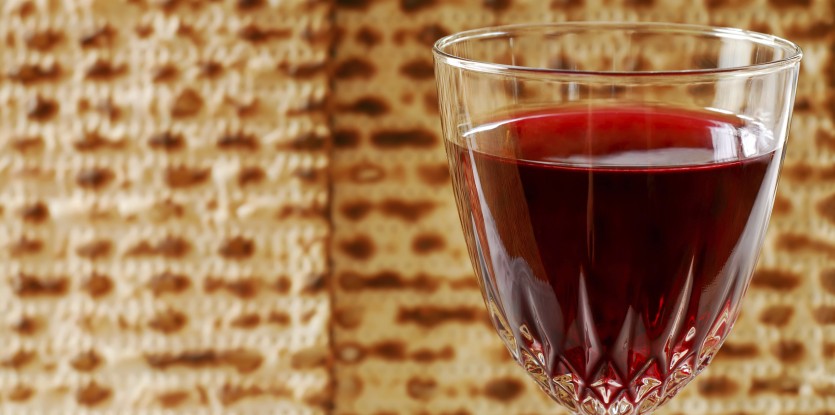
Thus our trancendency of time enters a new, heightened phase: it is one thing to vitalize memory to the point of actual re-experience, but quite another to make real an event that lies in the future, especially an event that has no precedent or parallel in the history of man. Yet in the closing hours of Passover, we enter into the world of Moshiach: having vaulted over millennia of past, we now surmount the blank wall of future, to taste the matzah and wine of redemption.
Based on an address by the Rebbe, Passover 5732 (1972)[3]
______________________________
[1]. Including the “extra day of the Diaspora” added outside of Israel.
[2]. On the seventh day of Passover, we read the “Song at the Sea,” which contains an important allusion to the messianic era (see Talmud, Sanhedrin 91b); on the eighth day, the haftorah (reading from the Prophets) consists of one of the most basic descriptions of the future redemption (Isaiah 10-11). Thus, the custom of “Moshiach’s meal,” as cited above.
[3]. Likkutei Sichot, vol. VII, pp. 272-273.