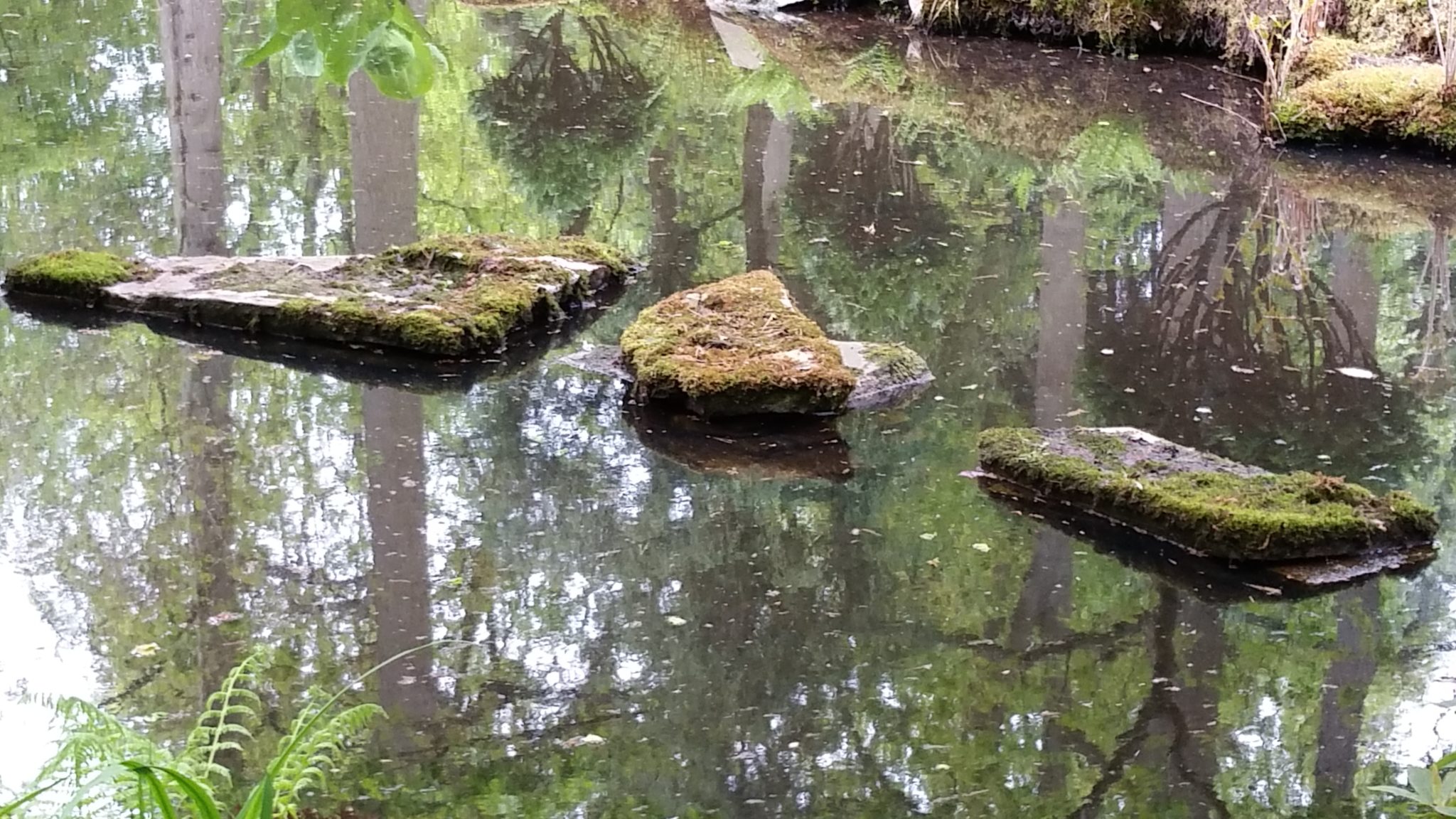

If He had split the sea for us, but did not take us across it on dry land—it would have sufficed for us
The Passover Haggadah
The above lines are from the Dayyeinu hymn, sung at the Passover Seder, in which we enumerate fifteen things that G-d did for us when He liberated us from Egypt and took us to be His chosen people. We thank G-d for each of these things individually, recognizing each as a distinct and unique gift. Thus we say: “If He had taken us out of Egypt, but had not punished [the Egyptians]—it would have sufficed for us…. If He had fed us the manna, but had not given us the Shabbat—it would have sufficed for us….” and so on.
Many of the commentaries on the Haggadah are puzzled by the meaning of the above-quoted stanza: what does it mean that it would have sufficed for us had G-d split the sea for us but had not taken us across it on dry land? Of what use would the splitting of the sea have been to us had it not enabled us to cross to the other side and escape Pharaoh’s pursuing armies?
The Avudraham[1] explains that the emphasis is on the fact that we crossed the things that have profoundly impacted our lives as Jews sea on dry land. In order to save us from the Egyptians, it would have been enough that the sea split and we trudged through the mud and silt that naturally covers the sea bottom. To show His love for His people, G-d performed an additional miracle, making our path as dry and firm as land that has never been covered by water.
But the fifteen things enumerated by the author of the Haggadah in Dayyeinu are not simply a list of miracles performed by G-d in the course of the Exodus (of which there were many others), but major developments in Jewish history: the Exodus itself, the splitting of the sea, the manna, the giving of the Torah, the entry into the Holy Land, the building of the Beit HaMikdash—to this very day. What, then, is the lasting significance of our crossing the Red Sea “on dry land”?
Spiritual Scuba
We each inhabit two worlds—worlds that are often as far apart from each other as two worlds can be. One world is the “revealed” portion of our existence: our professional, family and social lives, our conscious thoughts and feelings. But we simultaneously inhabit a “hidden” world—a world of subconscious drives and desires, of innately known truths and deeply-held convictions that rarely, if ever, see the light of day.
Kabbalistic and Chassidic teachings refer to these two worlds as our “land” reality and our “sea” reality. On land, things are out in the open—so much so, that they often seem disconnected from their environment and source of life (looking at a throng of suited businessmen striding down a busy city sidewalk, it is hardly apparent that they derive their nourishment from the earth). In the sea, everything is submerged and hidden. At most, we might catch a shadowy glimpse of what transpires close to the surface; of what lurks in its depths we see nothing at all.
What is the case on the individual level is also true of creation as a whole. There are the “revealed worlds,” which include the material and physical realities, as well as those spiritual realities that are fathomable and accessible to us. But beyond this “land” lies the mysterious sea, the supra-natural and supra-rational strata of creation.
Much of the pain and frustration in our lives stems from the rift between our “land” and “sea” personalities. If only we could reconcile our revealed life with our subconscious self! If only we could recognize our true will and uncover our deepest yearnings; if only the countless choices we make each day in our “terrestrial” existence would reflect who we truly are and what we truly desire!
This, explain the Chassidic masters, is the spiritual significance of the “splitting of the sea.” When G-d split the Red Sea, He also split “all the waters in the world,”[2] from the physical seas on earth, to the individual sea of every soul, to the cosmic sea that suffuses the deepest secrets of creation. In the words of the Psalmist, G-d “transformed the sea into dry land; they traversed the river on foot.”[3] What is ordinarily submerged and inaccessible became manifest and tactual, and traversing the depths of one’s soul was like walking on firm terrain.
After “the children of Israel passed through the midst of the sea on dry land,”[4] the waters reassumed their natural course. Again the sea world was obscured, again the subconscious became a mystic and secret place. But a precedent had been established, a potential implanted in our souls. Never again was the sea to be impregnable, never again were the revealed and hidden in man to constitute two hermetic worlds. With His splitting of the seas, G-d empowered us to penetrate our individual seas, to blaze pathways of dry land on the ocean floors of our souls.
The Intermediate Man
In his Tanya,[5] Rabbi Schneur Zalman of Liadi speaks of three spiritual personalities: the rasha (iniquitous individual), the tzaddik (perfectly righteous individual) and the beinoni (the intermediate).
The rasha is one whose “revealed” life—his deeds, speech and conscious thoughts—is at odds with his hidden essence. His soul is “literally a part of G-d above,”[6] but his daily life includes acts that are a transgression of the divine will. His quintessential desire is to cleave to his source, but he consciously desires things that impede his relationship with G-d.
In the tzaddik, there is complete harmony between the hidden and revealed portions of his soul. His intrinsic love of G-d dominates his life, so that he is drawn to everything that enhances his bond with the Almighty and is repelled by anything that threatens it. He is one who has transformed his sea into dry land, whose quintessential self and manifest self are one and the same.
Between the rasha and the tzaddik is the beinoni, the “intermediate.” The beinoni desires evil; but he never allows his negative impulses to find expression in action, speech, or willful thought. In other words, the beinoni is a behavioral tzaddik and a psychological rasha. On the behavioral level, his life is in complete conformity with his inner identity as a spark of the divine torch. Psychologically, the dissonance between his essence and his manifest self remains.
The beinoni is one who has split his sea, but who still struggles along its muddy bottom. He has penetrated his hidden self enough to get him to the other side. He gets the same “results” as the tzaddik: his daily life is a perfect reflection of his innermost self. But his sea has not been transformed into dry land. Life for him is a constant struggle with the contradiction between sea and land.
Double Split
The Tanya tells us that every man has the capacity to be a beinoni—to gain complete mastery over his behavior and not allow a single evil impulse to find expression in actual deed. But few can attain the state of the tzaddik. Indeed, there is something about the beinoni, something about his perpetual battle with evil, that makes his life richer and more G-dly than the perfect existence of the tzaddik. G-d desires both beinonim and tzaddikim in His world, for each realizes a dimension of His purpose in creation that the other cannot fulfill. On a more subtle level, we each have our beinoni periods and our tzaddik moments—periods of struggle and moments of harmony—both of which are integral to a complete self.
On the seventh day of the Exodus, G-d granted us the capacity for both: for virtue and for perfection, for successful struggle and for harmonious wholeness. He split the sea for us, empowering us to manifest our hidden self in our daily lives. And He transformed the sea into dry land, enabling us to aspire to a complete synthesis of our mystic essence and our terrestrial character.
Based on an address by the Rebbe, Passover 5718 (1958)[7]
Adapted from the teachings of the Lubavitcher Rebbe by Yanki Tauber
[1]. Classic commentary on the Siddur by Rabbi David Avudraham (14th-century Spain).
[2]. Mechilta on Exodus 14:21.
[3]. Psalms 66:6.
[4]. Exodus 14:29, 15:19.
[5]. Chapters 9-17.
[6]. Tanya, ch. 2.
[7]. Likkutei Sichot, vol. III, pp. 1016e-1016f.