
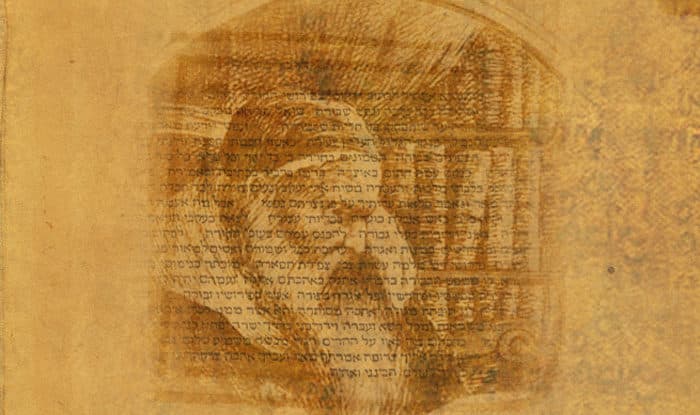
Rabbi Moshe ben Nachman (Ramban) – (1194-1270)
Rabbi Moshe, son of Nachman was a critical link in the transmission of ancient mystical wisdom to the modern era. His contributions cover every area of scholarship, distinguished both in the legal dimension and the esoteric one. His major commentary on the Bible – mandatory study today – is multi-dimensional, weaving the “wisdom of the truth” (mysticism) into understanding the Bible. The Ramban, distinguished also as a physician and philosopher, was a leader involved in all public matters of his day. One of his greatest mystical contributions was his ruling (in his Gate of Reward) that the ultimate reward and fulfillment of creation is in fusing the material and the spiritual.
Biographical Highlights:
~ 1194: Born in Gerona, Spain, to a noble family which includes many prominent Talmudists.
~ His primary Kabbala teachers are Rabbi Yehuda ben Yakar and Rabbi Ezra and Rabbi Ezriel of Gerona.
~ 1210: At age 16, having mastered the entire Talmud, he writes Milchamot Hashem, a defense of the work of the great Talmudist, Rabbi Isaac Alfasi against the attacks of Zerachiah Halevi.
~ Becomes a practicing physician as well as fulfilling the role of communal rabbi of Gerona.
~ Appointed chief rabbi of the entire province of Catalonia.
~ 1263: Is ordered by the king of Aragon to participate in a religious disputation with Pablo Christiani, a Jewish apostate. Ramban wins the debate, and publishes an account of the proceedings.
~ 1265: Brought to trial and condemned to banishment for “blasphemy.”
~ 1267: Leaves Spain and settles in Acco, Israel.
~ Begins a campaign to improve the spiritual and material condition of the Jewish community in Israel which is in a dismal state. Writes his famous commentary on the Torah.
~ 1270: Passes away at age 75, and is buried in Haifa.
~ His mystical writings are cited and deciphered in later mystical works, especially composed by his student, the mystic Rabbi Yitzchak Daman Ako.
Published Writings:
Commentary on Chumash; Commentary on Maimonides’ Sefer HaMitzvos; Commentary on Talmud; Writings of the Ramban, 2 volumes (Chavel): Milchamot Hashem; Toras Hashem Temimah (Treatise on the Virtue of Torah); Wedding Homily; Rosh Hashana Homily; Treatise of Kohelet (Ecclesiastes); Sefer HaGeulah; Commentary on the Book of Job; Letter on Ethics; Toras HaAdam (includes Shaar HaGomul); Ha’Emunah V’Habitachon (On Faith and Trust); Commentary on Sefer Yetzirah. Torat Haacku; Sefer Havikuach; Iggeres HaRamban on Intimacy; Discourse on the Inner Torah; Commentary on Song of Songs; 613 Mitzvos derived from the Ten Commandments
Resources in English:
Ramban (Nachmanides): Commentary on the Torah – Five Volume Series
Translated by: Charles B. Chavel, Shilo, 1976
Ramban: Writings and Discourses – Two volumes. Translated by: Charles B. Chavel, Shilo
Ranban: His Life and Teachings – Feldheim, 1960
Ramban: The Story of Rabbi Moshe ben Nachman, Yaakov Dovid Shulman
Iggeres HaRamban: A Letter for the Ages – The Ramban’s Ethical Letter
Translated by Rabbi Avrohom Chaim Feuer (Artscroll Mesorah)
Ramban Hagaddah – by Rabbi Yosef Israel (Artscroll Mesorah)
Some Concurrent Events in History:
1000-1200: Period of the Middle Ages dominated by Crusades – wars undertaken by European Christians to conquer Israel from the Muslims and eliminate non-Christian control in Europe and the Middle East.
1085: For the Jews, the Golden Age of Spain began to wane with the Christian reconquest.
1200-30: In the Fourth Crusade, Christians conquer Constantinople ~ Famed Jewish scholar, Rambam, dies ~ Genghis Kahn invades China, the Near East & Russia ~ In the Sixth Crusade, Frederick II, King of the Holy Roman Empire is crowned King of Jerusalem after Muslims surrender.
1230-49: Pope Gregory IX establishes the Inquisition, a tribunal of the Roman Catholic Church to ‘suppress heresy’ ~ Public burning of the Rambam’s works in Paris ~ Egyptians recapture Jerusalem ~ Hebrew Talmud and holy manuscripts publicly burnt in Paris ~ Seventh Crusade led by Louis IX of France invades Egypt ~ Muslims flee Seville as Christian armies invade.
1250-70: Crusades introduce the decimal system to Europe and spices used for medicinal purposes ~ King Louis IX expels Jews from France ~ Sorbonne (University of Paris) opened by the chaplain of King Louis IX ~ Kublai Kahn establishes China’s Yuan Dynasty ~ Latin Empire of Constantinople falls to the Byzantines.
Insights:
Over the centuries the Ramban’s view on the mitzvah of settling the Land has been most influential. He also held that even mitzvos which were obligatory outside of the Holy Land did not achieve the level of perfection as when performed within Eretz Yisrael. Looking back at the chaotic state of the Land during the periods of non-Jewish control, he interpreted Leviticus 26:32 as promising that Israel’s enemies will be unable to settle the Land. As part of the mitzva of settling the Land he included the admonition “that we not forsake the Land to others of the nations” (Numbers 33:53).





Good but needs more info on Ramban
definitely needs more info
Not really what i was hoping for
Good. Maybe you can discuss the Rebbes ideas in light of Ramban? At least some of the ideas, regarding the Geulah.