
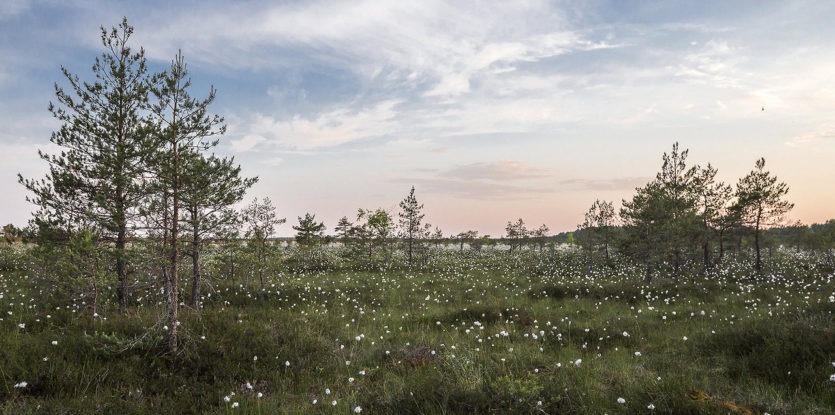
“Man is a tree of the field,”[1] and the Jewish calendar reserves one day each year—the “New Year for Trees” on the 15th of Shevat[2]—for us to contemplate our affinity with our botanical analogue and what it can teach us about our own lives.
The tree’s primary components are: the roots, which anchor it to the ground and supply it with water and other nutrients; the trunk, branches and leaves that comprise its body; and the fruit, which contain the seeds through which the tree reproduces itself.
The spiritual life of man also includes roots, a body, and fruit. The roots represent faith, our source of nurture and perseverance. The trunk, branches and leaves are the “body” of our spiritual lives—our intellectual, emotional and practical achievements. The fruit is our power of spiritual procreation—the power to influence others, to plant a seed in a fellow human being and see it sprout, grow and bear fruit.
Roots
The roots are the least “glamorous” of the tree’s parts—and the most crucial. Buried underground, virtually invisible, they possess neither the majesty of the tree’s body, the colorfulness of its leaves nor the tastiness of its fruit. But without roots, the tree cannot survive.
Furthermore, the roots must keep pace with the body: if the trunk and leaves grow and spread without a proportional increase in its roots, the tree will collapse under its own weight. On the other hand, a profusion of roots makes for a healthier, stronger tree, even if it has a meager trunk and few branches, leaves and fruit. And if the roots are sound, the tree will rejuvenate itself if its body is damaged or its branched lopped off.
Faith is the least glamorous of our spiritual faculties. Characterized by a “simple” conviction and commitment to one’s Source, it lacks the sophistication of the intellect, the vivid color of the emotions, or the sense of satisfaction that comes from deed. And faith is buried underground, its true extent concealed from others and even from ourselves.
Yet our faith, our supra-rational commitment to G-d, is the foundation of our entire “tree.” From it stems the trunk of our understanding, from which branch out our feelings, motivations and deeds. And while the body of the tree also provides some spiritual nurture (via its “leaves”), the bulk of our spiritual sustenance derives from its roots, from our faith in and commitment to our Creator.
A soul might grow a majestic trunk, numerous and wide-spreading branches, beautiful leaves and lush fruit. But these must be equaled, indeed surpassed, by its “roots.” Above the surface, we might behold much wisdom, profundity of feeling, abundant experience, copious achievement and many disciples; but if these are not grounded and vitalized by an even greater depth of faith and commitment, it is a tree without foundation, a tree doomed to collapse under its own weight.
On the other hand, a life might be blessed with only sparse knowledge, meager feeling and experience, scant achievement and little “fruit.” But if its “roots” are extensive and deep, it is a healthy tree: a tree fully in possession of what it does have; a tree with the capacity to recover from the setbacks of life; a tree with the potential to eventually grow and develop into a loftier, more beautiful and fruitful tree.
Fruit
The tree desires to reproduce, to spread its seeds far and wide so that they take root in diverse and distant places. But the tree’s reach is limited to the extent of its own branches. It must therefore seek out other, more mobile “couriers” to transport its seeds.
So the tree produces fruit, in which its seeds are enveloped by tasty, colorful, sweet-smelling fibers and juices. The seeds themselves would not rouse the interest of animals and men; but with their attractive packaging, they have no shortage of customers who, after consuming the external fruit, deposit the seeds in those diverse and distant places where the tree wants to plant its seeds.
When we communicate to others, we employ many devices to make our message attractive. We buttress it with intellectual sophistication, steep it in emotional sauce, dress it in colorful words and images. But we should bear in mind that this is only the packaging, the “fruit” that contains the seed. The seed itself is essentially tasteless—the only way that we can truly impact others is by conveying our own simple faith in what we are telling them, our own simple commitment to what we are espousing.
If the seed is there, our message will take root in their minds and hearts, and our own vision will be grafted into theirs. But if there is no seed, there will be no progeny to our effort, however tasty our fruit might be.)[3]
_________________________
[1]. Deuteronomy 20:19.
[2]. “Tu B’Shevat,” which this year falls on January 25st.
[3]. Igrot Kodesh, vol. I, pp. 247-250. There exist two versions of this letter: a draft in the Rebbe’s hand, and a copy of a letter as actually sent, which includes only some of the points contained in the first version.
Based on a letter by the Rebbe dated Shevat 21, 5704 (February 15, 1944)






PLEASE CORRECT–TU B’SHEVAT THIS YEAR FALLS ON JANUARY 25, not in February. I am super-aware of anything in Shevat as my birthday is 2 Shevat.