Dear Rabbi Simon Jacobson,
Purim always intimidates me. Serious days I can handle – days of study or introspection. Fast days and days of mourning are also accessible – I can always find something to feel sad about. But Purim and Simchat Torah, these are the holidays that I find daunting. I’m supposed to be joyous, happy and exuberant! How do I access joy? Do I have joy inside of me that I can turn on like a tap for 24 hours – joy on demand? Happiness on demand! Bottled Joy! People may suggest using alcohol but I’m concerned that either I’ll fall asleep or be a melancholic drunk.
Sometimes I walk down the street and I say to myself, “Be joyous, get in touch with your joy,” and I immediately think of at least ten reasons not to be joyous: eg. “I’m not married, I’m not married, I’m not married … ” (ten times)
As I understand it, on Purim, I should be joyful because 2,500 years ago, a nice Jewish girl (Esther) married a non-Jewish king (Ahashverosh) whose viceroy (Haman) decided it would be a good idea to kill all the Jews. 2,500 years ago, the Jews were saved and so I am here today. I guess that’s a fair reason to celebrate – that I exist. But really 2,500 years is a long way to travel back in time in order to find a reason to be happy. Isn’t there an incident a little more current in Jewish history about which I can feel unadulterated Joy?
Seriously though, how do I access Purim?
Eda Rozensweig
—–
Dear Eda,
Great question. This would make for an excellent topic for discussion at the Purim table.
Here are some of my thoughts: For one, Purim allows us the opportunity to ask the questions you pose: how can we have joy in our lives, especially when we are not in the mood of it and have many reasons not to be joyful?
There is a short-term solution and a long term one. First the long term. The question is why are some people naturally happy and others not? Is joy genetic? Natural and inherent or acquired? Nature or nurture?
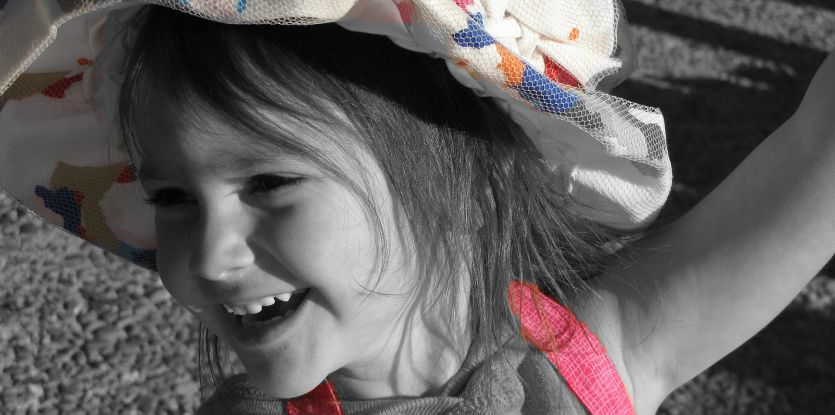
The answer of the Torah — which I believe is the blueprint for life — is that joy is natural and inherent to every person. Just witness the natural happiness and cheerfulness of a young child. The bright joyous face of a child is something that any adult vies for. A child begins to lose his natural cheer due to external causes. His inherent joy starts to erode when he begins to experience the disappointments and tragedies of life events, the despondent attitudes of parents, educators and other adults affecting the child.
Purim is the time of year when the window of opportunity of accessing our inner joy opens up. The celebration of Purim is not merely due to the historical events that occurred 2500 ago, but a celebration of an event that is happening in our lives today, on the day of Purim. (Time is a cyclical energy. Each day recreates the energy flow of that respective day in years past). The Baal Shem Tov puts it this way: If one reads the Purim Megillah as if it is an event that happened in the past and not in the present, the mitzvah has not been performed.
How do we access the inner joy innate in each of us? By accessing the cheer and enthusiasm of our inner child — the part of us connected to God that precedes the sadness that life circumstances imposed and continues to impose upon us. That is what Purim is all about: the celebration of our inner child. The enchantment and magic of our souls.
Purim is a day of joyous abandon that transcends conventional boundaries. We are told to celebrate “ad de lo yado” – which means to be joyous until you reach a place beyond the doors of perception, where we transcend dark and light, even the pains and disappointments of our lives. The story of Purim teaches us that despite how dark it gets, even when all hope seems to be lost, the joy of the inner child surfaces in an eruption of joy. It is a delight that transcends any pain you may be dealing with in life, whether it is the lack of a marriage or a challenging marriage.
Long term — one needs to cultivate the inner soul child. Purim is a day when a window opens up that allows us deep inside of ourselves. Meditating and internalizing the feeling that God put you on Earth for a unique purpose, that you have an indispensable contribution to make, realizing that all else in life pales in comparison to the essential power of your soul — is a sure cause for being joyous. Short term — on Purim day listen to the Megillah, participate in a Purim festivity meal, send food gifts to friends, and give charity to the needy. These are all methods and tools to excavate the inner resources of our soul child that are available to us on Purim.
Joy is contagious. Often when we can’t access it on our own, a way of igniting it is by celebrating in dance and song with others. Behavioral change, acting joyous (even when you don’t feel like it), coupled with the fact that deep inside (or not so deep) lies a reservoir of pure joy, is a way to actually become joyous.
May God give you the strength to see your child, to access the inner joy, and to celebrate.
Happy Purim,
Simon Jacobson
PS. Please feel free to email me with further questions at wisdomreb@meaningfullife.com