November 17th, 2016
As can be expected, this open letter has evoked many passionate responses — both supportive and critical. In the spirit of open dialogue, and in respect to all opinions, we are publishing all these voices uncensored, even if they include remarks that may offend some. The MLC is proud of its enduring policy to champion the sacred right of every individual’s personal expression. We therefor invite and welcome your opinion, and encourage you to join this conversation. Please comment below to post your thoughts.
Dear Mr. President-elect, Donald J. Trump,
Congratulations on being elected to the highest position in our land, and indeed, the leader of the free world – our 45th President of the United States of America.
Every elected position is a great responsibility, and indeed, one that is always driven by a higher “invisible hand,” as stated in the book of Proverbs (21:1): The heart of a king is like a stream of water in the Divine hand, wherever He wishes, He will direct it.
But your election, Mr. Trump, stands out in particular as unprecedented in history: You defied all the predictions and pollsters, you upended both the Republican and Democratic parties, you did not follow the “established” rules and guidelines for a political campaign, you exposed the media’s biases and inadequacies – you basically broke every norm. And yet you won a resounding victory, breaking the blue wall and turning over states that no one expected you to win.
One can hardly find an equivalent event in the history of presidential elections that qualifies for a true “invisible hand” directing the electorate to upset the existing systems and infrastructures.
One word stands out to describe this cataclysm: Disruption.
Mr. Trump, you tapped into the fiber of this country’s restlessness and eagerness for change; to change the existing political norms and to bring this county back to its great legacy.
This is the reason for my writing to you today: I am absolutely convinced that you face a once-in-history opportunity to lead this country, and by extension, the entire world, to a new world order of global peace and prosperity.
What has made this nation great? What is the secret behind the 240-year-old unparalleled success of the USA?
We don’t need to look far and wide for the answer. All we need to do is return (retrace our steps) to the deep and enduring roots of this county as they were laid down by our Founding Fathers.
The mission statement of this country was defined by the Founding Fathers in 1776 when they established this great nation. And they fought the Revolutionary War to defend this mission stated in the Declaration of Independence:
“We hold these truths to be self-evident, that all men are created equal, that they are endowed by their Creator with certain unalienable Rights, that among these are Life, Liberty and the pursuit of Happiness. That to secure these rights, Governments are instituted among Men, deriving their just powers from the consent of the governed.”
By studying different systems and their failures, by personally experiencing the consequences of being denied basic human freedoms, by building this country’s pillars not on their own subjective whims but on eternal values rooted in the Bible – the Founding Fathers understood that the grand American experiment is only possible with a firm foundation that absolutely guarantees individual rights.
A nation built on the principle that “All men are created equal” as “One nation under God” and E Pluribus Unum, created the best business climate to allow this nation to flourish. With its promise of freedom and equal opportunity, the United States has welcomed people from all over the world and encouraged them to contribute to the growth of this country.
And flourish it did. The investment of the Founding Fathers paid off. The synergy of people from all backgrounds coming together as equals under God created the highest developed country of all time.
For 240 years our mission statement – the principles of the revolution – has never been challenged.
But this great corporation lost its soul somewhere along the way. America forgot its true mission statement.
The unprecedented prosperity of this nation has spoiled us. We have built the greatest empire in history, with the highest standard of living, and the most powerful technology. Everything seemed to be going so well. The unheard of economic boom, the information revolution, the unbelievable advances in medicine and science, promised to deliver a new world order. Consumption – mass consumption, enabled by mass industry – became the dominating driving force in our consumer driven economy.
But no business can function without it being aligned with its mission. How much more a great nation like ours: Our country can live up to its enormous potential only if it is aligned with its mission.
Indeed, our sustained prosperity has given rise to a profound complacency. Today it is becoming obvious that we have taken for granted many of the freedoms and blessings that were contained in the vision of our founding fathers. Our newfound vulnerability and deep feelings of uncertainty expose more than ever the emptiness of financial security. It makes us realize how alienated we become when we our jobs and careers become an end in themselves, divorced from their deeper mission statement: an expression of our souls.
Now, over two centuries later this nation has been issued the greatest challenge it has ever faced. Perhaps the United States is on the threshold of a new revolutionary war – the final frontier. And it is indeed a great honor and merit and responsibility and gift to be part of this drama and affect its destiny.
This, Mr. President-elect, sets the stage for your new administration to reclaim our great American heritage.
This country must align itself with its mission – the business of this nation must reconnect to its higher calling. And when the USA lives up to its calling then, and only then, can it serve as a beacon to the other nations of the world. Simply being a nation of great wealth and enormous military muscle does not by any means give it the moral high ground. Other nations, religions and peoples have much longer traditions and histories than the relatively new world of the United States. But this country can demonstrate something unique to the world. As a country, it can rise above its own national issues and serve as a beacon of light teaching the world the universal principles of all humankind – the principle upon which this nation was founded – how to live in peace with God.
This disruptive election is a wake-up call. Disruptions are tremors signaling the dawning of a new era. The stunning way this election disrupted the powers that be, the media, the political establishment, reflects the “market correction” and reality check of a country that has lost its moorings, and is in search of reconnecting with its mission.
Mr. President-elect, with this extraordinary election, you now have the opportunity to realign our country with its purpose. To rebalance business and spirituality, Capitalism and compassion, matter and spirit.
With the cabinet and team you build please make it a priority to offer us a new business model, a new paradigm – one that integrates our work with our essence. By recognizing that our careers and businesses are means and vehicles to fulfill the divine plan in our lives, we can reclaim the core beliefs that are the secret of the nation’s endurance.
The United States now stands at perhaps the most defining moment of its history. We are now locked in a struggle to renew our contract with the soul of our nation. In many ways we now are faced with the formidable task of finishing what our Founding Fathers began.
We must balance our economy of consumption with higher values. Let us learn how to reclaim our mission statement: What are we? Who are we? What is this company called America?
New paradigms are always difficult. That’s why they are new.
We hope and pray for you, Mr. President-elect, that you serve as a divine agent that leads this country and the world into a new era, a world driven by the moral principles upon which all civilization rests, a world in which all people, races and nations, in all their rich diversity, live in harmony and peace, humbly serving the higher calling for which we were all created.
God bless you and God bless America and the world.
Respectfully,
Simon Jacobson
Tags: donald trump, us president, united States, usa, president, trump
Posted in Trending, Elections 2024, Government, Current Events | 40 Comments »
November 10th, 2016
The Stunning Election of President Trump: What Does it Mean?
How do you react when you are shocked and shaken up? Do you try to rationalize and explain away the shocking events, or do you allow yourself to be open to a new reality and adjust accordingly?
Shocking moments are reality checks. The way we respond to them teach us volumes about our characters and how trapped we are by our comfort zones and conventional wisdom.
The stunning victory of Donald J. Trump surely goes down as one of the greatest shockers in recent history.
And how people are reacting to it is most telling.
Stunning. History in the making. Shocking upset. The greatest upheaval in US Presidential history. A devastating loss. These are some of the ways that the surprising election of Mr. Trump is being described.
No one (except for a select few, who perhaps are as stunned as everyone) expected it — not in the establishment, not in the government, not in the media. Without even a campaign office in some of the states he won, without a well-oiled political machine, without spending exorbitant sums as the Clinton campaign spent, without the support of his own party, against all the polls and predictions, despite all his guffaws and offensive remarks — despite all the odds, Trump pulled off this sound and astounding victory, winning states in which no one ever expected him to be a contender.
Every one — foremost in the media and political leadership — is rubbing their eyes. Just look at their faces — like a doe caught in the headlights. What happened?! No one can wrap their head around this.
What did indeed happen? Is Trump a genius? Was the establishment and the media too arrogant? Did the blatant bias of the most powerful voices in America backfire? How could so many experts and strategists have so misread the sentiments of the US public? How did a man vilified by many reputable voices win such a resounding victory? What does it say about the credibility and reputation of the venerable New York Times, as one example of many media outlets that made it their crusade to defeat Trump (venturing far beyond their mandate of reporting the news without prejudice)? The questions will certainly be asked for years to come. But will anyone ever find the answers?
Perhaps this belongs in one of those watershed junctures in history which can never fully be understood. Maybe there is an invisible hand which shows its guiding force at key moments in time?
This unprecedented election can only be understood by placing it in historical context of events that are shaking up the world today, forces that are disrupting the existing systems and institutions, leading us into a new era.
Shock is the natural reaction to changes that jolt us out of comfort zones and conventional wisdoms. Shock always comes hand in hand with true transition from one state to another. As we see a ne order arising it disturbs our existing institutions.
Groundswells like these can either overwhelm and upset our very foundations, they can demoralize and disorient us; or they can be seen as convulsions preceding a new birth.
If we allow our egos to stand in the way, we will look to blame others and all types of factors (except ourselves) for these shake-ups. However if we stand humble, and set aside our own agendas, we can allow these seismic shifts to open up new horizons.
When your comfort zone is challenged you can either feel threatened or you can embrace the new possibilities and opportunities it opens us up to.
Ask yourself: When things don’t turn out the way you expected, do you try to find ways to explain it away, or do you challenge yourself and your expectations? In other words: Do you adjust reality to fit your existing framework, or do you adjust your framework to fit the new realty?
How you answer this question will define, with far-reaching implications, your personality and your capacity for growth.
I submit that the shocking or stunning election of the 45th US President is far bigger than Mr. Trump and the electorate. It is part of many dramatic changes taking place in the world today – in the Middle East, in Europe and in the USA. It is the “invisible hand” of history exposing to us that we are on the threshold of a new world order.
We are now at a major juncture. And we have a choice how to proceed: Either we will embrace a new unknown and be part of a new era, or we will stubbornly hold on to the past and to our old perception, criticizing what we don’t understand, and thus dooming ourselves to a faded yesterday.
As a recent Noble Laureate wrote in the turbulent 60’s: Come mothers and fathers throughout the land, and don’t criticize what you can’t understand, your sons and your daughters are beyond your command, your old road is rapidly agin’, please get out of the new one if you can’t lend your hand, for the times they are a-changin’. The full text is below.
How we choose will make all the difference.
Please go here to view a more elaborate talk I gave last night on this topic.
Come gather ’round people
Wherever you roam
And admit that the waters
Around you have grown
And accept it that soon
You’ll be drenched to the bone
If your time to you is worth savin’
Then you better start swimmin’ or you’ll sink like a stone
For the times they are a-changin’
Come writers and critics
Who prophesize with your pen
And keep your eyes wide
The chance won’t come again
And don’t speak too soon
For the wheel’s still in spin
And there’s no tellin’ who that it’s namin’
For the loser now will be later to win
For the times they are a-changin’
Come senators, congressmen
Please heed the call
Don’t stand in the doorway
Don’t block up the hall
For he that gets hurt
Will be he who has stalled
There’s a battle outside and it is ragin’
It’ll soon shake your windows and rattle your walls
For the times they are a-changin’
Come mothers and fathers
Throughout the land
And don’t criticize
What you can’t understand
Your sons and your daughters
Are beyond your command
Your old road is rapidly agin’
Please get out of the new one if you can’t lend your hand
For the times they are a-changin’
The line it is drawn
The curse it is cast
The slow one now
Will later be fast
As the present now
Will later be past
The order is rapidly fadin’
And the first one now will later be last
For the times they are a-changin’
Tags: donald trump, 2016 presidential election, shock, trump
Posted in Trending, Elections 2024, Social, Government | 16 Comments »
November 4th, 2016
The severity of the situation doesn’t matter; when things fall apart there are three initial steps you can take to start restoring security and order to your life. Conventional wisdom says, “Pick up the pieces of your life.” That approach is reactive and negative and can compound feelings of hopelessness. Try this instead when things fall apart.
Remember Who You Are
Your strength comes from a firm foundation. Your foundation is knowing who you are at the soul level. Before you look for solutions to your problems, affirm who you are. Think about it. Journal about it. Talk to a trusted friend or mentor about it. A tree cannot withstand heavy wind and rain without strong roots. Your roots — your foundation — is your true self at the soul level.
Think Optimistically
Think good and it will be good. When things fall apart, it can be hard to see a way out from under the rubble. “Think good” isn’t just about sunshiny optimism. It means having faith in your Creator, knowing that you are never alone. “Think good” means looking at all of your internal and external resources and finding ways to use them. Your thoughts, if they’re good, will propel you to take action.
Ask for Help
Asking for help has two benefits: One is that you might get not only the help that you need, but that new doors, doors that you didn’t even know about, could open. The other is that you will not feel alone. Isolation is the most devastating part of times when things fall apart. But just knowing that you are not alone can give you hope.
Exercise: Remember a time in your life when things fell apart and you put them back together. Examine the process that you used to put things back together. Record your answer in MyMLC.
Go deeper into this subject: Rebuilding Life After Trauma

SOULGYM I MASTERCLASS
Live with Rabbi Simon Jacobson
Is Trauma the New Scapegoat?
Wednesday, June 22, 2022 @8:30pm
Live Stream | Podcast
Add to Calendar
Tags: abuse, healing, trauma, spiritual healing
Posted in Soul Gym, Personal Life, Pain & Suffering | 4 Comments »
November 3rd, 2016
A Deluge of Choice
How much nonsense — non-relevant information — have you consumed today? Does that question even make your uncomfortable?
Our world today is flooded by information and many other unprecedented comforts. Never in history has there been so much prosperity. Despite the so-called recession and economic downturn, our grandparents could not even dream of the abundance available to us today.
But do these new opportunities make you feel emancipated or overwhelmed?
They tell us that we are living in revolutionary times – the Information Age. They tell us that we have never been so powerful, never so free, that we now have the unprecedented ability to access any information anytime anywhere. But are you feeling freer today? With all the information at our fingertips, are we happier people, more fulfilled, less fearful, making better decisions? Has the Information Revolution informed us or inundated us? Are these gushing waters destroying or refining us?
Our modern age, with all its breathtaking technologies, has its share of maladies, many not unrelated to our scientific advancements and higher standard of living. Indeed, the argument can be made that our unprecedented cascade of information and slew of options has also brought on unparalleled misery. Is our only option to escape and insulate ourselves from the flood of choices? Or is there a way to fully take advantage of our wealth of knowledge and prosperity without being annihilated by it?
The answer to these critical questions can be found in comparing two Biblical verses, which describe the state of the earth, one of them in this week’s Torah portion.
In only a few select verses does the Bible describe the state of the earth – “the world was filled…” Two of these verses stand out in stark contrast to each other:
“The world filled with corruption” (in this week’s Torah portion, Genesis 6:13).
“The world filled with Divine knowledge as the waters cover the sea” (Isaiah’s Messianic prophesy, 11:9).
The association of these two verses is not just in the fact that they both use the same opening term (“the world filled,” “moloh ha’aretz”), but also in their context. The corrupt earth self destructed, wiped out in the great flood of water. This is eerily similar to Isaiah’s statement “the world filled…as the waters cover the sea.” Yet in the Messianic prophecy, the water filled earth is a blessing – a world filled with Divine knowledge, while the flood on our chapter is an agent of destruction.
Another interesting correlation is the opening of the verse in Isaiah: “They will not hurt or destroy… for the world will be full of Divine as the waters cover the sea.” In our chapter the world is annihilated by the floodwaters precisely because the people were corrupt and were hurting and destroying each other, whereas in Isaiah the submerged earth manifests a higher state of consciousness. We thus end up with two contrary scenarios, two types of floods, which appears like a catch-22 situation: Isaiah declares that a world submerged in Divine knowledge will eliminate violence and destruction. In our chapter the floodwaters also put an end to the violence – but through destroying, not elevating, mankind.
So which one is it? Does knowledge and information obliterate or refine us? The answer lays in the addition of one word by Isaiah: He says not just knowledge, but Divine knowledge.
Knowledge is compared to water. Like water, knowledge makes us and everything around us grow. It is nurturing, moisturizing, empowering. In short, a great blessing. Yet, knowledge can be used for selfish and destructive purposes, to take advantage of and hurt others. Or it can be used to build and improve life and the world around us.
The choice lies in our hands:
When knowledge is seen as Divine – not merely as a product of the great human mind, but a gift from above, endowed to us in order to use the knowledge to refine life – then it’s deluge is a great blessing. However, if we see our lives and our blessings – and the knowledge we gain – as self-made, and we direct these gifts only toward selfish ends; if our world become filled with greed and corruption – then even the knowledge and prosperity we gained turns into a torrential flood that will, due to our conflicting interests, overwhelm and destroy us.
However, if we humbly recognize that the knowledge is Divine knowledge
Only when we humbly recognize that water/knowledge is Divine, and its purpose is to affect and be integrated into your life, does it prevent hurt and destruction. When it is just ordinary water/knowledge it can become a curse lacking focus and integration. When asked how he, as a professor of ethics, could behave unethically, Bertrand Russell once said, “I am also a teacher of mathematics and I am not a triangle.” Academics often take pride in their detachment: “I can be completely knowledgeable of a given topic and it does not affect my behavior.” Contrast this attitude with Maimonides’ words, that a true scholar is recognized in his actions: how he talks, walks, sleeps and does business. A seamless flow between knowledge and behavior.
To have knowledge affect you this way requires bittul – total immersion in the pure waters of knowledge. True knowledge is not about you, it’s about the Divine truth of the knowledge and your humble recognition that you are a transparent channel for this knowledge. Like a fish submerged in water – always connected and aware that its entire sustenance comes from the water.
When Adam and Eve ate from the Tree of Knowledge – the knowledge of good and evil – they began to sense themselves as separate entities from their Divine mission. They unleashed knowledge that is divorced from its higher purpose. Ten generations later in the time of Noah this dichotomy evolved into total corruption, with one person turning on another in a blatant war against humanity, hurting and destroying each other.
The waters of the flood came to remind the world and purify it with a total immersion, reminiscent of the world as it was at the beginning of creation, completely submerged in water, the source of life, and a foretaste of the world that will be “filled with Divine knowledge as the waters cover the sea” – a knowledge that transforms the person into a Divine vehicle, preventing human hurt and destruction.
And mind you, the flood began as regular rainfall, as a warning and reminder to the people to wake up and correct their ways. First come several symptoms, a taste of what’s ahead, corrupt executives, unsound financial decisions, an economic breakdown, information overload, _________ (fill in the blanks) – all attempts to remind us that we need to act. And when we do, the water does not need to turn into a flood, it can become a rain that waters the fields.
Our current flood of knowledge with its assault on our psyche, is in many ways worse than any physical flood. Yet, within the curse lies the cure. This flood of information alerts us to the dangers of knowledge without focus; information without integration. And it reminds us that we must embrace Divine knowledge – knowledge that lifts and empowers us to be proactive and take control of circumstances, instead of knowledge and information that turns us into robotic observers and victims as it demoralizes and makes us anxious.
What can we do to find refuge from the flood around us – the flood of greed, fear and information?
We must build an ark, a ‘teivah, ‘ which also means ‘word.’ By surrounding and immersing ourselves in the sacred words of Torah and Tefillah (prayer) we create an oasis of Divine knowledge and words that protect us from the raging flood outside.
Designate time each day for prayer and Torah study, build a ‘teivah’ that will serve you well as a ship swimming through the swelling floodwaters that surround us.
Yet, a defensive response is not sufficient. True, we need to protect ourselves from the flood, but the ultimate goal is to transform the world into a place where we need not fear a destructive flood. Just as Noah is commanded after the flood to “leave the ark” and build a new world, we too must build a new world. The only thing that will do justice to the flood, and the only guarantee that there will be no more hurt and destruction, is by inundating our lives with torrential goodness and kindness, creating a world flooded with Divine knowledge “as the waters cover the sea.”
In our lives we have both options: A deluge of waters that will overwhelm and destroy us; or a deluge of Divine knowledge that submerges us in its watery embrace.
Both earths are covered in water. The difference is us. Have we allowed ourselves to be defined by self-interest, and then when the floodwaters come, get consumed by them?
Or have we built our “arks” – surrounded ourselves with sacred words, allowing ourselves to be lifted by the raging floodwaters?
Both are deluges. But the choice is yours.
Tags: Divine knowledge, water, rain, flood
Posted in Bereishit, Biblical, Weekly Parsha, Noah, Noah, Religion, Beliefs & Concepts, Free Choice, Torah Personalities, Social, Nature, Spiritual, Torah, Science & Technology | 12 Comments »
October 6th, 2016
We now find ourselves in a unique time of the year: A ten-day period — which begins with Rosh Hashana and concludes with Yom Kippur — called The Ten Days of Teshuva. 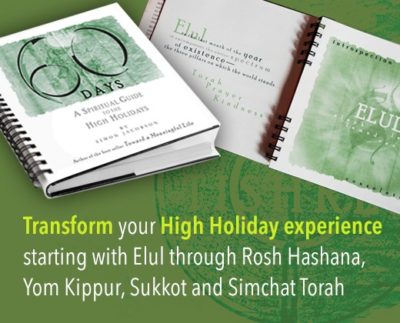 Time is energy. And the energy of this time period is one of return (the literal meaning of the word teshuva).
Return to what? To your core and essential self — to the real you, the “you” that lays beneath the masks, the armor and the elaborate defense mechanisms that define our daily encounters. In these Ten Days of Teshuva/Return the doors of return are open for us, beckoning and allowing us to tap into our innermost selves — the purest place within us; the true you as you were before you lost your innocence.
In this article Rabbi Simon Jacobson guides us on this journey… a journey into the inner recesses of your… self.
I saw the angel in the marble and carved until I set him free. –Michelangelo
A few days ago my good friend sent me a picture of himself as a young boy. Pure. Innocent. Beautiful. Vulnerable.
This friend had grown up in a fractured home. Estranged from abusive parents he was excited to discover a picture from his childhood.
But my friend’s anguished words brought tears to my eyes. “What happened to that little boy?” he asked with resignation dripping from his words.
“I look at myself today and don’t recognize that child. Not the wonder in his eyes, not the simple smile on his lips. Not his clear complexion. That small, innocent child is lost forever…”.
I hung up the phone and wept. Not for the lost child, but for something far deeper: For my friend’s self-induced certainty that his purity is lost, when in truth it is right there inside of him, and I, for one, am able to see it.
Was it a coincidence that this incident happened just as we are about to enter Yom Kippur, the holiest day of the year? Rhetorical question.
Yom Kippur was the only time of the year when the High Priest entered the Holy of Holies. All year round no person ever entered this holy place. Anyone entering would not survive. Like a blinding light, the exposed spirituality of the place could not be contained and consumed all who entered.
Even when the High Priest would enter on Yom Kippur, it was only for a short while and after extensive preparations. Furthermore, he entered bound in ropes to drag him out if he carried any blemish and would perish as he entered!
What exactly is the Holy of Holies and why was it so inaccessible? What is the significance of entering the Holy of Holies on Yom Kippur?
The mystics explain that Yom Kippur – which the Torah coins “achas b’sheno” (lit. once a year) – refers to the “achas,” the oneness and unity of the innermost dimension of the soul – yechida sheb’nefesh.
The soul as it were is comprised of five dimensions, one curled into the next: The surface level of the soul is Nefesh – sensory life. Layer two is Ruach – emotional life. Next is Neshomo – intellectual life, Chaya – transcendental and finally Yechida – oneness – the pure essence of the soul. Yechida, oneness, is the pintele yid – the inner dot, the purest point of your most intimate self. The inner child of innocence.
Our most tangible experiences are on the outer layers of the soul; what our surface senses and basic consciousness can perceive. But our truest and most meaningful experiences are on the inner levels of the soul, the deepest of them all – on the yechida level.
However, the deepest recesses of the soul are shrouded within its outer layers, which in turn are encased in the hard crust of the physical body and material universe.
This is the story of our lives. We are born pure and innocent children. Children who dream enchanted dreams, believe that everything is possible and expect the most. Vulnerable children – unpolluted and uncorrupted. Then life’s challenges being to seep into our experiences. We slowly (some faster than others) learn about deceit, disappointments and unrealized expectations. As the years roll on the outer layers of our soul and the body’s shell harden, innocence lost and expectations lowered. As we experience harsher realities many of our dreams and idealism wanes, until many of us come to a point of silent resignation, distracting ourselves with outer stimulation, anything that will relieve our existential loneliness. Some develop sharper tools like cynicism.
As much as we crave intimacy which resonates deep within us, the sad fact is that sensory stimulation consumes our daily lives, obfuscating our innocent essence, to the point that our inner life is most often left wanting if not plain starving.
So is there hope? Can we reach our inner child?
The answer is yes, but it is not a simple process.
Entering the souls’ holy of holies is not a light matter. We don’t enter there at will and without great care. Being the purest place in your heart and the most intimate dimension of the soul, yechida (the holy of holies) is extremely sensitive. Every subtle move, even the slightest quiver, has a dramatic impact on that most tender of places in our psyches. Observe a newborn child’s’ ultra sensitivity to touch and surroundings. This is why abuse that touches our intimacy, especially as young children, has such devastating consequences. By means of analogy: A strand of hair on your sleeve is harmless, but in your eye it is highly irritating. Our outer organs are protected from bacteria, but exposing our internal organs requires a highly sterilized environment. The subtler and purer the place, the greater the care necessary to preserve its pristine character.
But one day a year we are given the power to enter our holy of holies. And we enter with great care: We fast and suspend, as much as possible, our immersion in the material world. We spend the day in prayer and clothed in white – all to set the proper ambiance to enter the holiest place in our souls.
That one day is Yom Kippur – the day of the fifth dimension (hence, five prayers), when we celebrate yechida: The one and only day in the year when each of us has the power to access our innocence. On this day you can become like the High Priest and enter your own holy of holies.
On Yom Kippur you return to your child, to your innocence, to your purest place. But this time, the innocence and exuberance of the child comes joined with the seasoning and experience of an adult. [One of the most awesome sights is to witness the fusion of adulthood and childhood. Observe an elder who still maintains the twinkle – the spunk, enthusiasm and possibilities – of youth].
And therein lays the power of Yom Kippur.
Yom Kippur tells us that your child is never lost. Perhaps concealed. Maybe deeply concealed. Your child may be hiding. After your child has been hurt and disappointed, after he or she has seen how cruel people can be – your child goes into hiding. What emerges is an adult with a metal sheet of armor, an extensive and complex battery of defense mechanisms, protecting the vulnerable child from the pains of the world. Sometimes the child is so well concealed that the “mature adult” cannot even see his own child within.
But then we are given a day like Yom Kippur, when we are able to open the doors, and peer inside. And as we do – the child within is given the power, permission and strength to peer out back to us.
Can you see your child?
Even the most cynical among (and within) us has a pure side. Even the most jaded has a moment of truth. Yom Kippur teaches us the most vital message of hope: Never give up on your self – on your inner, pure self. No matter how challenging your life has become, no matter how worn down you are, despite your bitter disappointments, losses and wounds – your inner child always remains intact.
Even if you give up on everything, never give up on that pure child that lies embedded within you. That child – the holiest part of your heart and soul – may be your last vestige of your greatest potential, and the last refuge of hope.
If nothing else – one day a year hold on to what is most dear. Give your child, your soul, a chance to speak to you.
Cherish your child. Protect her. Nurture her tenderness. Above all, be kind to her. After all, she is you – the best of you.
Last night I presented a workshop on Yom Kippur. My friend’s lost hope in his inner child planted an idea in my mind which I subsequently suggested to the audience: As a Yom Kippur exercise to access your own innocent essence, find a childhood picture of yourself and study the photo. Then juxtapose it over your life today. Ask yourself: How far have I wandered from my own innocence? How much purity have I lost? How did I get from there to here? And how can I retrieve that purer part of myself? Ask G-d to help you find ways to reclaim your own innocence.
And perhaps, perhaps – as the Yom Kippur curtain closes with setting of the sun and the child goes back into hiding, she will feel a bit safer to show her face more often than just once a year.
The next day I called my friend and told him: Your painful hopelessness has given hope to a few hundred people.
I could feel the warm smile on the other end of the line.
Transform your High Holiday experience starting with Elul through Rosh Hashana, Yom Kippur, Sukkot and Simchat Torah with best-selling 60 Days: A Spiritual Guide to the High Holidays.
Learn more about Yom Kippur.
Save
Save
Save
Save
Save
Save
Save
Tags: Holy Temple, inner child, experience, purity, Holy of Holies, soul, innocence, suffering, Yom Kippur, pain, inner self, unity, neshama
Posted in Tishrei, Good & Evil, Yom Kippur, Soul & Mystical, Months & Holidays, Beliefs & Concepts, Personal Life, Home & Family, Spiritual, Life Cycles, Torah, Emotions & Psychology, Pain & Suffering | 16 Comments »
September 22nd, 2016
Where Abuse Meets Dignity
Arise, shine, for your light has arrived, and G-d’s glory has risen upon you. For, behold, darkness will cover the earth, and dense clouds the peoples; but G-d will arise over you, and His glory will be seen upon you. Nations will come to your light, and kings to the brightness of your rising. Lift up your eyes round about, and see; they are all gathered together, and coming to you; your sons come from far, and your daughters are carried on the hip.
Who are these who fly like clouds, like doves flying to their cotes?
The sons of your oppressors will come bending to you, and all who despised you will bow down at your feet. They will call you, ‘The city of G-d, the Zion of the Holy One of Israel.’ Though you were forsaken and hated, with no one passing through you, I will make you an eternal majesty, a joy of many generations.
Your sun will no longer set, nor will your moon wane. For G-d will be your everlasting light, and your days of mourning will be ended. Your people will all be righteous; they will possess the land forever; the branch of My planting, the work of My hands, that I may be glorified. The smallest will become a thousand, and the least a mighty nation; I, G-d, will hasten it in its time.
Isaiah 60:1-22 – 6th Haftorah of the 7 weeks of comfort
As a young child I recall myself scratching a rainy window, praying, crying, that my parents come home. That was the extent of “abandonment” I endured.
That’s why I was utterly shocked, to the point of disbelief, when I first heard about true child abuse.
The first, unnerving time was when one of my students shared with me how she was considered a bit crazy for climbing atop the refrigerator in her home. Or when that didn’t work, under the kitchen table. You see, she was trying to find a way to avoid her incestuous father… She would devise all types of schemes and ruses to avoid sleeping in her bedroom, lest she have to host another one of his nightly visits.
I find it too horrible to imagine a father deliberately exploiting his own child. G-d knows: We all have our temptations, some very difficult to control. We all have our ugly sides, the ones we would rather never expose, even to ourselves. But what twisted psyche would cause a parent to rape his child? It’s totally beyond the scope of any normal distortion.
And then, what was even worse – if that is possible – is the silent mother, ignoring the violation, the atrocity – going about her own merry way, smiling, acquiescing, creating the illusion of normalcy, whining “we are a normal family; no family is perfect,” insisting on “family gatherings” and taking “family pictures” – as if all was just fine and dandy, all the while that the little girl in hell was retreating deeper into a her inner shell, never to return quite the same.
And those Friday night dinners, when the violated child would run with tears from the table of her so-called father’s, oh-so-normal loving Kiddush – sobbing in bed, trying desperately to get someone’s attention, attempting to provoke a protest, only to get slapped yet again as her father would force all her siblings to sing Shabbos songs louder and louder, “come on let me hear your voices,” just in order to drown out her cries in the bedroom…
At first I did not want to believe such things possible. But the mounting evidence, the sincere cries of one adult after another, quickly shattered my “innocent” naiveté. And there I thought I was the savvy guy, understanding life’s tribulations, plumbing the depths of human darkness. Oh boy, was I in for a rude awakening: Until you don’t see the devastating effects of abuse, you have not seen darkness.
Yes, I studied and was aware – and even thought I had a feel – for the heavy shroud that conceals reality, what the Arizal calls the “mystery of the Tzimtzum,” that cosmic black hole, sometimes named the “first tzimtzum” or the “great tzimtzum,” which concealed the conscious presence of the Divine light, allowing for our independent consciousness to arise. I had learned and explored how this “concealment” is the root of existential loneliness, and of all injustice and abuse, feeding the illusions of our self-containment, allowing us to hurt one another and ourselves in the process.
But you don’t know what the “tzimtzum” is until you experience a holocaust – individually or collectively. Until you don’t see an adult trembling like a child when he or she revisits the profound shame and abandonment resulting from one form of abuse or another, you have not seen the “tzimtzum” in its “full glory.” And then, and only then, do you have the humble and sacred right to cry out and demand justice. To challenge G-d and implore of Him: Why?
For, behold, darkness will cover the earth, and dense clouds the peoples.
Darkness is not an intellectual process. It is a gut-wrenching, emotional cry that comes from the innermost depths of an anguished heart, trying, groping, gasping for some air.
“Why was I not loved?” “Did I not deserve love?” “What is the matter with me?”
Every night when the sun sets, how many little girls and boys shrivel up in fear?
For some of us a sunset is a beautiful sight. For many others it is a nightmare beginning to unfold.
Darkness covers the earth. But an even thicker cloud covers people’s perception. As dark as the tzimtzum may be, it doesn’t compare to the density we bring on when we feed into the concealment and amplify its distorted effects.
By no means is this limited to sexual abuse; there are tragically many forms of abuse – psychological, physical, verbal, even religious. Then there are other equally traumatizing experiences – like premature death of a parent, divorce and other jolting tragedies – that shatter the innocence and pure belief of a child’s seamless life.
And yet, the paradox is, that the same G-d we want to “blame” for our problems, is the source of our consolation and hope:
Despite the darkness covering the earth and its peoples, G-d will arise over you, and His glory will be seen upon you.
So —
Arise, shine, for your light has arrived, and G-d’s glory has risen upon you… Though you were forsaken and hated, with no one passing through you, I will make you an eternal majesty, a joy of many generations.
And despite the many dark nights that you children endured, your sun will no longer set, nor will your moon wane. For G-d will be your everlasting light, and your days of mourning will be ended.
How is it possible that after enduring so much damage an injured psyche can bounce back?
Answers the prophet, with perhaps the most powerful statement that we will ever hear: Your people are all righteous; they will possess the land forever; the branch of My planting, the work of My hands, in which to take pride.
This is the source of the theme: Birth is G-d saying that you matter. Your very existence is testimony to your indispensability. You are G-d’s flower, the work of His hands – you have an essential contribution to make that no one else but you can fulfill. You and all you do matters now and forever.
No person can ever take that away from you, because no person ever gave it to you, not your parents, not your teachers, not your customers and not your employers.
Human indispensability is the core of human dignity. And this is the antidote – the cure that precedes the damages of abuse:
Of all abuses’ devastating effects the most damaging of all is the violation of human dignity, malchus (see The Destruction and Restoration of Dignity). Causing deep shame, abuse demoralizes the human spirit and strips a person of his G-d-given birthright – the sense of self-value and self-esteem.
Tells us the verse, that no matter how much abuse a person has endured, despite the darkness that consumes him, his inherent Divine dignity is never destroyed; it can only be forced to run for cover, but it can never be annihilated. Arise, shine, for your light has arrived, and G-d’s glory (kovod, malchus) has risen upon you. For, behold, darkness will cover the earth, and dense clouds the peoples; but G-d will arise over you, and His glory will be seen upon you. {As a result} Your people are all righteous; the branch of My planting, the work of My hands, in which to take pride.
You are never negligible.
And thus – The smallest will become a thousand, and the least a mighty nation.
We may however think, “ok I may come out stronger as I discover my inner malchus, but I have lost so many years crying, retreating, not living up to my potential? How can that ever be retrieved? Will I ever realize the purpose of my life and make a contribution to the world, or will I be in a perpetual state of healing?” Some point out, that survivors often become so consumed with themselves, compensating for all the lost time when their identities were annihilated, that in the process of healing they have no time to think about anyone or anything else, let alone how to help others and the world around them.
Says the Haftorah:
Nations will come to your light, and kings to the brightness of your rising. Lift up your eyes round about, and see; they are all gathered together, and coming to you; your sons come from far, and your daughters are carried on the hip. The sons of your oppressors will come bending to you, and all who despised you will bow down at your feet. They will call you, ‘The city of G-d, the Zion of the Holy One of Israel.’
Your malchus dignity (rooted in G-d’s glory) will not just empower you individually, but will also allow you to influence your environment and society. Nations will come to your light, and kings to the brightness of your rising. The redemption of violated dignity is not merely its restoration; it can and must also affect the world around us.
However, for this to happen you must lift up your eyes round about, and see; they are all gathered together, and coming to you. An oppressed spirit is often weary, “just let me be, I have suffered enough; allow me now to just relax in comfort.” But the inner dignity of your soul is not silent; it does not allow you to just lick your wounds and wallow in self-pity:
Arise, shine, for your light has arrived.. G-d’s glory will be seen upon you.. Lift up your eyes round about, and see; they are all gathered together, and coming to you.
Your friends are waiting, your community is waiting, nations, kings and the world are all waiting for you to rise to the occasion and illuminate your surroundings with your unique light.
And what better time to begin than in the final days of the year 5776? As we prepare for the New Year and the new unprecedented energy/light that it will bring, now is the bets time to set our minds, align our hearts and mobilize our actions to begin new and perhaps revolutionary initiatives that will shine into the universe with our unique light.
Should we however slightly falter, we have the Divine promise: I, G-d, will hasten it in its time.
Tags: abuse, abused children, tzimtzum, concealment
Posted in Weekly Parsha, Soul & Mystical, Abuse, Personal Life, Social, Devarim, Spiritual, Sexuality, Torah, Ki-Tavo, Pain & Suffering | 19 Comments »
September 15th, 2016
Two Visions
When you go out to wage war upon your enemies, G-d will deliver them in your hands – opening of this week’s Torah portion
Why is there is such a disagreement between intelligent people about the strategy for peace in Israel and about the war on terror perpetrated by Muslim extremists?
One side argues that we need to sit down with both parties and hammer out a deal. They argue the need for diplomacy, negotiations and concessions on both sides. A second school of thought adamantly disagrees and feels that we need to show strength, even it requires military action, and it would be a disaster to take the path of appeasement or compromise.
[There is of course a third category of people who simply would prefer to ignore the entire issue. For obvious reasons, this column is not addressing this attitude].
What lies at the root of these differences? If both sides are committed to peace and co-existence, why are their positions so diametrically opposed?
Some argue that the disagreement (which many feel is generally the difference between much of Europe and the United States, or to a greater extent the split between the West and the Russians and Chinese) is rooted in self-interest: European – and to a stronger degree: Russian and Chinese – oil interests are economically entwined with Iran and other Middle Eastern countries. The United States sees its self interest served by confronting Iran and other extremist regimes in the Middle East. Some add, that America’s enormous power allows it the confidence to take on any global challenge, presently, Iran. Europe on the other hand does not wield such power, so they inevitably take on a more conciliatory and compromising stance. (See Two Faces of Esau).
Others chalk it up to plain anti-Semitism. Some of those advocating that Israel not use force (or “disproportionate” force, whatever that means) are just masking in “humanitarian” terms their antipathy to Israel and their belief that Israel is an “occupier” of Palestinian land. The argument goes (though rarely explicitly stated), that had Israel not existed in the first place we wouldn’t have all our problems with the Muslim world. On the other side, the American Christian Right, for instance, are fiercely pro-Israel and anti any concessions of land to the Arab world.
All these reasons may be valid, but there is something deeper.
May I submit that perhaps the root difference lies in two contrary perspectives on the nature of man and consequentially, two opposite visions of the world’s future.
Some believe that the human being is at heart an animal, albeit an evolved intelligent one, but nevertheless at the core humans are driven by the narcissistic survival drive (“survival of the fittest”). Allow the “id” out of the box and humans can perpetrate terrible atrocities against each other. Their intelligence, when distorted, can turn them into barbarians, far worse than the most aggressive natural predator.
The logical conclusion of this perspective – which may be coined the Darwinian-Freudian model – is that the world will never change much. We will forever be plagued by war, violence and narrow-minded hatred. Despite moment of respite, people will inevitably gravitate back to their innate animal-like natures, always pitted against each other. Given, there are many good and noble people, but a large part (the majority?) the world’s population are selfish, petty and discriminate against each other.
According to this view, history is the greatest witness to the fact that people have always been at war with each other. People have done terrible things to each other. Thus it was and thus it will be. The only difference between one war and another is the time, place and the name of the empires and countries involved.
This school of thought argues that there will always be nations and cultures that will be dictatorial, autocratic and ruled not by democracy, but by a minority in power. Some regions will always be ruled by religious forces. Most of the Arab/Muslim countries fall into this category.
This world view dictates that the best strategy is to tolerate the powers that be, as long as they don’t cross certain lines (or even if they do). Even if we disagree with the totalitarian policies of these countries it is better to live with the known evil – which lends a certain level of stability – rather than upset the balance and then have to deal with the unpredictable and unstable unknown. Case in point: Iraq.
The argument goes: Since we don’t really believe that we can ever wipe away evil and ever put a stop to the unending, inherent greedy grab for power and control, we must make the best with what we have, to ensure a relatively stable world.
Of course, once in a while, when a Hitler emerges who refuses to maintain the status quo and demonstrates his real wishes to annihilate the free world, it becomes clear that there is no choice but to wage total war with the demand for unconditional surrender and the overthrow of the existing destructive regime.
But as long as it does not come to a blatant attack as perpetrated by the Nazis, we have to make the best with existing circumstances.
According to this rather somber – or some would call: resigned – world view, diplomacy, the U.N. and politics plays an important role of maintaining the fragile balance. (Of course those that feel this way will call themselves “realistic,” not fatalistic).
[Another variation of this way of thinking holds that a strong military is necessary to serve as a deterrent to the self-interest, which can lead to cruelty, innate in human nature].
Then there is a diametric opposite view of the human being and vision of the future. One that believes that we are fundamentally good people, driven to achieve heightened states of consciousness and discover harmony. Survival is a definite part of the human experience, but transcendence is ultimately more dominant.
Thus, the firm belief is that we will achieve global peace, and we will create a world in which war and injustice is entirely eliminated. This view, therefore, feels that everything possible must be done to help bring about a new era of universal peace and global co-existence, even if it means confronting and overturning existing regimes and causing short term unrest. The temporary pain is worth it because of the long term good that it will achieve.
Is it possible that some of those advocating appeasement simply do not believe that the world can ever fundamentally change for the better? Do they possibly not have confidence in the power of the human spirit to prevail over the material ego; that the power of love can prevail over the love of power? Is it conceivable that today’s disagreements about the attitude to the Muslim world and its war against Israel are rooted in these two different world visions?
Some will argue that one can embrace the second school of thought – the firm belief in a utopian future – and still not need to go to war against the totalitarian regimes. The best approach, they argue, to affect change in the Middle East regimes, is through peaceful dialogue, diplomacy, political and cultural exchange, not through aggression. On the contrary, the thinking goes: Since we believe in the inherent goodness of man, our ultimate solution will be achieved through peaceful interventions, not through war.
The problem is what is to be done when Muslim fundamentalists brazenly attack innocent people – whether they are in Israel, India, Spain, New York or Great Britain?
Can you just negotiate with a Hitler who declares his intention of annihilating you? Can diplomacy work with a group which explicitly calls for your destruction?
What this really comes down to is finding the unique combination, the delicate balance, between a profound belief in the magnificence of the human spirit and a beautiful future, and a sober recognition of human frailty and that we are not quite there yet.
It requires the humble wisdom of knowing when to go to battle against destructive forces, while retaining conviction in the goodness of man. Indeed, because of the love of beauty and faith in the greatest possibilities, we sadly have to at times do what it takes to fight when mans’ most base elements emerge. No different than, say, a loving parent who must discipline a delinquent child out of love and confidence in the child’s potential goodness.
The opening of this week’s Torah portion captures the subtle balance:
When you go out to wage war upon your enemies, G-d will deliver them in your hands.
The two operative phrases are “go out” and “upon,” seemingly superfluous terms. The Torah is telling us that “war,” even when necessary, is not the natural state of affairs. The inherent nature of existence is good. But at times, when you must battle forces that conceal that goodness, you “go out” – outside of your inherent nature – to wage battle. And therefore you always remain “upon” – above and more powerful – than “your enemies.” Even when you fight your adversary, you never become defined by it. Even as you wage war you always remain above it.
Diplomacy is fine – if it isn’t a smokescreen masking a philosophy of resignation and fear. A peaceful approach must come from a position of strength, coupled with the courage to go to war if necessary – in the firm belief that we can and will build a better world.
The month of Elul, in which now find ourselves, offers us this option: The absolute belief in the human spirit, the power of infinite hope, as reflected in Moses’ relentless efforts to achieve reconciliation following betrayal (as discussed in last’s week’s article).
Elul offers us a vision of the future – of a world which diverse nations will live in complete peace, without hate, war and discrimination. An absolute certainty that we can create such a world, and we will do whatever it takes to achieve it.
If necessary, we will not shrink away from battling the forces that want to destroy the foundations of civilization – the Divine dignity of each and every person, regardless of background. Of course, this commitment includes every possible effort to help inspire, through discussion and diplomacy, all countries, cultures and religions of the world to revolutionize their educations systems so that they not teach hate, destruction and deification of martyrdom through killing innocent people.
But, diplomacy cannot compromise the protection of the innocent. Discussions are only possible when we are not under the gun. As long as there are looming threats of terror everything must be done to eliminate the enemy. Yet, we must never forget that our war is not merely against others and their distorted ideology; it is a war for an ideology. It is not merely a defensive battle, but a proactive, offensive one: To build a world the way G-d intended – a world in which all G-d’s creatures live in complete harmony.
A universe in which there will be no more evil and destruction, because it will be “filled with Divine knowledge as the waters cover the sea.”
Tags: psychology, Israel, war, peace, politics, Elul, Moshiach
Posted in Weekly Parsha, Israel, Devarim, Social, Ki-Teitzei, Torah, Government, Current Events | 5 Comments »
September 14th, 2016
Why do we blow the shofar? When is the shofar blown?
On the anniversary of the day on which the first human being possessing a Divine soul was created, we blow the shofar, which mirrors the cry of that soul—our soul. On this day G-d breathed the soul of life into man. And now every Rosh Hashana man blows his breath—the breath that G-d breathed into him—through a ram’s horn in order to hear the sound of his soul reverberate.
The ram, a male sheep (the animal that Abraham offered in sacrifice in place of his son Isaac), is the most gentle and innocent of creatures, untainted by the aggressive nature of other animals. The ram reminds us that our soul is that part of ourselves that is gentle and innocent, untainted by the aggressive, manipulative world we inhabit. And the ram’s horn is the simplest of instruments—not carved, molded or strung like other instruments which testify to the ingenuity of man—and it produces the haunting, resonating, piercing cry that most closely approximates the pure sound of the soul.
The prayer that we recite before the blowing of the shofar further unlocks its secret: “From my narrow place, from my depths and constraints, I call to You, and You respond to me from Your expansive place.” The pressures and challenges of life that force us into a “narrow place”—a place of difficulty, pain, frustration, regret, or sorrow—are meant to be catalysts that compel us to cry out to G-d for something more than our earthbound materialistic reality.
This prayer assures us that when we cry from our “narrow place,” the response flows from G-d’s most expansive generosity. In fact, the shape of the shofar—narrow at one end and wide at the other—mirrors this experience. The purest cry that is emitted from the constraints of our lives reaches the purest place in heaven and opens up the channel of all blessings.
This is an excerpt from 60 Days: A Spiritual Guide to the High Holidays. Enliven your high holidays experience with a special package: A genuine shofar horn and a copy of 60 Days.
Tags: 60 Days, High Holidays, shofar, new year, Rosh Hashana, Yom Kippur
Posted in Tishrei, Rosh Hashanah, Months & Holidays, Month of Elul, Torah, Elul | No Comments »
September 8th, 2016
What Would Your Grandfather Say?
Dear cousin,
As relatives that go back thousands of years to our shared grandfather Abraham, let me get straight to the point.
You are all believers of Allah — a good G-d who created all human beings with the purpose of transforming this world with virtue and justice.
You proudly trace your lineage to Ishmael son of Abraham — the one and only Abraham who stood up to an entire pagan world and single-handedly pioneered the path of kindness and love, as documented in the Torah (what you call Tawrat).
So here is my question to you: With atrocities being perpetrated by Muslims in the name of Allah — beheadings, rapes and murders of women and children, the killings of thousands of innocent people — why do we not hear any voice of protest from any of you?
Some argue that you silently condone and agree with this behavior. Others say that you may not advocate this violent approach of creating an Islamic Caliphate and would prefer that it be done peacefully, but you can understand and therefore tolerate your fellow Muslims who do embrace these militant methods.
We prefer to believe that 1.5 billion of you do not approve of these methods. But if that is the case, why are none of you — not individually and not collectively, not your laymen and not your leaders — crying out in outrage?! Why are your Imams silent about this in their weekly Kutbahs (sermons)?
How about your children: What are they being told about these brutal methods?
And finally, the biggest question of all: Did you ever think what your grandfather and ancestor — the founder of your faith — would say about this behavior?
When Abraham became aware of G-ds plan to destroy the infidel cities of Sodom and Gemorrah, what did he do? One would have perhaps thought that Abraham would have celebrated the annihilation of the non-believers, the apostates and the sinners. But no! We are told — and you can read it in your very own Quran — that Abraham prayed for them, beseeching G-d to spare the city in merit of the righteous people that may live there!
So please explain: How is it possible that instead of following Abraham’s path of compassion, instead of praying for (people you consider to be) infidels, you are murdering them in cold blood?!
How can anyone claiming to be Abraham’s child — the very Abraham who introduced love and kindness to the world; the very same Abraham who prayed for an infidel nation — behead another human being?!
The basis of Islam, built upon the Torah, states that every human being is created in the Divine Image. How then can someone claiming to be a believer gruesomely murder the… Divine Image, while crying out Allahu Akhbar, God is the greatest?!…
Is this what Abraham sacrificed his life for, so that his grandchildren would in his name and in the name of G-d terrorize the world?!
How would your grandfather Abraham react to your actions??…
Exercise: Seek out an opportunity to bring in love and kindness. Transform the darkness to light. Journal about it in your MyMLC journal.
This is an excerpt from: What Respect Means In the Torah
SOULGYM I MASTERCLASS
Live with Rabbi Simon Jacobson
The Kabbalah of Today’s Global Conflicts: The Battles between Islam, Christianity and Judaism
Wednesday, January 31, 2024 @8:30pm
Live Stream | Podcast
Add to Calendar
Tags: Islamism, anti-semitism, Islam
Posted in Weekly Parsha, Biblical, Operation Iron Swords, Israel, Soul Gym, Abraham, Torah Personalities, Social, Ishmael, Devarim, Shoftim, Torah, September 11th, Terrorism, The Inside Story, Current Events | 35 Comments »
August 25th, 2016
7 Steps to Healing and Reconciliation
We are now in week two of the Seven Weeks of Comfort that follow the Three Weeks of Affliction. In these weeks we are comforted over the destruction and loss of the Holy Temple, and they prepare us for rebirth and renewal in the upcoming New Year.
By digging deeper into the 2438 year-old system of the Seven Weeks of Comfort we can discover the secrets of how to deal with all forms of loss and suffering; how to move from destruction to consolation to renewal – the mystery of eternity that has held us together through centuries of upheaval.
Let’s begin with a story…
The house is in flames. Families shattered. So many lives lost. The man of the house has left and abandoned his family.
If you are the one in pain you feel a profound loneliness. If you are only a witness, but filled with empathy, your heart breaks for all the senseless suffering. For all the oozing layers of anguish.
Sensing their pain, the husband appoints a messenger. “Go console my wife and family,” he tells the courier. “Their home has been destroyed. My wife sits alone and needs comforting.”
The wife is not consoled.
The husband sends a second distinguished messenger and yet a third. Still, to no avail. He sends all his best messengers, but the wife remains unconsoled.
“Why have you forsaken me? Why have you forgotten us,” the wife cries out.
The messengers return and share with the man the grief of his abandoned wife and family.
Finally, the husband himself appears and comforts his wife and family.
But after all the loss, simple comforting is not enough. With each passing week, the comfort grows deeper, as the healing process intensifies.
Finally, after six weeks of comforting, the woman and her family rejoice with their renewed hope.
They are then ready to enter a new stage of rebirth and renewal.
This — explains the Midrash (cited in Avudraham) — is the story of the Seven Weeks of Comfort (‘sheva d’nechemta’) – the present period in time, as related in the haftorahs of these seven weeks.
G-d first sends His messengers, the prophets, to console Jerusalem and the people. “Nachamu Nachamu Ami, – Comfort, comfort my people… speak to the heart of Jerusalem…” (haftorah of week one).
“But Zion said (in haftorah of week two): G-d has forsaken me; My G-d has forgotten me.” Zion is not comforted by the consolation of the prophets.
The messengers return and tell G-d (in haftorah of week three): “Afflicted, storm tossed, one is not consoled” by our comforting words.
G-d then replies (in week four): “Anochi Anochi hu menachem’chem, – I, I am He who comforts you.” Not messengers, but I – yes I myself – comfort you. Why? Because the Torah says that “if a fire gets out of control…the one who started the fire must make restitution” (Exodus 22:5). Since G-d is the one that ‘started the fire” that destroyed the Temple, G-d Himself comes to comfort on the loss (Pesikta Rabsi, 30).
And G-d continues (in the haftorah of week five) – as the comfort progressively grows more powerful (see Tosafot, Megillah 31b): “Sing barren one, you who have not given birth. Break into a song and cry aloud… for the children of the abandoned are more numerous than the children of the married… Enlarge the place of your habitat…for you will expand abroad to the right and to the left, until your descendants possess the nations and populate the desolate cities.
“Do not fear, for you will not be ashamed… You will forget the shame of your youth and the reproach of your widowhood… For your Creator is your husband… The Holy of Israel is your Redeemer. He will be called the G-d of the whole earth. For G-d called you as a wife abandoned and grieved in spirit. Can a wife of youth be rejected? Says your G-d. For a brief moment I forsook you, but I will gather you with great compassion. In an outburst of wrath, for a moment I hid my face from you; but with everlasting kindness I will have compassion on you.”
Then G-d continues, with an even greater consolation – the vision of the world’s Redemption: “Arise, shine for your light has come, and G-d glory has risen upon you. For, behold, darkness will cover the earth and thick darkness the peoples, but G-d will arise over you and His glory will be seen upon you. Nations will come to your light, and kings to the brightness of your rising…
“Aliens will build up your walls…The sons of your oppressors will come bending to you, and all who despised you will bow down at your feet. They will call you, “The city of G-d, the Zion of the Holy one of Israel.” Though you were forsaken and hated with no one passing through you, I will make you an eternal majesty…
“Violence will no longer be heard in your land, neither desolation nor destruction within your borders…
“Your sun will no longer set, not will your moon wane. For G-d will be your everlasting light, and your days of mourning will be ended.
“Your people will all be righteous; they will possess the land forever; the branch of My planting, the work of My hands… The smallest will become a thousand, and the least a mighty nation; I, G-d, will hasten in its time.”
When the people hear these words of comfort, they reply (in the seventh and last haftorah of the Seven Weeks): “I will greatly rejoice in G-d, my soul will exult in my G-d, for He clothed me with the garments of salvation…
“For Zion’s sake I will not keep silent, and for Jerusalem’s sake I will not be still, until her righteousness shines forth like radiance… The nations will see your righteousness. And all the kings your glory…
“O Jerusalem, I have set watchmen on your walls. They will never be silent day or night… Behold G-d has proclaimed to the end of earth: Say to the daughter of Zion: Behold, your salvation comes… They will call them ‘The Holy People,’ G-d’s redeemed; and you will be called “Sought Out,” a city not forsaken.
“Who is this that comes from Edom…
“In all their affliction He was afflicted…In His love and pity He redeemed them; He lifted them up and carried them through all the years.”
Are than any better words for our times? Are there any more comforting words we can tell suffering souls, broken hearts, betrayed relationships?
*
Following is one application of this Seven Week dialogue between the people and G-d — which is actually a process that can be recreated in this 7 week period; a process that can help us establish a dialogue with G-d as we attempt to heal and grow through our challenges, losses and experiences.
I should add, that this system is relevant to all of us and at all times. Even if you have not personally experienced a (recent) loss, we all: 1) are living in the same uncertain world and are in need of healing. 2) must empathize with others who are suffering. 3) can and must always grow; even when things are going relatively well, there is so much more that we can reach. And relative to our own level we all need a form of healing and elevation from level to level. As the saying goes (in Yiddish): “Oib gut iz gut, iz besser nisht besser? – If good is good, is better not better?”
The Seven Steps to Healing from Loss
Week 1. Nachamu Nachamu – Companionship
First we must comfort each other. If you have been hurt, you must find friends that can comfort you. It’s not enough to turn to G-d. You need to find peers that you can relate to and that can relate to you. Once something has broken, you have to begin rebuilding from the bottom up. We may not be initially ready for G-d Himself to come and console us directly. We first need to create the proper ‘container’ to acclimate ourselves to receive G-d’s blessings and consolations.
Exercise: Find a friend, find a teacher that can hold your hand and help you through a difficult time. Someone sincere and real, who can accompany you and then help prepare you for the next stages. And allow yourself to be such a friend for others as well.
Week 2. G-d has forsaken me; My G-d has forgotten me – Awareness
Once we have done everything humanly possible to heal and comfort each other, we then reach a new level of awareness and sensitivity, where we can recognize blind spots and undernourished parts of our soul that was previously obscured. In our newfound awareness we cry out, “G-d has forsaken me; my G-d has forgotten me.” We feel a deep void.
Exercise: Next time you cry, don’t just cry for your pain and sense of being overwhelmed. Try to focus not just on your feelings of emptiness, but feel that your cry is also for the void of not feeling your connection to that which is Higher than yourself – your connection to G-d.
Week 3. The afflicted, storm-tossed one is not consoled – Acknowledgement
Our cry reaches heaven. And it is acknowledged: We are not consoled by mortals; we are not comforted by even the best of intentions and words. We are not satisfied with being pacified over our losses; neither are we soothed by just damage control and ‘doing the best with what we have.’ We want to not only heal from loss, but redeem the loss. We need to know that our pain is not just being lifted, but that it brings us and those around us – and above all, our lost loved ones – to a greater place. And this yearning is acknowledged above; it is not only our wish and hope, G-d acknowledges that we are entitled. Entitled to more.
Exercise: Be compassionate and sensitive to those around you. Acknowledge the void in others, and your void will be acknowledged as well.
Week 4. I, I am He who comforts you – Reunion
A new Divine power enters into your life (made possible by the previous three steps/weeks). A force that brings you deep comfort from within, knowing that you have an absolute and indispensable purpose in this world, one that transcends and encompasses all life experiences, even painful ones. It is the sense that you can and will make it through everything and anything. This power is not a mortal one; it is Divine, and it gives you the ability to experience a deep calm – being at peace with your center.
Exercise: Say Modeh Ani prayer every morning, acknowledging the return of your soul for a new day. Connecting to your soul and your personal mission statement – your indispensable role in this world.
Week 5. Sing barren one, you who have not given birth – Rebirth
After the initial reconnect and corresponding comfort, we can begin to feel reborn and refreshed. Even though we may feel ‘barren’ and have ‘not given birth,’ we learn to sing. Not because we accept our ‘barren’ state, but because we learn to give birth in new ways. We learn new tools and methods – sometimes ones that like ‘bypass surgery’ open up new channels of birth, ones that even greater than conventional channels, ones that give birth to more numerous children. And we expand to far greater places. Resultingly, we don’t just sing, we break into a song.
Exercise: Meditate and internalize the lines of this week’s haftorah. G-d tells you “Do not fear, for you will not be ashamed… You will forget the shame of your youth and the reproach of your widowhood… For your Creator is your husband… The Holy of Israel is your Redeemer. For G-d called you as a wife abandoned and grieved in spirit. Can a wife of youth be rejected? Says your G-d. For a brief moment I forsook you, but I will gather you with great compassion. In an outburst of wrath, for a moment I hid my face from you; but with everlasting kindness I will have compassion on you.”
Then sing a song to yourself, sing for the blessings in your life.
Week 6. Arise, shine for your light has come – Rebuilding
But even as we are comforted, the world around us may still remain a dangerous place. It’s not enough to insulate ourselves from the pain around us, we must also be able to feel secure in our environment. So after we are personally comforted and given the ability for rebirth, we now are comforted by the fact that we have the power to transform and rebuild the world around – even a dark and uncertain world.
Exercise: Now meditate and internalize these words: “Arise, shine for your light has come, and the Divine glory has risen upon you. For, behold, darkness will cover the earth and thick darkness the peoples, but G-d will arise over you and His glory will be seen upon you. Nations will come to your light, and kings to the brightness of your rising… Aliens will build up your walls…The sons of your oppressors will come bending to you, and all who despised you will bow down at your feet. They will call you, “The city of G-d, the Zion of the Holy one of Israel.” Though you were forsaken and hated with no one passing through you, I will make you an eternal majesty…Violence will no longer be heard in your land, neither desolation nor destruction within your borders…Your sun will no longer set, not will your moon wane. For G-d will be your everlasting light, and your days of mourning will be ended. Your people will all be righteous; they will possess the land forever; the branch of My planting, the work of My hands… The smallest will become a thousand, and the least a mighty nation; I, G-d, will hasten in its time.”
Now, sing not just for yourself, but sing a melody for and with others.
Week 7. I will greatly rejoice in G-d – Reconciliation, Renewal
After the previous six weeks/levels of comfort, we have grown and acknowledge that growth. We reach the point where we are now ready to reciprocate. And we do – in a celebration of joy. “I will greatly rejoice in G-d, my soul will exult in my G-d, for He clothed me with the garments of salvation.” We commit ourselves to be awake and alert – “For Zion’s sake I will not keep silent, and for Jerusalem’s sake I will not be still, until her righteousness shines forth like radiance… The nations will see your righteousness. And all the kings your glory.”
Exercise: Do your part to protect the sacred and defend the helpless in the environments where you spend your time. Whether you are actively supporting local community initiatives, moderating online forums, or even advocating for responsible limits while chatting in a crypto casino community, speak out and take a stand. “O Jerusalem, I have set watchmen on your walls. They will never be silent day or night… Behold G-d has proclaimed to the end of earth: Say to the daughter of Zion: Behold, your salvation comes… They will call them ‘The Holy People,’ G-d’s redeemed; and you will be called “Sought Out,” a city not forsaken.”
Recognize the Divine choreography in today’s world events. “Who is this that comes from Edom…”
And above all, remember that G-d is with us in all our pain. “In all their affliction He was afflicted…In His love and pity He redeemed them; He lifted them up and carried them through all the years.”
Now, we are ready to enter the New Year.
Tags: Holy Temple, pain, comfort, consolation, rebirth, renewal
Posted in Personal Life, Pain & Suffering | 2 Comments »