September 22nd, 2006
“L’shana tova u’metukah” is the prayer we say when we eat the apple dipped in honey on the first night of Rosh Hashana. In Yiddish we bless each other with “a gutten un a zisen yor.” Both these expressions mean: a good and sweet year. 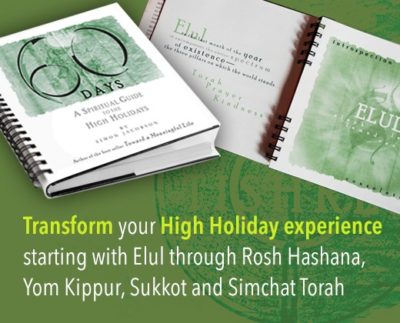
Do you know why we bless each other with a “good and sweet year?” Is it a cliché, or does this sweetness carry a deeper message?
* * *
The mystics write that as the sun sets before Rosh Hashana, the universe goes into a comatose state. A slumber descends on all existence, everything comes to a stand-still in cosmic silence, in apprehension of its contract being renewed.
As the sun sets before Rosh Hashana and existence hangs in the balance – it’s a good time to review the very nature of this existence that we are part of and whose parameters define our lives.
Is existence a form of revelation or a form of concealment?
This is not a mere abstract or esoteric question; it touches on the fundamental nature of our beings. Is the true essence of a human being – and of all existence – defined by what is visible to the eye and tangible to the five senses, or is the essence quite invisible, something that cannot be experienced in a revealed state?
In other words: Is what we see really a state of revelation, or is it the other way around: What we see is the glove, while the true hand remains hidden within?
The first verse of Genesis – arguably the most famous ever documented – answers the riddle:
“In the beginning when G-d created heaven and earth.”
The name for G-d used in this verse is “Elokim.” The classic commentator Rashi explains why the name “Havaya” is not used (as in a later verse, Genesis 2:4):
“Initially the Divine intention was to create existence with the element of justice, but He perceived that the world would not endure; so He preceded it with the element of compassion, blending it with the element of justice.”
What is the meaning of this explanation? Since the world could not endure on justice alone, why did G-d initially consider creating it that way; and only later did He decide to integrate the element of compassion? And what exactly is the meaning of justice and compassion?
Justice (Elokim) refers to the concealment of the Divine omnipresence which was a prerequisite for existence to come into being. As long as the Divine reality is all consuming, there is no room for any other consciousness to emerge. Explains the great mystic, Rabbi Isaac Luria (the Arizal), in his revolutionary Tzimtzum doctrine, that the Divine presence (light) was concealed in a type of cosmic “black hole,” which allowed for the emergence of the conscious, independent personality of existence as we know it. Like a teacher with an infinitely greater mind than his student conceals his brilliance in order to allow “space” for the student to contain the ideas on his limited terms.
This tzimtzum/concealment is a called justice (din and gevurah), which withholds, measures and limits the transmission. By contrast, compassion (Havaya) activates the flow of energy and light.
Now we can understand the meaning of Rashi’s words: The basis of all existence is rooted in the element of “justice”, which concentrates and conceals the Divine light. Without this concealment an independent existence can never come to be. Thus, genesis begins that the universe was created with the name Elokim. However, G-d recognized the far-reaching consequences of a universe whose engine is strict justice and concealment. He therefore infused into the Tzimtzum an element of compassion – ingrained in the concealment is the purpose that it must bring light. When the great teacher conceals the full intensity of his mind he does so not as an end in itself, but as a means to convey the idea to the student. In other words, the concealment (justice) itself is ultimately an expression of compassion, allowing the student to absorb the wisdom. So too, the concealment of the Divine energy (the tzimtzum), so necessary for existence to emerge, is not an end in itself but an act of compassion that will allow us – an autonomous entity – to unite with the Divine, step by step, on our terms.
Here we have the answer to our initial question as to the nature of existence: Existence as we perceive it is actually a state of concealment. The deeper you travel into the intimate recesses of the human spirit the less tangible is the sensation, the fewer are the words, the less defined is the experience.
In other words, the entire nature of existence is turned on its head, upside down and inside out: Our sensation of the revealed is actually a state of concealment, and that what is concealed is the true state of revelation. The visible is an artificial cover, and the invisible is true reality. This existence as we know it, as we perceive and experience it merely a shell, the surface layer that shrouds what lies behind the curtain.
And the journey – and purpose – of our lives is not to be distracted by the outer mechanics, not to be deluded into thinking that there is nothing more than the outer shell. The objective of life is to weaken the hold of the concealment (justice) and reveal the compassion and revelation within.
No person is immune to the forces of “justice” in this dark world. Our challenge is not to be overcome by the severer moments of life, and recognize the compassion even in the darker moments. Knowing that compassion is imbued into the very fabric of existence (or else the world could not have endured), becomes an eternal source of hope, giving us the strength to overcome any challenge.
This is one of the main themes of Rosh Hashana, when we celebrate the birthday of the universe and its crown-jewel, the human being:
One of the reasons for the Shofar blowing is to sweeten the severe judgments (hamtokot ha’gevurot), and transform them to forces of love and compassion. As the Midrash states:
“When G-d is ready to judge He sits on the chair of judgment. But when the shofar is sounded, He rises from the chair of judgment and sits down in the chair of compassion, and He transforms the judgment to compassion.” (Midrash Tehillim 47. Vayikra Rabba 29:3)
As we say in the Rosh Hashana Musaf prayer:
“Accept the shofar blast to change the Throne of Judgment for that of the Throne of Mercy.”
The Shofar – a ram’s horn – is also a reminder of the ram that replaced Isaac whom Abraham bound and was prepared to offer to G-d. Which is why the Torah reading of the second day of Rosh Hashana is Akeidat Yitzchak—the binding and offering of Isaac (from Genesis 22). As the Talmud explains:
“G-d said: ‘Sound before Me a shofar made of a ram’s horn that I may remember for your sake the offering of Isaac, the son of Abraham, and I will consider it as if you bound yourselves before Me.’” (Rosh Hashana 16a)
Indeed, according to the Midrash, the Akeidah actually took place on Rosh Hashana (Midrash, Pesikta Rabbasi, ch. 40. Zohar III 18a).
Much has been written about the controversial episode of Abraham being ready to offer Isaac (see G-d Said to Abraham Kill me A Son). One of the explanations lays in the dynamics of the “justice” and “compassion” within existence:
All the personalities in the Torah are quintessential archetypes of Divine virtues and human traits: Abraham represents the flow of love (chesed), and Isaac embodies the withholding energy of justice and discipline (gevurah). Abraham’s binding of Isaac was a Divine act in which Abraham transcended his own natural fatherly love to introduce an even deeper love by sweetening the severe judgments of Isaac; infusing the concealment with compassion. And in the merit of binding Isaac, the entire course of history was changed.
The Divine compassion is very often concealed – deeply concealed – in our harsh world. Even with the sweetening of the severities through “binding of Isaac,” human history is a tragic testimony of far too many cruelties… One can only shudder to think what life would have been like without the “sweetening” of gevurah that momentous Rosh Hashana morning over 3500 year ago on lonely Mt. Moriah.
Over 3500 years…
And ever since we have blown shofar on Rosh Hashana to sweeten the severities and be spared from judgment.
It’s awesome when you think about it: Despite all the traumas of history – the enslavements, the genocides, the massacres, the expulsions, the persecutions – despite it all, the Jews every Rosh Hashana, wherever they were, blew the Shofar, with absolute confidence that the ram’s horn, in merit of Abrahams’ ultimate sacrifice, would lighten and sweeten the severities.
And sweetened they were. Today, over 3500 years later, we live in a distinctly sweeter world.
Yet, there are still gevurot (severities) to be overcome. So we prepare to sound the Shofar once again (even on Shabbat, when we don’t actually blow Shofar, Shabbat accomplishes the same thing), knowing that as we do so G-d “rises from the chair of judgment and sits down in the chair of compassion, and He transforms the judgment to compassion.”
All this power lies in the modest, unassuming blessing: Have a good and sweet year!
The great Kabbalist, Reb Levik, explains: “Good” refers to revealed kindness (chesed), and “sweet” intimates the sweetening of the severities (gevurah).
On my own behalf and on behalf of all of us here at the Meaningful Life Center, I want to thank you for all your warm blessings and wishes for the New Year, as well as for your generous support and partnership in our work.
All those that bless shall be blessed says the Torah:
May you and your loved ones be blessed with a good and sweet year!
* * *
Question for the week: What do you think will be our greatest challenge in the year ahead, and what will be our greatest blessing?
Transform your High Holiday experience starting with Elul through Rosh Hashana, Yom Kippur, Sukkot and Simchat Torah with best-selling 60 Days: A Spiritual Guide to the High Holidays.
Save
Save
Tags: justice, creation, purpose of existence, Jewish history, judgment, concealment, purpose of life, compassion, Arizal, Rosh Hashana, tzimtzum, Divine light
Posted in Tishrei, Rosh Hashanah, Biblical, Months & Holidays, Abraham, Torah Personalities, Isaac, Torah | 22 Comments »
July 21st, 2006
Consider and reflect upon an astonishing thing: Everything happens in its time for the good. The [Torah] portions which we always read during the Three Weeks, Matos, Massei and Devorim, discuss the victory of Israel over the nations and the division of the [Promised] Land – the diametric opposite of the terrible events that happened during this time [the destruction of the Temple]. Sometimes we also read Pinchas during this period, which discusses all the holidays… related to the fact that in the future “these days will be transformed into joy and gladness and holidays” (Zechariah 8:19) – Shaloh Mesechta Taanit
As the Middle East enters a second week of war with Israeli troops expanding their operations in Southern Lebanon launching a ground assault against its sworn enemy Hezbollah – and our hearts and prayers go out to all innocent lives being lost – its hard to ignore the connection to this period in time when we remember the war destruction of Jerusalem two millennia ago by the Babylonians and then again by the Romans.
No one is disputing the fact that the Hezbollah attack against Israel – and indeed the entire existence of the Hezbollah – is founded on the principle of conquering Israel and is being fueled, funded and armed by Syria and Iran – the location of ancient Babylon, which at its height included the land that is now Syria and a large part of Iran (Persia).
Babylon of old attacked Israel. So did the empires of Assyria, Persia, Ptolemy, Rome, Byzantine, the Crusaders, the Arabs and Ottomans. And the same story is now being replayed in the same geographical area – is this a coincidence?
After 2428 years since the Babylonian destruction and 1938 years since the Roman destruction of the Holy Temple why is Jerusalem still burning?
And what can we do about it?
As we compare this most recent conflict with previous ones, striking parallels and differences stand out.
The most obvious parallel is the never-ending battle over this small piece of geography called Israel.
But what is far more striking – and disturbing – are some of the unique differences that distinguish the current battle from previous ones.
One of the most obvious issues today is the lack of strong leadership and clear moral direction. Yes, every normal person or country agrees that Israel has a right to defend itself from wanton attacks on its innocent citizens. But is that enough?
We still hear questions whether Israel is responding in “disproportionate” measure. For some reason, many people are questioning whether this is a justifiable war? Why? Would the same be said if, for instance, terrorists were launching unprovoked missiles from Algeria to France, or from Mexico to the United States?
Is it possible that Israel is being second-guessed because Israel itself is suffering from an identity crisis and lack of clarity? Yes, under attack all of Israel is united in the commitment to defend itself at all costs. But the haunting questions remains: The six million Jews living in Israel are surrounded by hundreds of millions of Arabs and Muslims most of whom (if not all) do not want Israel there. If they had their way, and there was no military deterrent, a large number of them would actually support the elimination of the Jewish State (G-d forbid) and even those that may not go to war against Israel would not be greatly disturbed if Israel ceased to be.
In such a hostile environment what good reason is there for Jews to live in Israel, surrounded by millions of enemies? If you moved to a neighborhood with high hopes for a comfortable life and then the neighborhood deteriorates, what would most people do? They would move to another neighborhood.
Is it possible that many are wondering the same about the Jews in Israel? Do Israelis themselves have this question? And if they do, what is the answer.
Another unprecedented factor in the current battle is the new type of war being fought. Previous wars involved defined nations, with defined borders and clear targets. A war against terrorists – whether it is in Baghdad, Lebanon, Gaza, London or New York City – poses a new set of challenges: Whom exactly are you fighting? Where is the enemy located? This type of war requires new terms of engagement.
Why is it that Israel’s victory in 1967 against four major countries, Egypt, Syria, Jordan and Iraq took only six days, and now their battle against one upstart terrorist organization is already over 9 days old and far from ending?
Some would argue, that a war against defined countries is far easier to fight than one against terrorists embedded in tunnels and caves within a country’s infrastructure, hiding behind civilian shields, with arsenals dug in beneath hospitals and schools. Other may contend that the six-day war was A Divine miracle.
Another factor may be that it is far easier to win a war when there is strong leadership, and an army passionately motivated by a defined vision and goal – as it was in the war of 1948 and 1967. Does that passion exist today?
Years of slow-bleeding battles and relentless terrorist attacks have worn down many people. The ultimate question is this: Why in the first place are Jews living in a hostile neighborhood?
And even if you have an answer, what is the game-plan? How will this all end?
Questions abound. Many questions indeed.
But we are never abandoned in our questions and doubts. The Jewish people have been here before. Throughout their long history of persecution, their ultimate solace and strength came from the Torah, called the Torah of life – a blueprint to face every challenge in life.
During the Three Weeks of destruction we read in the Torah chapters that address the issues swirling around Israel and Jerusalem under siege – as the Shaloh writes in the opening quote of this article:
The [Torah] portions which we always read during the Three Weeks, Matos, Massei and Devorim, discuss the victory of Israel over the nations and the division of the [Promised] Land – the diametric opposite of the terrible events that happened during this time [the destruction of the Temple].
Barely a consolation, yet the battle over Jerusalem is not new. And by looking at the past we can learn much for the present and future.
This Shabbat we also bless the month of Av. Av consists of two letters: Alef and bet – an acronym for the two nations that destroyed the two temples: Adom (the Roman Empire) and Babylon.
Our troubles in the Middle East did not begin today. They are an extension of unresolved forces unleashed millennia ago – events that set in motion a series of conflicts that plague us to this very day.
Edom (Rome) is the Western, Christian world – descendants of Esau. Babylon is the Eastern, Arab, Muslim world – descendants of Ishmael. All global confrontations are a result of the strange bedfellows created back in the home of Abraham.
So what does all of this have to do with current events? How do historical roots help us deal with our present challenges?
The three chapters we read during these Three Weeks contain some answers:
Pinchas – Healthy Passion
Pinchas is the only zealot ever condoned in the Torah. Pinchas took a stand against a public atrocity and killed the perpetrators, consequently saving thousands of lives. Pinchas is subsequently rewarded with the “covenant of peace.”
What does this teach us about modern day zealotry and its dangers? Haven’t we learned our lessons over history of the grave destruction perpetrated in the name of G-d by religious extremists?!
As discussed at length in a previous article, Pinchas was the ultimate model of a peaceful warrior: When confronted with cruelty some people shy away in fear, others become morally ambivalent and yet others become radical zealots, mercilessly killing innocent people in the name of (distorted) faith.
Comes Pinchas the man of peace and tells us that there is another option: No extremes, no bringing in your own personal prejudices and feelings of aggression or passivity, violence or comfort zones. Pinchas teaches us simple selflessness to protect and defend innocent lives. Zealousness – but in peace.
What we learn from Pinchas is the exact opposite of killing in the name of religious zealotry. Violence against other people, especially innocent ones, can never be tolerated – no matter what its cause. Any justification of violence, whether it is in the name of religion or in the name of fighting for a cause, is unequivocally deplorable and goes against the laws of G-d. Anger and murder resulting from religious feelings is perhaps the most dangerous of all, because the “holy war” helps mask the venting of personal aggression.
On the other hand, Pinchas teaches us, just because religion has been abused and used to perpetrate atrocities we shouldn’t fall to the other extreme of not fighting for any values. We must never lose sight of right and wrong, but at the same time we must learn from the past how to fight for it with selfless passion.
What is needed today is passion – but guided by humility. G-d – but guided by love and compassion. We need a zealot today. A true Pinchas that will rise and defy conventional thinking. Not a murderous zealot but a zealot of peace.
Today we are called to join forces in a zealousness and passion against all forms of extremism and violence, including those perpetrated in the name of religious zealotry. To counter the passion of misguided souls ready to blow themselves up, we need to zealously defend and promote the Divine principles of justice and peace – and all in the spirit of unity and love fueled by selflessness.
Matos-Massei – Fortitude in the journey
“Matos” (in Hebrew) are stiff, firm rods. “Massei” are journeys, referring to the forty-two journeys of the Israelites through the Sinai Wilderness on their way to the Promised Land.
Life is a journey – a series of journeys – toward the Promised Land. Indeed, the Baal Shem Tov explains that each of us goes through 42 journeys in our lives.
The journey toward the Promised Land (even when we may be living there) is a difficult one – as witnessed time and again throughout history. We therefore need the “Matos” in our “Massei” – an unwavering fortitude, based on deep faith that gives us the relentless power to forge ahead regardless of and despite the adversary.
Life can be difficult, very difficult. The only power to counter all our hardships and enemies comes from a profound, unwavering, connection to knowing the purpose of our lives and knowing without a shred of doubt that our fight is just; an absolute, unbending (“Mattos”) moral certainty in our calling, and the resulting absolute determination to see the journey through.
Where do we get this fortitude? From-
Devorim – Divine words
“These are the words which Moses spoke…”
The fifth book of the Torah documents the words that Moses spoke to the people in the last 37 days of his time on Earth:
“These are the words which Moses spoke to all Israel beyond the Jordan in the wilderness, in the Arabah over against Suph, between Paran, and Tophel, and Laban, and Hazeroth, and Dizahab.”
Moses was the ultimate leader. Knowing that he has a short time to live, and recognizing the difficult challenges laying ahead, Moses – as a true leader – delivers his final words in order to imbue the people – then and in all generations to come – with the strength and confidence to forge ahead and tackle every possible issue. Moses examines the events that occurred over the last 40 years since they left Egypt, he discusses the relationship the Jews had established with G-d, G-d’s instructions to them, and he encourages them to carry on these teachings for the generations to come.
More specifically, Moses reviews the difficult journey of the Jewish people toward the Promised Land and reaffirms the reason for their journey – to forge an invincible bond with G-d that will empower the people to transform the material universe into a Divine home. Moses offers the Jewish nation strong words of encouragement and direction that by holding on to their connection to the Divine they will be able to face any challenge, no matter how difficult.
Moses’ words live on forever. Especially in time of war and challenge we need the powerful, unwavering words of Moses to infuse us with hope, courage and direction.
Above all, Moses’ words state the ultimate – and only – justification for the Jewish presence in Israel today:
“Behold, I have set the land before you: go in and possess the land which G-d swore to your fathers, to Abraham, to Isaac, and to Jacob, to give to them and to their seed after them” (Deuteronomy 1:8).
“Israel, listen to the laws and rules that I am teaching you to do, so that you will remain alive and come to occupy the land that G-d is giving you (4:1). Safeguard and keep them since this is your wisdom and understanding in the eyes of the nations (4:6). Only take heed and watch yourself very carefully, so that you do not forget the things that your eyes saw. Do not let [this memory] leave your hearts, all the days of your lives. Teach your children and children’s children” (4:9).
And the end game?
“G-d will then bring back your remnants and have mercy on you. G-d will once again gather you from among all the nations where He scattered you… [and] bring you to the land that your ancestors occupied. G-d will be good to you and make you flourish even more than your ancestors” (30:3-5).
Meanwhile – Moses concludes – “be strong and brave” (31:6).
It’s amazing that after all these years the secret to redemption eludes us but still remains in our hands: “Zion will be redeemed with Law and its captives with righteousness” (Isaiah 1:27. Haftorah of Shabbat Chazon).
Torah study and charitable righteous deeds will redeem Zion and its hostages.
How much longer will Jerusalem burn? That’s up to us.
* * *
Question for the week: How far should Israel go in its war against Hezbollah, and what should be the “end-game”?
Tags: morality, words, Babylon, war, history, peace, Jerusalem, clarity, Divine, Moses, Jewish nation, faith, Temple, pain, passion, love, battle, Israel, humility, miracle, justice, Torah, journey, leadership, selflessness, Patriarchs
Posted in Weekly Parsha, Biblical, Tisha B'Av, Months & Holidays, Israel, Beliefs & Concepts, Torah Personalities, Personal Life, Bamidbar, Social, Exile, Torah, Matot, Massei, Av, Moses, Current Events | 36 Comments »
July 14th, 2006
After a rather lengthy sleep we have suddenly been jolted back to reality with the latest conflagration in the Middle East.
Is anyone shocked?
We children of the West, born in freedom, have been spoiled by the façade of our many distractions that have allowed us the luxury of denial of the stark battles of good and evil, creating an illusion of false security.
The reverie of a peaceful siesta is far more comfortable, but one need not be very intelligent to recognize that the Middle East is a combustion chamber, a fermenting hotbed of noxious toxins always ready to explode.
September 11 and other attacks remind us sporadically from time to time that there are powerful brewing forces that must be reckoned with before we enter an age of true peace, but it is so easy to sink back into our comfortable cushions. Such is the nature of the beast of denial.
Just a bit of history can surely wake you up:
Hezbollah, which means the Party of G-d, views the conflict with Israel as “an existential struggle” as opposed to “conflict over land” (as Lebanese scholar Amal Saad-Ghorayeb underscores in her book, Hizbu’llah: Politics and Ideology). In the words of Sheikh Naim Qasim, Hezbollah’s deputy secretary-general, “Even if hundreds of years pass by, Israel’s existence will continue to be an illegal existence.”
Although Hezbollah has denounced attacks on Western civilians, they make an exception in the case of Israel. As Sayyed Hassan Nasrallah, head of Hezbollah puts it,
“in occupied Palestine there is no difference between a soldier and a civilian, for they are all invaders, occupiers and usurpers of the land.”
After Israel’s withdrawal from Lebanon in 2000, some analysts predicted—and many Lebanese hoped—that Hezbollah would soon wind down its military operations and become a purely political party. But Nasrallah has greater ambitions than to win more seats in Lebanon’s parliament, and he has had the firm backing of Iran and Syria. At once a determined radical and an astute pragmatist, he views Hezbollah both as a Lebanese party committed to assuring the welfare of its constituents and as a vanguard in the pan-Islamic struggle to destroy Israel and restore Palestine to its native inhabitants.
By no means did this restrict Hezbollah’s action to Israel alone. In the early 1990s, Hezbollah members were connected to two notorious attacks in Buenos Aires: the 1992 bombing of the Israeli embassy, which killed twenty-nine people, ostensibly in retaliation for Israel’s assassination of Sheikh Musawi; and the 1994 bombing of a Jewish community center, which killed eighty-five civilians.
Tragically, it doesn’t end there. In March 2004, after the Israeli assassination of Sheikh Ahmed Yassin, the spiritual leader of Hamas, Nasrallah said to Hamas: “We are under your command. Your blood is our blood; our fight is one.” Hezbollah demonstrated its solidarity with the Palestinian group by firing more than sixty-five rockets at six different Israeli military positions in the Shebaa Farms in southern Lebanon.
You may recall that Hamas, now controlling the activities in Gaza and the West Bank, initiated the current crisis by kidnapping an Israeli soldier. Hamas clearly views the Arab-Israeli conflict as a religious struggle between Islam and Judaism that can only be resolved by the destruction of the State of Israel, and thus opposes any Arab-Israeli peace talks.
If you’re still asleep, here are a few quotes from the Hamas covenant (or charter):
Preface: “Israel will exist and will continue to exist until Islam will obliterate it, just as it obliterated others before it.” (A quote by Imam Hassan al Banna)
Article 6: “The Islamic Resistance Movement is a distinguished Palestinian movement, whose allegiance is to Allah, and whose way of life is Islam. It strives to raise the banner of Allah over every inch of Palestine, for under the wing of Islam followers of all religions can coexist in security and safety where their lives, possessions and rights are concerned…”
Article 7:”The Islamic Resistance Movement aspires to the realisation of Allah’s promise, no matter how long that should take. The Prophet, Allah bless him and grant him salvation, has said: “The Day of Judgement will not come about until Muslims fight the Jews, when the Jew will hide behind stones and trees. The stones and trees will say O Muslims, O Abdulla, there is a Jew behind me, come and kill him. Only the Gharqad tree would not do that because it is one of the trees of the Jews.”
Article 11: “The Islamic Resistance Movement believes that the land of Palestine is an Islamic Waqf consecrated for future Muslim generations until Judgement Day. It, or any part of it, should not be squandered: it, or any part of it, should not be given up.”
Article 13: “There is no solution for the Palestinian question except through Jihad. Initiatives, proposals and international conferences are all a waste of time and vain endeavors. The Palestinian people know better than to consent to having their future, rights and fate toyed with.”
Article 28: “The Zionist invasion is a vicious invasion … It relies greatly in its infiltration and espionage operations on the secret organizations it gave rise to, such as the Freemasons, The Rotary and Lions clubs, and other sabotage groups. All these organizations, whether secret or open, work in the interest of Zionism and according to its instructions… When the Jews conquered the Holy City in 1967, they stood on the threshold of the Aqsa Mosque and proclaimed that “Mohammed is dead, and his descendants are all women.” Israel, Judaism and Jews challenge Islam and the Moslem people. “May the cowards never sleep.”
Article 32: “After Palestine, the Zionists aspire to expand from the Nile to the Euphrates. When they will have digested the region they overtook, they will aspire to further expansion, and so on. Their plan is embodied in The Protocols of the Elders of Zion, and their present conduct is the best proof of what we are saying.”
What to be done?
As in all serious confrontations one needs a short-term plan and a long-term one. Obviously, first and foremost everything possible must be done in the short term to protect innocent lives and never allow anyone – terrorists or sovereign states – to violate the security of a peace-loving nation. A show of strength is often necessary to serve as a deterrent.
We all would wish that this short-term approach would be enough. But the fact remains that even when these immediate fires are quelled (hopefully sooner than later), the region is festering with centuries of old toxins, driven by religious passions and often fanatical faith (misguided or not), and the resulting hostility to Israel will not just go away. It is built on a philosophy and unwavering belief system of millions.
Thus, one thing is for sure: Until we don’t come to honest terms with the brutal truth about the true nature of the conflict – religious and spiritual as opposed to political – we will not know how to fight this war and we will never win it. Fires may be suppressed, but the underlying forces will not be tamed.
It is no surprise therefore that the current outbreak began on the 17th of Tammuz, the day when the Jerusalem walls were breached, leading three weeks later, on the 9th of Av, to the destruction of both Holy Temples in Jerusalem, the first Temple 2428 years ago, the second one 1938 years ago.
This saddest time in the year, called ‘The Three Weeks’ (Tammuz 17-Av 9), is a national period of mourning for the holiness that was lost with the destruction. The Western Wall in Jerusalem – which symbolizes, more than any other object, the Jewish presence in Israel today – is the only remaining remnant of the wall surrounding the Temple.
During the Three Weeks we traditionally increase our Torah study, prayer and charity. Above all, we intensify our love and kindness to each other – counterbalancing the baseless hatred that was the ultimate cause for the Temple’s destruction.
What exactly are we mourning over for close to two millennia? Why do we pray for the Temple’s restoration? And what connection is there between human hatred and a Holy building’s destruction?!
The answer is that the Temple wasn’t a mere structure of bricks and mortar. It was a window – a literal gate – between heaven and earth. “Build Me a Sanctuary,” G-d says, “and I will rest among you.” The Temple’s destruction marked the closing of the window between spirit and matter, between the Divine purpose of existence and existence itself. Think of it as a traveler losing sight of his destination, an entity losing touch of its mission – a world losing direction.
The first symptom of a dichotomy between matter and spirit – the misalignment of existence and purpose – is expressed in personal disunity. When an individual loses touch with his own raison d’etre, his fragmented self has to cause anxiety and ultimate insecurity and erosion of self-respect. In its extreme it escalates into a self-loathing (the purposeful soul loathing the aimless life). This inevitably spills over into our relationships with others: When you hate another it is a projection – or deflection – of hating yourself. A secure person can co-exist with anyone. Even if he may disagree with or be attacked by another, the secure person distinguishes between the actions of the enemy and his person.
From the personal, divisiveness carries over to the collective: To the splits between communities, religions and nations.
Once divisiveness infected the people, the Holy Temple – which bridged spirit and matter – could simply no longer stand. There was no room for it in a fractured world. It no longer was appreciated and no longer served its purpose…
Just as divisiveness destroys the Temple, unity rebuilds it. And mind you, unity here means on a universal scale. Indeed, the Midrash tells us that had the nations of the world known how the Temple protected them, they would have built legions around it shielding it from any harm!
How uncanny and ironic is it that the current battles in the Middle East – over Israel and Jerusalem at its heart – began and continue in the Three Weeks?!
It only underscores the true nature of the war.
As mentioned, everything must be done in the immediate to protect the innocent. But in the long term big picture, we must remember that this – as in past battles in Israel, all the way back to the Babylonian and Roman destruction of the Temples – is ultimately a spiritual and religious battle, reflecting the battle of all life.
The true battle of life is not for land, honor or wealth. It is for the dominance of spirit over matter. Our greatest challenge is not political but spiritual. It is about finding purpose and direction.
And that is why we grieve over the Temple’s destruction and pray for its restoration: We are yearning, aspiring and doing everything in our power to reconnect with the direction, mission and destination of our lives – something we lost close to two millennia ago.
And we thus intensify our efforts in reconnecting with out inner purpose, through our increased study, prayer and charity, thereby creating internal harmony. Above all – we do all we can to battle divisiveness and foster love between each other.
As long as we do not understand the current confrontation – some call it a “clash of civilizations” – we will continue to be its victim, and putting out fires in a never-ending, slowly bleeding vicious cycle.
The ultimate victor will be not the one with the most powerful weapons. It will be the one with the most powerful spiritual vision.
What exactly this battle entails has been discussed at length in this column.
So while all peace-loving people grieve over the tragic loss of any life, and pray for the end of all hostilities – we must always remember that even while we are forced to deal with the short-term challenges, there looms a much larger picture.
The universe is at war and has always been at war – the raging battle between materialism and spirituality, between personal gain and higher purpose, between matter and spirit. Center stage of this war – now and throughout history – has always been Israel.
So ladies and gentlemen: Time to wake up. “Everybody up, up, up, up” was the annoying sound of the reveille call we would hear each morning in summer camp, abruptly disturbing our peaceful sleep. Annoying indeed.
Perhaps this is the power of the promise “hineh lo yonum v’lo yishan shomer Yisroel,” “Behold, the protector of Israel does not slumber nor sleep” – even when we may.
* * *
Question for the week: What should be done about the never-ending Arab-Israeli conflict?
Tags: Israel, peace, reality, Pinchas, history, politics, spiritual, terrorism, Divine, material, insecurity, Temple, good and evil, purpose, soul, mission, pain, Middle East, unity, war
Posted in Weekly Parsha, Israel, Bamidbar, Social, Torah, Pinchas, Current Events | 22 Comments »
July 8th, 2006
One of the gratifying and beautiful benefits of our work is the feedback we receive from you, our readers. As fascinating as they are diverse your comments, critique, questions, arguments and counterarguments reflect the rich multi-dimensional tapestry of our human race.
Powerful insights emerge from the opinions of large, diverse groups of people. “The wisdom of crowds” is how it has been coined today in a book by the same name (authored by New Yorker columnist James Surowiecki), exploring the idea that large groups of people are smarter than an elite few, no matter how brilliant; they are better at solving problems, fostering innovation, coming to wise decisions, even predicting the future.
The aggregative synergy of independent, decentralized opinions has the ability to reveal deeper truths about many issues. Even at its least optimal, the opinions of the masses on the ground definitely expose the state of the human condition, better than any analyst could ever predict from a pedestal (or ivory tower). Analysts, therapists and even marketers and advertisers – and for that matter, educators, clergies and leaders – would do well listening closely to the voice of the people.
Students of human nature are actually students of G-d. There are ways to know the Divine through revelation and holy books. But there is a profound and intimate Divine wisdom that comes from studying our own “flesh” (“from my flesh I behold G-d”) and the natural universe (“how great” and “how many” are Your works).
In this spirit, we are launching a new feature: The Meaningful Question of the Week. Its objective: To pose a timely question – addressing a relevant issue – in order to elicit your responses and comments and those of anyone you pass this question on to. The questions will be culled either from your correspondence with us or from current news and other sources.
Our goal is to create a platform of dialogue for the widest possible audience, to address the most important challenges facing us today.
We therefore invite both your responses as well as suggested questions for future postings. We also encourage you to welcome your friends, associates and anyone you see fit into this ever-widening loop. The more people responding – the greater the synergy and wisdom of the crowds.
WEALTH
As a follow-up to the many responses we received to last week’s article on Givers and Takers, addressing Warren Buffett’s unprecedented charitable commitment, the question for this week is this:
“What does wealth do to families?”
Here are some opinions out there.
The great philanthropist Andrew Carnegie felt that wealth should not be passed on to families. In his 1889 essay “Wealth” (later named “The Gospel of Wealth”) Carnegie wrote:
“The most injudicious” method of disposing of wealth is leaving it to the families of the descendents. “In monarchical countries, the estates and the greatest portion of the wealth are left to the first son, that the vanity of the parent may be gratified by the thought that his name and title are to descend unimpaired to succeeding generations. The condition of this class in Europe today teaches the failure of such hopes or ambitions. The successors have become impoverished through their follies, or from the fall in the value of land. Even in Great Britain the strict law of entail has been found inadequate to maintain an hereditary class. Its soil is rapidly passing into the hands of the stranger. Under republican institutions the division of property among the children is much fairer; but the question which forces itself upon thoughtful men in all lands is, Why should men leave great fortunes to their children. If this is done from affection, is it not misguided affection. Observation teaches that, generally speaking, it is not well for the children that they should be so burdened. Neither is it well for the State. Beyond providing for the wife and daughters moderate sources of income, and very moderate allowances indeed, if any, for the sons, men may well hesitate; for it is no longer questionable that great sums bequeathed often work more for the injury than for the good of the recipients. Wise men will soon conclude that, for the best interests of the members of their families, and of the State, such bequests are an improper use of their means.
“It is not suggested that men who have failed to educate their sons to earn a livelihood shall cast them adrift in poverty. If any man has seen fit to rear his sons with a view to their living idle lives, or, what is highly commendable, has instilled in them the sentiment that they are in a position to labor for public ends without reference to pecuniary considerations, then, of course, the duty of the parent is to see that such are provided for in moderation. There are instances of millionaires’ sons unspoiled by wealth, who, being rich, still perform great services to the community. Such are the very salt of the earth, as valuable as, unfortunately, they are rare. It is not the exception however, but the rule, that men must regard; and, looking at the usual result of enormous sums conferred upon legatees, the thoughtful man must shortly say, “I would as soon leave to my son a curse as the almighty dollar,” and admit to himself that it is not the welfare of the children, but family pride, which inspires these legacies.”
In our own time, Warren Buffett, who just declared the largest charitable pledge ever made, argues that estate taxes should be increased, not eliminated. Mr. Buffett says the estate tax helps build a vibrant economy of innovators and strivers — a true meritocracy — and that repealing it would risk a stunted economy controlled by aristocratic inheritors. Repealing the estate tax, he has said, would be the economic equivalent of “choosing the 2020 Olympic team by picking the eldest sons of the gold-medal winners in the 2000 Olympics.”
Bill Gates, a founder of Microsoft and close friend of Mr. Buffett, has not taken a public position on the estate tax, but his father leads the movement to keep it. Few ultrarich families agree, and 18 have spent $500 million since 1994 lobbying for estate tax repeal, according to disclosure records examined by Public Citizen and United for a Fair Economy, which want to keep the tax.
Almost alone among rich Americans, Mr. Buffett and Mr. Gates position echoes Carnegies’ philosophy in the abovementioned essay.
What is the Torah opinion?
The Torah specifically states that children inherit the wealth of parents. What would the Torah answer to Carnegie’s arguments, and the facts on the ground, that inherited wealth in most cases does not serve the children well? Clearly, the Torah is speaking about healthy situations in which the bearers of wealth understand that their blessing carries responsibility; they know that it is meant to be shared and they fulfill their charitable obligations of distributing 10% or 20% of their wealth to tzedakah.
But the question is what would the Torah say about wealth that is being hoarded, squandered and/or corrupting and tearing apart families? What about children who do not understand the great responsibility that comes with wealth, and instead become spoiled by their gift?
What do you think?
Tags: responsibility, diversity, wealth, nature, G-d, Divine, chochma, questions, charity, blessing, corruption
Posted in Weekly Parsha, Personal Life, Bamidbar, Home & Family, Chukat, Torah, Business, Work & Money, Balak | 17 Comments »
July 1st, 2006
History in the Making
— The Post Buffett and Gates Era: A New Paradigm —
A major historical event happened this week, and though it made headlines, its significance was not duly appreciated. I submit that when the annals of history are written, this event will go down as a major milestone, marking a shift in human consciousness and leaving an impact that will reshape future attitudes.
The event is Warren Buffet’s breathtaking announcement that he would donate 85 per cent of his wealth to charity, an amount worth about $37 billion – the largest charitable commitment in history.
Let’s put this generosity in historical context.
Throughout the ages accumulated wealth was simply not given away to charity. Quite the contrary: It was always used to gain and consolidate power and influence.
In days of old and not so old huge sums of money – let alone the value of today’s 37 billion dollars, more than the GNP of over half the countries of the world today – would be used to build monarchies, wage wars, conquer lands and construct monuments of glory.
How money was used may have something to do with the way it was accumulated, largely from non-commercial sources: usually through war, pillaging, ransoms, slavery, taxation, blood-money and bride-money – forces of dominance and control.
Indeed, the history of wealth is directly linked with the history of war and violence, and even the history of religion. Finance lies at the heart of the rise and fall of the great empires and their conquests and defeats – Alexander the Great, the Roman Empire, the Viking assault on England, the Norman Conquest, the Crusades, the Hundred Years War between England and France, the Spanish conquest of Mexico and Peru, the aftermath in Britain of the Napoleonic Wars, the U.S. Civil War, and the financing of the two World Wars. For example: The need to transfer large sums of money to finance the Crusades (1095-1270) provided a stimulus to the re-emergence of banking in Western Europe.
Warfare, with its appalling humanitarian consequences and vast economic costs, has stimulated financial innovations from the spread of coinage to the creation of the national debt. Conversely, economic weakness and the inability to properly utilize financial resources have been causes of military defeats.
Obviously, when wealth is gained through aggressive or criminal activity it will be used to perpetuate corruption, and not serve as a force for good.
James Madison put it this way:
“History records that the money changers have used every form of abuse, intrigue, deceit, and violent means possible to maintain their control over governments by controlling money and its issuance.”
And when wealth is driven by myopic, short term gain it inevitably wanes. Today it is controlled by the prevailing dominant individual or group, and tomorrow by the next vanquisher. It never lasts.
Where, for instance, is the great wealth of the Roman Empire today? Who inherited the vast holdings of the British Empire? And what about Mali, the Ottoman dynasty or the Incas – each the wealthiest empire in its time; today barely remembered?
Every conqueror coming to power – whether it was a monarch or the church – confiscated the treasures of the conquered. Constantine adopted Christianity and following his conversion, he confiscates the enormous treasures amassed over the centuries in the pagan temples throughout the empire.
Indeed, the very root of the word “money” (and “mint”) is derived from the ancient false Roman goddess Moneta, “the goddess who warns,” named after the cackling geese (no joke) of Juno that warned the Romans when the Gauls tried to take the Capitolium in 390 BCE [quite consistent with the Rebbe Yosef Yitzchak’s idiom: Gelt (money in Yiddish) is the gematria of bloteh (mud)].
Some even make a case for a conspiracy amongst the global aristocracy of wealth, arguing that the top Western industrialists and institutions were behind the rise of Communism and Fascism around the world. As W. Cleon Skousen writes in The Naked Capitalist, his review of Dr. Carroll Quigley’s Tragedy and Hope:
“Power from any source tends to create an appetite for additional power… It was almost inevitable that the super-rich would one day aspire to control not only their own wealth, but the wealth of the whole world.”
“As I see it,” Skousen writes, “the great contribution which Dr. Carroll Quigley unintentionally made…was to help the ordinary American people realize the utter contempt which the network leaders have for ordinary people. Human beings are treated en masse as helpless puppets on an international chess board where giants of economic and political power subject them to wars, revolution, civil strife, confiscation, subversion, indoctrination, manipulation and outright deception as it suits their fancy and their concocted schemes for world domination.”
Whether you agree with this argument or not, no one can doubt the history of wealth as a force of control. Money was always synonymous with power, greed and all its corrupt consequences.
Now comes Mr. Buffett and with his unprecedented commitment turns the historical use of wealth on its head.
As long as Bill Gates was the only one to bequeath his fortune to charity the argument could be made that his generosity was an anomaly. But now that the second wealthiest man in the world has joined the wealthiest one in giving away most of his fortune to charity, it is hard to dismiss and should cause us all to raise more than our eyebrows. In contrast to the way wealth was always used for personal gain, Mr. Buffet’s and Mr. Gates’ initiative should capture our attention to realize that something special is underway.
The accumulative amount of both their charitable commitments is simply staggering. Let alone that Mr. Buffet did not link his gift to perpetuating his name (as in a Buffet University or Buffet Foundation)!
Andrew Carnegie fulfilled this ethos of generosity to its fullest extreme. In his 1889 essay “Wealth” (later named “Gospel of Wealth”) – which reportedly had a strong influence on Mr. Gates and Mr. Buffett – presents a powerful argument that “the duty of the man of wealth” is to serve as a “trustee” for the larger community. The wealthy should not give their wealth to their children but to administer it for the benefit and common good of the public, and thereby create the “ideal State, in which the surplus wealth of the few will become, in the best sense, the property of the many”. Carnegie believed, as he wrote in another article in 1908 that “wealth is not chiefly the product of the individual…but largely the joint product of the community.”
The American model in general, and Carnegie’s philosophy and the present Buffett/Gates move in particular is a major event not just in the history of philanthropy (no one has ever bequeathed a larger charitable gift) but in the history of mankind in general. It is nothing less than Messianic: It is essentially a shift from being a taker to becoming a giver.
The difference between these two models of wealth – the historical model of greedy wealth to gain personal power or the model that is now beginning to take hold (let’s call it the post-Gates/Buffett era) of wealth as an opportunity to give – is not merely a difference in approach; it reflects a fundamental different attitude to life.
Are we human beings essentially takers or givers? Is life about you, or about you serving a greater cause?
A few days ago I was speaking with a community leader from a prominent city in New England, a man who has accomplished much in his life of public service. As we were speaking a mutual friend walked by, a businessman who has accumulated a fortune of approximately 90 million dollars. His sheepish look, and forced voice of interest reflected his discomfort. I sensed an underlying resentment. You see people who are takers are very uncomfortable with givers. It exposes their own self-centered lives, and lack of courage to serve. They often enjoy being cynical and criticizing public servants, so that they can be more comfortable in their own skin and not be exposed.
The secret to true happiness is this: The more you give the happier you will be. The more you take the unhappier you will be.
Guaranteed. Test it out and let me know if I’m wrong.
The reason for this is because we are inherently wired to be givers – like G-d in Whose Image we are created – and not takers. Yes, we take in our early formative years, as we are provided for by our parents. But that is only a training period, preparing and shaping us to become true givers. Like a student who must first absorb the wisdom of his teachers before he becomes a teacher himself (and even as you become a teacher and giver yourself, you always remain a student).
Happiness lays in the domain of givers not takers.
We take because we are insecure. Hoarding, collecting, gathering gives us a sense of security – a false sense, but it still feels like you “own” something. In truth we own nothing except our own choices. The great philanthropist Moses Montefiore once told English Queen Victoria:
“The only wealth that I truly own is that which I have given away to good causes. Everything else – all my holdings – are simply under my control for the moment, but they can be lost in the next moment due to a bad decision, war, an accident or other cause which I cannot control. However the good institutions that my money has built are forever; they can never be taken or lost.”
As the train robber declares before he jumps off the train with all the passengers’ belongings in his bag: “Ladies and Gentlemen, please remember, it’s always better to give than to take”… Napoleon Bonaparte in 1815 put it this way (in arguing that government should not be dependent upon bankers for money): “The hand that gives is above the hand that takes.”
It takes a lot more strength and courage to give than to take.
However, in our insecure world, most people have become (unnatural) takers, living in the illusion that hoarding will bring security. We live in a world of “competition” – people competing with each other for status, power and influence. And in this anxious climate, coupled with the psychological insecurities that many of us have assumed due to absentee (or worse) parents that did not cultivate our self-confidence, we seek out panaceas that will give us a tangible sense of control. Money is perhaps the strongest soothing drug of them all.
Not to suggest that money is a curse. It is actually a great blessing, but only when you don’t use wealth as a compensator for your own insecurity, and know that it is a blessing given to you so that you can use it to give to others.
And now we have the major philanthropic stride taken by Mr. Buffett, underscoring the one previously made by Mr. Gates.
[And it comes in an appropriate week: The Korach episode in this week’s Torah portion teaches us about the power of wealth – for good and for bad. Korach was undone by his wealth. And we learn from his behavior about the risks of self-absorbed materialistic abuse, and its subsequent effect of consuming the very perpetrators; yet, at the same time, this is due to man’s weakness, not the fault of the wealth per se, which has the power to lift man to great heights, as discussed at length in another article].
In a world where most people ask: “What more can I take?” there are the precious few who have taken the road less traveled and ask: “What more can I give?”
Perhaps – hopefully – this will begin a trend of giving, turning takers into givers, ushering in a new era of economics: The Economics of Giving.
Maimonides writes that the Messianic age does not necessitate miraculous or cataclysmic external change. The primary change will be from within; a radical shift of consciousness. Instead of seeing materialism as an end in itself, we will see it as a means to “knowing G-d.” This consciousness will affect our economic view. As Maimonides puts it: “Material delights will be found as dust,” which also means that the abundance of material wealth will render it valueless as dust and useless as an end unto itself. This in turn will naturally eliminate envy and competition, hunger, poverty and strife. “The business of this entire world will be to know G-d.”
Today we stand at the threshold of a new economic paradigm. The final frontier of the history of money and wealth: To see the acquisition of wealth as a means for giving and fuel for spiritual growth. Wealth, in short, will finally realize its true value: soul energy, elevating and transforming all of existence.
The wealthiest men in the world today force us all to ask the question about the nature of our own wealth and its acquisition. And how it will be used: For temporary power, to be stashed away gathering dust in some Swiss account, eventually squandered, sometimes a generation or two later, often destroying families in the process, or will the wealth be used for eternal benefit, to build and improve the world.
The first reactions look promising. Just today the media is reporting that Hong Kong action movie star Jackie Chan is looking to bequeath half his fortune to charity, following in the footsteps of Mr. Buffet and Mr. Gates.
Alan Greenspan, former Chairman of the Federal Reserve, once said:
“The history of money is the history of civilization or, more exactly, of some important civilizing values. Its form at any particular period of history reflects the degree of confidence, or the degree of trust, that market participants have in the institutions that govern every market system, whether centrally planned or free.”
I would add that money is the history of civilization because it reflects the inherent conflict of life: Will we be takers or givers?
This is the choice each of us has: Are you more excited when you make money or when you give it away to a good cause?
Tags: corruption, wealth, happiness, Korach, attitude, community, Toward a Meaningful Life, consciousness, life, G-d, choice, growth, blessing, insecurity, behavior, immortality, Messiah, abuse, change, charity, war
Posted in Weekly Parsha, Personal Life, Bamidbar, Social, Korach, Torah, Business, Work & Money, Government | 11 Comments »
June 24th, 2006
With a Samach-Vav Twist
— Samach-Vav Part 16 —
Wednesday June 21, 8:30AM – Riding the Number 4 train to Borough Hall, to fulfill my jury duty.
Hundreds of people are filing into the NY State Supreme Courthouse on Adams St. to do their part in “upholding the justice system,” as we are reminded by the indoctrination video welcoming us as we enter the vast hall called Room 216, where I and my compatriots will spend the day.
I come well prepared. With my Samach-Vav [the series of discourses delivered by the Rebbe Rashab a century ago] in hand and other papers to review, I have my day planned. I will study this week’s discourse in Samach-Vav, make a few telephone calls and twiddle my thumbs in between.
My first hurdle was to smuggle my cell phone into the courtroom. The jury instructions clearly stated that “cell phone cameras will be confiscated for the day.” But how can I – and so many of my vulnerable colleagues – survive a day without a cell phone?! What are they thinking?! Do they understand the consequences of cell-phone deprivation? (And why don’t they allow taking photos in courtrooms anyway?)
It didn’t end up being that difficult. I wasn’t the only one with the dilemma. Everyone — and I mean everyone — arriving had a cell phone with them, and we were all allowed in unscathed.
The day is filled with many humorous moments, but perhaps the funniest is when the clerk announces: “Anyone that does not have basic knowledge of English, please line up to my right.” I thought to myself: “How is someone who doesn’t have a basic understanding of English supposed to understand that announcement…” But before I finish my thought the same announcement is made in Spanish, Chinese and Russian.
And here is the funny part: Immediately following the announcement (in English) around a quarter of the crowd arises and begins making their way to the line on the right. Until the clerk continues: “If you’ve lived in the United States for over 20 years the likelihood is that you have a basic knowledge of English.” Some of the people sit back down.
I guess “basic knowledge of English” can means many things; and the desperation of jury duty has a way of making people feel that “basic” is professor level English. Any thing to get outta this place.
The clerk continues: “Not having a basic knowledge of English does not mean that you can go home. It simply means that you will be interviewed.” More people return to their seats.
Clearly, jury duty is meant to keep as many people hostage for at least a full day. But then again, who will sit on juries if we are all allowed loopholes of escape? Doesn’t that sound sweet…
I turn around on my bench to watch the large crowd. People of all backgrounds, colors and creeds fill the room. A true cross section of NY has gathered here today, as they do every day, in room 261, awaiting instructions and their name to be called.
Time to travel elsewhere. I pull out my Samach-Vav.
What sustains negative and evil forces in life? Since they don’t have any power of their own, what keeps them going? Explains the Rebbe Rashab, they are sustained by a force that is called “makif” in mystical language. “Makif” (lit. surrounding) is a transcendent, hovering form of energy that is somewhat removed from the internal details and therefore can tolerate and give off energy even to the “other side.” When you are detached you often allow room for harmful forces.
For this reason, even good deeds need strong protection in this world. Since every good deed we do manifests in the material world, which is a hybrid combination of good and bad, selfish and selfless, there is always a potential that good actions will “feed” negative forces in the process.
Good people with good intentions need protection in a hostile universe. The protection comes from a force that is above and beyond us, an even higher level of makif, called the “distant makif,” a place that is beyond any form of negative influence, which cuts off the flow of energy (from the lower makif) to any unacceptable place. We access this higher makif through the negative mitzvoth (and through Torah). As discussed in a previous segment, the positive mitzvah generates a defined form of Divine energy, one that can be contained in the particular act of each respective good deed. The negative mitzvah manifests the Essence – the Divine energy than is beyond any form of expression, expressed only in the sheer effort of withstanding temptation to do something wrong. By avoiding destructive behavior we fortify our lives, building defenses and drawing down the Essential energy that surrounds us in its embrace and shields us from all harm.
Someone taps me on my shoulder. “We need your form.” Startled, I lift my eyes from Samach-Vav and remember that I am sitting in courtroom waiting to serve on a jury. Will I be arrested for learning Samach-Vav?
I give them my filled out form, and go right back to my thoughts.
This week’s Torah chapter and the following one discuss two opposite philosophies in dealing with the challenge of materialism.
Escapism and immersion.
The scouts, in this week’s chapter, are charged by Moses to check out the land of Israel in preparation of its conquest. The scouts return with a terrible report: “We cannot go forward against those people [living in Israel]. They are too strong for us.”
Hmm, the scouts were good people with good intentions, but they lacked the necessary protection. The scouts, the best men of their time, wanted to live spiritual lives, and felt that the optimal protection from the strangling tentacles of materialism is to avoid engagement at all cost. To remain in the insulated wilderness. The land is too powerful, they argued, a “land that consumes its inhabitants.”
And in their insistence to protect themselves from the material they ended up destroying their true protection. Because after all is said and done, what protects us in this world is not our own logical machinations, but a deep faith in the Divine, and the power that the Divine endows us to face all the challenges of life. [Joshua and Caleb, by contrast, did have extra protection: Moses prayed for Joshua’s wellbeing, and Caleb prayed at the gravesite of the patriarchs and matriarchs at the Machpela cave in Chevron].
You can run but you can’t hide. The scouts wanted to run – to escape behind the clouds of glory, the bread from heaven and the miracle water – to avoid the material land that “consumes its inhabitants.” All good and fine, but it is G-d that created the material land, and it is G-d who commanded the people, and blessed them, to enter the Promised Land, thereby giving them all the power and protection they need to not only survive but to thrive.
As Joshua and Caleb declared:
“[it] is a very, very good land. If G-d is satisfied with us…He can bring it to us. If you don’t rebel against G-d you won’t need to be afraid of the people in the land, because they are our ‘bread’ [i.e. we can transform them by elevating their sparks], [G-d will] have taken away their protection [i.e. the sustenance and power they receive from the makif, “shadow” (tzel)]. G-d is with us so don’t be afraid.”
Korach on the other hand (in next week’s portion) took the exact opposite approach: Since G-d created and placed us into the material world and we have nothing to fear, let us immerse ourselves entirely in materialism to elevate its powerful Divine sparks. His mistake was that you cannot survive on the protective “makif” energy from above alone. You need to build a life of virtue in this material world, through positive actions.
In Samach-Vav terminology: The scouts wanted the inner life (pnimi) without the protecting makif; Korach wanted the makif without the pnimi.
Extreme insulation and extreme immersion are not acceptable options.
To live a spiritual life in a material world requires not only avoidance and insulation but the ability to engage life and transform it.
Insulation and integration.
Back to earth, my name is called. Off we march to Room 5 to be screened as prospective jurors. After a judge instructs us as to the procedures, the attorneys representing the plaintiff and the defendant interview us to see if we will, as they put it, be fair and impartial. The case is about a door falling on a cleaning lady who is suing the owner for pain, suffering and damages.
I won’t bore you with the details. Bottom line is I am dismissed from this jury, and return to the lounge to continue serving my sentence.
I make some casual conversation, perhaps looking for the Divine providence of meeting someone I need to meet on this Wednesday. A man shares with me his tragic life. His mentally disturbed wife ran off with his son. He is so alone. Too many people are so alone. Life is too sad for too many people…
I escape back to Samach-Vav. Escape is not an option, the Rebbe Rashab tells me. Immerse, but stay above. Engage – and transform. Influence, don’t be influenced. Enter the universe and lift it.
No where to run. No where to hide.
1:00PM – Lunch time. At 12:45 an announcement sets off a scramble for the doors. Nothing like lunch break. I remain behind to see if anyone has anything else to do but run for lunch. No one remains. I guess no one wants to die of hunger. Or is it the lunch ritual that has us all programmed?
Off I go roaming the streets of downtown Brooklyn looking for a kosher meal. Not so simple. Finally a kosher stand emerges. Sit down on the wide steps of another office building to eat and observe. Are these steps that lead you somewhere or makeshift lunch seats that just look like steps?
2PM – back to the courtroom. Now what? We wait, and wait, and wait. Finally at 4:00PM I and many of my co-potential-jurors are discharged.
So now you know: I am a good American citizen, fulfilling my duty to the justice system. Ho-hum.
But I don’t know if I could survive just on that.
Thank G-d for Samach-Vav…
Tags: G-d, faith, Law and Order, justice, story, Divine, Holy Land, energy, desert, transcendence, scouts, diversity, behavior, Korach, wilderness, materialism, Philosophy, good and evil, Spirituality, Moses
Posted in Weekly Parsha, Good & Evil, Soul & Mystical, Beliefs & Concepts, Torah Personalities, Bamidbar, Personal Life, Shelach, Modern, Social, Spiritual, Rebbe Rashab, Torah, Government, Emotions & Psychology | 6 Comments »
June 17th, 2006
Present and Future
Educate the youngster according to his way; then, even when he grows old, he shall not depart from it — Proverbs 22:6
Raise the flames; kindle them until the flames rise on their own — opening of this week’s Torah portion (Numbers 8:2)
There is an educational crisis in guaranteeing a Jewish future.
Check out the following fascinating statistic: Worldwide intermarriage is currently over 72%. In some places it has reached an astronomical 90%. Ten cities (outside of Israel) have a substantial lower rate of intermarriage: Manchester, Toronto, Baltimore, Melbourne, Sydney, Johannesburg, Cape Town, Antwerp, San Paulo and Monterey. One common denominator distinguishes these cities from all others: Over 75% of Jewish children receive a Jewish education. In New York by contrast, the largest Jewish city in the world, only 12.5% of the Jewish children attend a Jewish school. Only 6% of all Jewish children in the United States attend Jewish Day Schools.
The evidence is clear and conclusive: Education of the young is the key to preserving spiritual identity.
But how? How do we change the current state of education? What practical steps can we take? And who will lead the way?
Half the cure of a problem is identifying it. Wise questions are half the solution.
Any unsuccessful institution – in our case, Jewish education which is failing our youth – is flawed in one or both of two ways: 1) The institution itself is not working. 2) The target audience it is trying to reach is not interested.
As a framework, let us break down the problem into several categories, which can actually be seen as a type of survey, questions that welcome your answers:
First the institutions:
1) Is the problem with the institutions themselves? Are they not serving the needs of – or communicating their services effectively to – the wider population? Or are the existing institutions simply unequipped to serve the secular Jewish population?
2) If so, what types of new institutions need to be created that will attract wider audiences?
Now to the target audience:
3) Why do most parents not see Jewish education as a priority?
4) How do we make it a major priority?
Which brings us finally to the education system itself: What exactly is wrong with our educational systems and methods that simply do not speak to the masses?
For one, many stereotypes, some fed by continuing attitudes, haunt Judaism. The prevailing opinion is that Judaism, and religion in general, is archaic, primitive – a throwback to the past. In one word: Irrelevant to contemporary life. Even those that feel a need for religion and faith do not find the need met in existing institutions.
The problem becomes infinitely compounded when you add into the equation the decelerating cycle of lack of education, and resulting ignorance and assimilation. In its ruins, we are left with a vicious cycle of symptoms feeding the root problem, and vice versa.
Here are some of the most common problems in – or attitudes to – the current educational system:
1) Fear vs. love
Some argue that there is a lack of discipline in our educational institutions. Citing the verse, He who spares the rod hates his son, but one who loves him is careful to discipline him (Proverbs 13:24), they advocate the need to instill fear and respect in our children.
The problem with this approach, of course, is considering that most Jewish children don’t go to Jewish educational institutions in the first place, more discipline will not solve the problem of low enrollment. Even if more discipline may be needed in the existing institutions, this will hardly help get more children into these schools.
Others therefore argue that the exact opposite is true. Judaism – and religious education – is plagued with a fear-driven approach, instead of one infused with love and sensitivity. Fear may work for the short term, but it does not imbue students with an internal commitment and yes, love for the tradition.
2) Dogma vs. relevance
Religion is preached rather than taught. The perception is that religion is all about rules and rituals – logical or not – that must be accepted or else. Many feel programmed and imposed upon, reinforced by family, community and peer pressure that keeps people in line. Dogma also leads to condescension.
Religion often appears divorced from personal relevance, warm spirituality, psychological introspection and overall character refinement. Religious people are not necessarily seen as more sensitive, loving and caring. Which explains why 90% of Americans consider themselves somewhat spiritual, but only 40% identify with religion.
When you consider the millennia-old history of “religious” dominance and crusades imposing their authority on the masses, the distrust of religious dogma is quite understandable.
3) Divisiveness vs. unity
Many people feel that religion creates divisiveness. True religion is all about creating unity in this universe. How then is it possible that religion be experienced as a divisive force? This too is a result of the profound distortion of religion appearing divorced of spirituality.
4) Knowledge vs. tools
Are our children being taught facts and information? Or are they being empowered with methodology and tools to find happiness and meaning?
5) Conformity vs. individuality
Does religious education help cultivate independence and self-actualization, or does it silence (or annihilate?) our individuality and induce conformity? Does it teach you to “rise on your own” or to always be dependent on others?
6) Passivity vs. passion
For life to be lived to its fullest you need passion. For you to access your innermost resources, you need to feel driven and excited about your possibilities. Do our religious schools teach us how to find our passion, our mission – our vision of life?
This is just a beginning. I would deeply appreciate your comments and suggestions as to other issues and questions that can be added to this list. Together let us begin a revolution, by identifying the questions, analyzing the dilemma, and then inevitably we will begin to recognize the changes that are necessary to be made.
Provocation isn’t always wise. But when it comes to issues that desperately need attention and repair, to provoke is to evoke, to evoke a response and a will to create change.
The Hebrew word for education is “chinuch,” which means both “beginning” and “training.” Essentially, true education sets the tone for one’s entire life. How that beginning looks and what type of training we receive defines our entire life. The past is the past – and results are “in the pudding.” Look at your own life and you can trace its genesis to your education.
But how that beginning will look for our children and what type of training they will receive is not dependent on the past; it is up to us to create change and improve the entire standard of education.
Today, nothing less than a revolution is necessary in our education systems. The first step to initiate any change is: Awareness and the courage to confront our challenges.
Tags: religion, complacency, fear, change, beginning, attitude, mission, unity, life tools, discipline, assimilation, conformity, education, transformation, jewish identity, jewish survival, individuality, challenge, love, passion, questions, knowledge, divisiveness
Posted in Weekly Parsha, Religion, Behalotcha, Love & Marriage, Bamidbar, Personal Life, Social, Home & Family, Spiritual, Torah, Education | 47 Comments »
May 20th, 2006
A Moment of Truth
“When a person knows G-d in general terms he is called a servant — he obeys his master’s command, and does not have the right to search his hidden archives and house secrets; when one knows G-d in [intimate] detail he is called a son, his beloved, who can search the hidden archives, all the house secrets. And though he is called son. the eldest son of G-d…he still remains a servant, to serve his father in various ways which honor his father. Every person needs to be both a son to his father, to search the hidden and to know the house secrets, and a servant.” This week’s portion in Zohar (end of Behar, 111b)
A moment. Forever.
All special things, even eternal ones, happen in a moment. Most moments in our lives are fleeting, easily forgotten or never remembered in the first place. But magical moments – of love or loss, of joy or pain, of a secret revealed – live on.
It may take many moments, many years, even eons, to reach that one special moment. But the moment is still but a moment. And when it happens, you never forget it. The moment becomes a permanent part of you. Hopefully you hold on to it, but even when you don’t, it always remain etched in your being, waiting to be retrieved, in moment’s notice.
Etched in my mind forever is a single moment, which happened one year ago today, at precisely 5:17PM. Sunday, Iyar 20th (corresponding to May 29th).
I saw a life — a life that shaped me — end one leg of its journey, only to begin another leg. My limited perception, one that I share with many, could only see the first stage. One moment I saw my father’s soul manifest in his body. The next I did not.
What happened at 5:17Pm? I really don’t know. A soul that was just with us was no longer there. I tried hard looking. G-d did I try. But once the curtain closes, as much as we try, our eyes cannot see beyond.
One moment – alive, vibrant, electric; a personality that touched and changed many lives. The next moment – gone.
5:17PM the life force of my father — otherwise known as the soul — left us.
Or did it?
Does a soul live on in our lives, in our memories? Does the soul continue to thrive through the inspiration and words it leaves us, especially one who left mountains of writings?
Memories…
One of the first memories I have of my father is holding his hand walking up Nostrand Avenue on Shabbat morning on our way to Shul. I always felt comfortable around him. Always. Now I know why. It was because he always felt comfortable with himself. When you are at peace with yourself, you are at peace with everyone around you (even if you may radically disagree with another) and you comfort them in the process. When my father would speak about his father (my namesake) there was a very profound unspoken confidence. I now understand where my father derived his personality.
Ahh… healthy people. Complex, but smooth and seamless.
When my children were young, I would clutch their little hands as we walked, as my father did mine. I must confess that today I sometimes try to briefly hold the hand of my 22-year-old son, to his chagrin and embarrassment. Little does he know that I do it not for him but for me. It’s recreating my connection to my childhood, to my father.
The door of truth between the two worlds opens twice in our lives. Once in the beginning, once at the end.
Upon birth a channel opens, delivering a gift to this world: A newborn child. Where did the soul originate, where did this new life suddenly appear from? We cannot see. All we witness is the door opening.
Then, upon death (or better put: when the soul separates from the body) the door opens for the second time, returning the gift to its original place. What is that place like? I guess only souls know. And only when we become soulful can we know.
What wise words King Solomon wrote:
“The living shall take to heart.”
Take to heart not just the grief and sadness over loss – do we need the wise Solomon to tell us that our hearts cry when we lose a loved one? We take to heart and remember even after the door closes. Remember that we have limited perception. Even when we can’t see behind the door, never feel or think, even for one brief moment, that nothing is happening on the other side.
Take to heart…
In the second year [of the Exodus], on the 20th of the second month [Iyar], the cloud rose from the Tabernacle of Testimony. The Israelites thus began their travels… (Numbers 10:11)
5:17PM on the 20th of Iyar a cloud rose and returned to Heaven. A brief second became eternal.
* * *
The Samach-Vav Connection
What is truth?
Is it what we see, hear, taste, touch and smell? Is it what we feel, think, sense and intuit? Is it what we love, believe and trust? Or is it all or none of the above?
Truth, explains this week’s Samach-Vav, is seeing the true nature of existence, seeing beneath the surface, which conceals what lies within.
Revelation of truth consists of many levels, one deeper than the next:
First it recognizes that our existence is not self-contained; a Divine life force sustains it. This awareness is the first step to all truth. As long as you are consumed with the narcissistic feeling that “I am, and there is nothing beside me,” then your only “truth” will be subjective — driven by own needs and perceptions, no matter how distorted they may be. The light of objective truth enters your life when you realize that there is more to life than you and your myopic vision.
The next level of awareness is when you come to recognize that the concealment of the inner force is in itself a Divine energy. Its purpose being to allow us the opportunity to heal the rift, to reveal the invisible, and expose that which is concealed.
Beyond that is the awareness that Reality is not what we perceive it as: from the outside in. Rather it is “inside out.” We think that this — our universe, our feelings, our experiences — is “where it’s at,” and the world of spirit is somewhere “out there” (if at all). In truth, it’s the other way around: The Divine is “where it’s at,” true reality, and we are the novelty “out there.”
Finally, the ultimate state of awareness is when we recognize and reveal that the concealment itself is rooted in the hidden, undefined, Divine essence – infinitely higher than any form of defined revelation.
These are the mysteries of truth – the “hidden archives” and “all the house secrets” – that a son discovers. The hidden elements within the structure of existence and beyond the structure.
I tasted this truth when I closed my father’s eyes on May 29, 2005, Iyar 20 5765 at… 5:17PM.
Tags: Divine energy, reality, existence, concealment, higher reality, truth, story, death, soul
Posted in Weekly Parsha, Soul & Mystical, Faith, Beliefs & Concepts, Vayikra, Personal Life, Home & Family, Spiritual, Torah, Behar, Bechukotai, Personal Stories | 6 Comments »
May 13th, 2006
There is something about order that mesmerizes us. It just feels comforting to see, for example, a complex system at work – an assembly line, a computer – millions of different parts, each doing their thing, all coordinated toward one end.
A beautiful musical composition or a masterful piece of art, a great book or a powerful information database structure (or at least its results), the eloquence of mathematics or the rhythm of business systems – touches us in a place that resonates. Perhaps our gravitation to mosaic-like harmony reflects the order that we so long for amidst an external sea of chaos. Perhaps it stems from the inherent unity within existence. Perhaps it manifests our craving to see what makes the world “tick.”
Just look at the wonder on the face of a child (or the inner child of an enchanted adult) taking apart a clock, studying the wheels, gears and springs in their intricate, interactive dance. (Not quite as easy to see in today’s digital clocks).
One could even say that all of life is about alignment – setting things straight, allowing our systems to breathe, ensuring that all the details of our lives are part of a “well-oiled” machine.
The ultimate system is of course our own bodies and the universe itself. No words can describe the wonder of nature; the fluency of so many different systems and species all working in synchronized harmony and balance.
***
One of the most eloquent systems ever devised is the Hebrew calendar. The months, weeks and days of the year are seen not as disjointed fragments in time linked merely by their proximity. They are all components of a flow of energy. Each segment – day, week, month – linked together in a chain, building a structure, telling the story of the vicissitudes of our lives, in all its richness and splendor, in all its challenges and mysteries.
When we “live with the time” – as Rabbi Schneur Zalman of Liadi once phrased it – we tap into the synchronized fluency of time and align ourselves accordingly.
This time of year – between Passover and Shavuot – is especially poetic.
Technically, Passover celebrates the Exodus from Egypt 3318 years ago. Following the Exodus, the Jewish people began to count the days in anticipation of their receiving the Torah 50 days later, on Shavuot. This transition period – connecting Passover to Shavuot – is known as the 49 days of the Omer. As we read in this week’s Torah portion:
“And you shall count for yourselves from the day after the Sabbath [second day of Passover], from the day on which you bring the omer offering [omer was a measure (around two quarts) of barley which the Jews brought as an offering on the second day of Passover], seven complete weeks shall there be; until the morrow of the seventh week you shall count fifty days, and you shall proclaim that very day a holy festival.” (Leviticus 23:15)
Even after the destruction of the Temple when we no longer bring the omer offering, the tradition of counting the omer continues.
That’s the technical calendar. Here’s the inner rhythm behind this calendar:
On Passover we celebrate transcendence – our ability to get beyond (pass over) all our inhibitions, fears and constraints, be they physical or psychological. Passover lifts us on its wings – the “wings of eagles” – and takes us to heaven.
However, every inspiration from above will just as quickly dissipate. The next stage requires integration: Personalizing the transcendent experience. We therefore count the 49 days of the Omer, each day reflecting on and refining another aspect of our emotional personality. Thus, we internalize the transcendent Passover experience.
This in turn prepares us to absorb the 50th day – the Sinai experience, an even greater transcendent dimension, when we receive the Divine blueprint and power to fuse matter and spirit. We don’t count the 50th day, but we cannot reach it unless we first count – refine and illuminate (“count” in Hebrew also means to shine and tell a story) – our 49 (7×7) personality features.
These three stages – Passover transcendence; 40 Omer days of personal refinement; Sinai revelation – are also reflected in the sequence of these three consecutive months:
Nissan is month one of the lunar calendar (chesed), symbolizing the transcendent unity that is rooted in the Divine. Iyar is month two (gevurah), reflecting the duality of the Divine inspiration that comes from above and the work that is required on our part below to integrate the transcendent experience. Sivan is month three (tiferet) – the synthesis of both previous dimensions.
In Kabbalistic/Chassidic terms – as explained in the Samach-Vav discourse delivered 100 years ago this week:
Every person, generally speaking, has two aspects to their lives; two voices: 1) The spiritual voice – our transcendent and sublime experiences, 2) The material voice – the one that is immersed in the struggle and needs for survival (eating, sleeping, work), and the pursuits of physical pleasures.
A harmonious – if I may say, eloquent – life consists of addressing both dimensions: Allowing your soul to express its spiritual yearnings, and sublimating your material involvements in higher purpose.
These two paths, are reflected, as discussed in a previous segment of the Samach-Vav series, in two types of service, or more generally – two types of souls:
1) Souls of the world of Atzilut, whose primary nature, even as they live in bodies in this material world, is spiritual. These unique individuals – like Moses – are completely selfless, and their service consists of revealing the absolute nullification of their souls in face of the Divine. These souls are compared to “sons” who have access to the “most intimate chambers and secrets of their father’s home.”
2) Souls of the worlds of B”iya (Beriah, Yetzirah, Asiya), whose primary nature is material, and their service consists of the hard work to sublimate the “egocentric” personality of matter. These souls are compared to “servants,” who are strangers in the palace, and their access is not by virtue of their “genes” but by their hard work and dedication.
More specifically, each of us has subtle elements of both souls, and times when one type of experience is more dominant than the other.
The transcendent (Passover) experience is a revelation from the Divine world of Atzilut. The counting of the omer is the work of refining the materially driven “animal” within (the omer was of barley, which serves mainly as animal feed) – the emotional drives and desires, which are comprised of 7×7 (49) dimensions (for a breakdown of each one, click here). This work internalizes, each according to his/her level, the spiritual, and prepares us for The Sinai revelation, which combines both transcendence and integration.
This Samach-vav explains the inner meaning of the mitzvah (in this week’s portion):
“And you shall count for yourselves from the day after the Sabbath, seven complete weeks shall there be.”
The Hebrew word used here for “count” is “v’sefartem,” which also means “to illuminate,” “to glow.” This refers to the luminous spirituality of the ten Sefirot of the world of Atzilut.
The verse then continues: “V’sefartem lochem,” “Illuminate – for yourselves,” a seemingly superfluous word (what would be missing without this word?) – to tell us that the luminous Sefirot of Atzilut have to be drawn down and illuminate “to yourselves” in your material involvements (in the worlds of biy”a). And this light gives you the power to refine your emotions, drives and desires.
“From the day after the Sabbath” refers to the level of Chachma, the highest point in Atzilut. And “seven complete weeks” is the Divine light that is higher than Atzilut – telling us that the counting (illuminating) of the omer accesses the highest levels of the Atzilut and beyond, reaching into:
“[The] most intimate chambers and secrets of their father’s home.”
The reason being because Atzilut is a reflection of the hidden Divine light of higher levels, and serves as an “interface” between the Divine and the human, as discussed in previous articles.
***
Much has been said about living a life of purpose, a meaningful life (you know where you heard that before…), a happy and healthy life, and a fulfilling one.
Here is a blessing of yet another dimension: May you live an eloquent life. Filled with poetry and music. Recognizing the shades and fluctuations of your life as nuances of one beautiful tapestry – one that carries may mysteries, hidden even from us.
As my family and I mark the first yahrzeit of our beloved father, the eminent journalist, Gershon Jacobson – a storyteller par excellence: his articles addressed the inner, hidden script that lay beneath the stories of the day – please accept my blessings for many healthy, happy, meaningful – and eloquent – years.
To live an eloquent life. Ahh, what a dream.
Tags: Exodus from Egypt, Divine service, spiritual and material, transcendence, Counting the Omer, passover, Shavuot, Ten Sefirot, soul, Hebrew calendar, purpose of life, Atzilut
Posted in Weekly Parsha, Shavuot, Months & Holidays, Passover, Soul & Mystical, Counting the Omer, Vayikra, Spiritual, Nisan, Torah, Emor, Sivan | 1 Comment »
May 6th, 2006
Where Form Meets Function
— Samach-Vav Part 14 —
“You shall be holy, for I, the Lord your G-d, am holy” – this week’s Torah portion (Leviticus 19:2)
We are all servants. Some of us serve ourselves; others serve a higher purpose. Most of us compartmentalize and our lives become a mix of the two. But can we really be satisfied with this sort of compromise?
Paradoxically, the happiest people are those that are not consumed with serving their own needs, but are dedicated to a higher cause. In the words of John Stuart Mill:
“Ask yourself whether you are happy, and you cease to be so. Those only are happy who have their minds fixed on some object other than their own happiness; on the happiness of others, on the improvement of mankind, even on some art or pursuit, followed not as a means, but as itself an ideal end. Aiming thus at something else, they find happiness by the way.”
This is the central theme of the Book of Leviticus, known as the Book of Offerings, which we are currently reading:
“A person will offer of himself an offering to G-d.”
As we continue reading Leviticus, each progressive chapter teaches us how to grow in offering ourselves to our higher purpose.
Following the earlier chapters which discuss the general offering of our souls and bodies, this week’s chapter intensifies our service with the commandment:
“You shall be holy, for I, the Lord your G-d, am holy.”
Do not be deceived by the simplicity of the statement. Had the verse only stated “be holy” and not added the reason (“for I, G-d, am holy”) then the commandment could be understood as another aspect of serving G-d. But by equating our holiness to G-d’s holiness the verse is actually saying that we mortal humans can become like G-d. To the extent that the Midrash has to qualify that G-d’s holiness is greater than our own (see G-d’s Vulnerability).
Indeed, Judaism never was satisfied with the mere spiritual journey. For many, it would be considered quite an achievement to be able to transcend the mediocrity of material existence and experience even a minimal state of psychological and spiritual freedom. But for the great Jewish leaders – beginning from Abraham and Moses – transcendence was not enough. They wanted a relationship with G-d; not just the ability to speak to G-d, but a relationship as in relating to G-d.
After all if You, G-d created us, then we have (contain) a “part” of You within us, and You have a part of us within You.
Take Moses’ memorable words, crying from the heart: Please G-d, “allow me to know Your ways,” “show me Your Glory.” Moses wants to see G-d’s face, and G-d complies, with a qualification.
But the big question is how? We humans are mortals, finite, limited – weak. G-d is immortal, infinite, eternal, omnipresent – all-powerful. We are creatures; G-d the Creator. How can the two meet?
Yes, we can serve G-d. We can obey Him, offer Him prayers and praise and look to Him for hope and salvation. But how can we unite with Him?
The entire Kabbalah comes to answer this very question. For in it lies the secret to life – the single greatest dilemma: How high can we reach? How eternal can we temporal creatures become? Do our choices matter in the long run; if we all perish at the end of the day, how invested should we really be in our choices?
Half-baked measures were simply not enough for the great spirits. They didn’t want to accept a limited relationship with the Divine. They refused to compromise and see their relationship with G-d as a one-way street: We serve G-d and G-d provides for us. That sounds great, but then why the need for the entire process in the first place? What Divine benefit is there in serving G-d? Yes, once we exist serving G-d may be the most redeeming factor of our lives – the only one that can connect us to the eternal – but why have us exist at all? If there was no creation and no service, what would be missing? And finally, there are many people out there that can serve G-d; what is unique about any individual’s service? We want to know that we are truly indispensable. That our individuality – our unique personality – has a relationship with and become like G-d.
This dilemma consumes every page of Kabbalah and Chassidus. It is therefore obvious that this theme is central to Samach-Vav – the masterful series of discourses delivered one hundred years ago (1906) – which codifies all of Chassidus and Kabbalah. Indeed, its author, the Rebbe Rashab, is known as the “Rambam of Chassidut.” Like the Rambam (Maimonides) the Rebbe Rashab organized the multitude of mystical discourses into one accessible structured text. No where is this more obvious than in the 61 sequential discourses of the year Samach-Vav.
In his flowing work, the Rebbe Rashab explains at length how we mortal humans can become like G-d – as has been elaborated upon in this column throughout the year. (The entire series of articles, plus a running summary and related commentaries, can be found in our special Samach-Vav section).
Basically, Samach-Vav tells us, that everything in existence has a Divine imprint. G-d imparted elements of the Divine “personality” in every aspect of the universe.
The entire purpose of existence is that we uncover this Divine force; that we transform the material world into a home for the Divine, and draw down new unprecedented energy that expresses “the innermost aspect and essence of the Infinite Light” – the essence of the Divine.
We achieve this by appreciating that everything in existence has two dimensions: Light and container – energy and structure. Both reflect the Divine but in different ways: The light (soul) reflects the transcendent dimension of the Divine – the selflessness, sublime and defiance of all definition. The container (body) reflects the Divine structure – how the Divine manifests in structure and form.
And the Divine nature of both light and container must be tapped and actualized to their fullest potential. The way of the “light” accesses the Divine energy within our souls and within all of existence. The way of the “container” transforms matter into spirit through our hard work.
Each of us has two dimensions in our lives: Our involvement in the material world, and our transcendental, spiritual yearnings. In one word: the body and the soul. Being G-dly means allowing your soul to shine (light) and sanctifying your body and material activities (containers).
More generally, this breaks down into two types of souls: Those who feel close to G-d, like children to a parent, and those that don’t, like servants to a master. Each type of soul has both lights and containers, yet the former souls are more “light-like” and the latter ones more “container-like.”
In the discourses we study these weeks (19-26), the Rebbe Rashab explains how the first type of soul accesses the Divine, and becomes like G-d, both through the light and container (soul and the body). Following the discussion about the first type of soul, Samach-Vav then continues to address the second type of soul, whose primary nature is material, and its’ service consists of the hard work to sublimate the “egocentric” personality of matter.
In personal terms this means that not only your soul but also your body and the material structure of your life can be sanctified and become G-dlike. The total fusion of form and function in a “spiritual union” is necessary for a balanced, wholesome life
(as discussed last week).
There are many far-reaching lessons that can be derived from this principle. For example: Two elements are necessary in the creation of every business, and the design of every product: Form and function. Both are vital components, and each has its own way of expressing truth. Function at its best should be like light, which reflects its source – the vision and purpose of the object. Form at its best represents the structure – the market, the audience that will benefit from the object. The key is to align the two in one seamless unit, which fuses the function and the form, the purpose and its expression.
On a practical note, after all is said and done, can we actually expect that ordinary people should serve only a higher purpose and not our own needs? Based on the above discussion the answer is both surprising and refreshing:
The structured “containers” have needs, the selfless “lights” do not; they are mere reflections of their source. But the needs of the “containers” are Divine in nature. With one crucial qualification: The objective is not to be fixated on satisfying the needs of the “containers” as an end in itself, but to recognize that these needs are also an extension of satisfying the higher, Divine purpose. In other words: To appreciate that the “containers” are just that – vehicles to express the Divine light.
So, in truth we really have only two choices in life: To serve yourself or to serve G-d. To serve your immediate perceived needs or to serve a higher purpose – the mission of your life.
And when you do, your needs will be fulfilled, and happiness will follow.
As the wise one says: I don’t sing because I am happy; I am happy because I sing.
Tags: happiness, sanctification, kabbalah, form & function, body and soul, Samech Vov, Chassidus, Divine energy, connection, light, relationships, spiritual and material, freedom, transcendence
Posted in Weekly Parsha, Soul & Mystical, Vayikra, Torah Personalities, Modern, Personal Life, Acharei, Spiritual, Rebbe Rashab, Kedoshim, Torah, Emotions & Psychology | 1 Comment »



