October 15th, 2014
Happy Holiday/Chag Sameach from The Meaningful Life Center
Tonight the holiday of Shemini Atzeret begins, and will be followed by Simchat Torah tomorrow and Shabbat Bereishit. Shemini Atzeret and Simchat Torah conclude the celebration of Sukkoth with joy and with meaning. These special days exude extraordinary energy, offering us a unique window of opportunity to breakthrough any resistance and open up unprecedented possibilities. Discover new tools and life skills to access these forces. Go deeper into your experience of concluding this year’s Torah reading cycle and beginning anew with ideas and stories from The Meaningful Life Center. They’re always available to you free of charge! Have a joyous Simchat Torah and a sweet year.
First an excerpt from the acclaimed book, 60 DAYS:
A Day Rich with Essence
Additional Readings for Shemini Atzeret, Simchat Torah and Shabbat Bereishit from The Meaningful Life Center:
A Non-Parting Party
A Shattering Reunion
Dancing With the Torah
Daughters Near and Far
Intuition
Michoel’s Merchandise
Scrolled
The Endless Quest
The Marriage Contract
An Uplifting Simchat Torah Story:
The following, “Fire”, is a freely translated excerpt of a narrative by Rabbi Pinchas Reizes of Shklov, a leading disciple of Chabad Chassidism’s founder Rabbi Schneur Zalman of Liadi, as retold by the previous Lubavitcher Rebbe, Rabbi Yosef Yitzchak Schneersohn: [1]
The winter of that year—5647 [1786-7]—was most severe, the first snow falling in Liozna during the festival of Sukkot. Sitting in the sukkah required a pelt and fur-lined boots, and on several occasions the snow had to be removed from the sukkah. Shemini Atzeret was on a Shabbat, and snow had fallen all night long; the Rebbe instructed that the gentile servant Kumza be told, “We need to eat in the sukkah and we cannot eat there as long as there’s snow on top of it,” so that he should understand to remove the snow.
Many of the guests who came to spend Simchat Torah with the Rebbe that year arrived in Liozna with frostbitten fingers and toes, and many had fallen ill from the unexpected cold.
On Friday I entered the Rebbe’s room to report to him that all the Torah scrolls had been properly wound and wrapped for that evening’s hakafot. On that occasion I mentioned to the Rebbe the plight of the sick chassidim, many of whom were running a high fever.
The Rebbe leaned his holy head on his hands and entered a state of deveikut (meditative contemplation). For a long while he remained deeply engrossed in his thoughts. He then opened his eyes and, in his famous melody, said: “The Torah says that the Torah is ‘fiery law.’[2] Today is Simchat Torah, the rejoicing of the Torah. Fire consumes fire: all should be brought to the hakafot in the synagogue, and the fire of Simchat Torah will consume the fever induced by the frost.”
In Liozna there lived a venerable old Torah scholar by the name of Rabbi Eizik. Reb Eizik counted himself as one of the mitnagdim (those opposed to the Chassidic movement), yet he had great personal respect for the Rebbe, for he recognized the extent of the Rebbe’s Torah knowledge and his piety.
Reb Eizik had a nephew—Reb Moshe Uptzuger—who was a chassid of the Rebbe. That Simchat Torah, Reb Moshe, accompanied by two sons and a son-in-law, came to Liozna to be with the Rebbe. The entire party stayed in the home of Reb Eizik.
Reb Moshe was of frail health, and the trip in the bitter cold did him great harm. He lay with a high fever. His sons and son-in-law were also gravely ill. Abraham the Doctor predicted that the young men would, with G-d’s help, survive the illness, but in regard to Reb Moshe, due to his advanced age, frailty, the severe pains he felt in both his sides and his high fever, it was extremely doubtful that he would pull through.
Reb Eizik was greatly grieved by the plight of his nephew, and repeatedly denounced the irresponsible behavior of chassidim. To come greet one’s teacher under such circumstances, he argued, was not a mitzvah but a sin.
Following the evening prayers on Shemini Atzeret, I, together with Ephraim Michel (a young chassid also from Shklov), Chaim Eliya Dubrovner and a number of other young chassidim, began making our rounds among the lodging houses of Liozna to summon—and if need be, bring—everyone to the synagogue for hakafot, to be warmed and healed by the fiery law of Torah.
Wherever we came, I repeated the Rebbe’s instructions (which everyone was already informed of—within an hour of my departure from the Rebbe’s room, the Rebbe’s words were known throughout Liozna; nevertheless, all wanted me to repeat the Rebbe’s words, word by word).
It was truly gratifying to witness the great joy which the Rebbe’s words evoked in the guests, their children and the members of their household. All were confident that the sick would, with the help of G-d, be cured.
That evening there prevailed a bitter cold, wet snow mingled with frozen rain, and a wind that penetrated one’s very bones. In addition, great masses of mud clogged the streets. None of this prevented the sick chassidim from coming to the synagogue. Many had to be helped along; others had to be carried on our shoulders.
Arriving at Reb Eizik’s, we found him in the midst of a passionate argument with Reb Moshe’s sons and son-in-law. The latter were demanding that the young chassidim making their rounds of Liozna should be summoned to help bring them to the Rebbe’s synagogue for hakafot, and that their father and father-in-law should also be carried there. Reb Eizik was heatedly saying that they mustn’t leave the house in their condition, and as regards their father, this was certainly out of the question. Since morning—Reb Eizik was saying— Reb Moshe had been lying stupefied from fever and was no longer aware of his surroundings; according to Abraham the Doctor, his very life was in jeopardy. If he would be taken outside, the very first whiff of wind would spell his end, G-d forbid.
When Chaim Elya Dubrovner, myself, and another two young men entered Reb Eizik’s home, there was great rejoicing among Reb Moshe’s children. We were greeted with cries of “Thank G-d!” “Father and us are saved!” while Reb Eizik cried: “Murderers! Killers! This is against the holy Torah!”
When I approached Reb Moshe’s bed and saw him lying there still as a log, his skin a blue-blackish hue, his eyes closed and the heat of his fever radiating from him, I was so alarmed that I nearly lost my bearings.
“What do you propose?” cried Reb Eizik to us. “That this critically ill person should be taken to the synagogue for hakafot? Even in the times of the Holy Temple, when it was a biblical commandment to make the pilgrimage to Jerusalem, the Talmud explicitly states that ‘The ill and the lame are exempt.’ [3] And going to the synagogue for hakafot is only a Rabbinical ordinance. If Moshe is taken outside, this would be nothing short of outright murder!” Chaim and Baruch, Reb Moshe’s children, countered that if the Rebbe said that this would bring a recovery, they believed with complete faith that bringing Reb Moshe to the synagogue would cure him.
I must tell you that at the time I was utterly confused and at a complete loss as to what to say. On the one hand I heard Reb Eizik’s arguments and saw Reb Moshe burning with fever; on the other hand I heard the words of wholesome faith coming from Reb Moshe’s sons, simple young men—the one a village tailor while the other runs a small business in the village—in whom there shines a faith in tzaddikim, to the point of self-sacrifice, without contemplation and preparation on their part.
Human reason dictated that Reb Eizik was surely in the right: a person so gravely ill mustn’t be moved from his place; in such a frost, he might not even make it to the synagogue, G-d forbid. But the divine reason of the G-dly soul said that Chaim and Baruch were right: the Rebbe said that the fiery law of Torah is a healing, and one must carry out his instruction with self-sacrifice.
My regard for Reb Moshe’s children—those simple young men with wholesome hearts—grew from moment to moment. To this day I remember the inner shame that I experienced; then and there I resolved that I most enter into yechidus. [4] with the Rebbe to discuss the lowliness of my spiritual state.
I, Pinye the son of Henich of Shklov, who studied Talmud and its commentaries and Jewish philosophy under the tutelage of the great Torah scholars of Shklov, who recognized the greatness of the Rebbe through my understanding and appreciation of his teachings, and who is already eight years a disciple of the Rebbe—still in me there prevails a supremacy of matter over spirit, of natural reason over G-dly reason; while these simple young men, who come to the Rebbe with only their fear of G-d and a simple submission to His will, who have no understanding of the Rebbe’s teachings—in them shines a G-dly reason and an absolute faith. Shame on you Pinye the son of Henich! Be shamed before the Chassidic village tailor and the Chassidic village merchant!
Engrossed in these thoughts, I ceased to be aware of what was transpiring about me, until Chaim Elya Dubrovner gave me a push, and conveyed to me the news that Abraham the Doctor said that Reb Moshe had reached his final moments, G-d forbid.
Before I had a chance to absorb this information, I heard Baruch crying to his father: “Father! The Rebbe has sent emissaries to bring you to hakafot! Father wake up! We must go to the Rebbe’s hakafot!” I then heard a great commotion in Reb Moshe’s bedroom. When I entered the bedroom I saw Reb Moshe lying with open eyes and a joyous expression on his face, waiting to be helped along to the Rebbe’s hakafot.
Chaim Elya rushed to summon a few more young men. In the meanwhile, we dressed Reb Moshe in warm clothes—he was still too weak to move a single limb on his own. When the young men arrived, they raised him aloft on their hands and carried him to the Rebbe’s synagogue for hakafot.
When I entered the synagogue, a wave of heat hit me in the face. The synagogue was packed, with a great part of the crowd consisting of the sick. Some sat supported by the walls, while other lacked even the strength to sit at all but lay quietly, others suffered from a relentless cough, and there were those whose moans of anguish so pained the heart that one could hardly bear to look at them.
It was the Rebbe’s custom to first conduct a “private” hakafot in the small synagogue adjoining his room, with the participation of a select number of his disciples. Following the private hakafot he would go to his sukkah and make kiddush, and then come to the large synagogue in the courtyard for the public hakafot.
That year, the Rebbe summoned to his sukkah three chassidim—Reb Michael Aaron of Vitebsk, Reb Shabbatai Meir of Beshenkovitz, and Reb Yaakov of Semilian. Open their arrival at the sukkah, the Rebbe said to Reb Michel Aaron, “You are a Kohen”; to Reb Shabbatai Meir he said, “You are a Levite” and to Reb Yaakov, “You are an Israelite.” “I require a three-member bet din(tribunal),” the Rebbe then said, “and this three-member bet din must include a Kohen, a Levite and an Israelite. I have chosen you to act as mybet din. Listen to kiddush, answer ‘Amen!’ to each benediction, and have in mind that your Amen should relate to the thoughts and meditations I will concentrate on in reciting the kiddush.”
The Rebbe then requested that several flasks of wine be brought to him.
After reciting the kiddush, the Rebbe’s took the remains of the wine in his cup and poured it into one of the flasks. He then told the three-member tribunal that he was appointing them as emissaries of healing. He instructed them to mix the flask of wine he gave them with the other flasks, and to distribute their contents to the sick for their full recovery. He also instructed the three-member tribunal to go up to the women’s gallery and give from the wine to those women who had not yet been blessed with children and those who had miscarried children, G-d forbid.
The three-member tribunal entered the large synagogue in the courtyard, where all had already heard of the nature of their mission and gazed upon them with awe and veneration.
Reb Yaakov Similianer ascended the podium and repeated, word for word, what the Rebbe had said.
After he had conveyed the Rebbe’s words, he announced that he had something additional to say that was pertinent to the situation at hand:
“It has been handed down to us,” said Reb Yaakov, “from elder chassid to elder chassid, that in order that a person should merit to experience the fulfillment of a blessing, two conditions must be fulfilled: a) the one being blessed must believe in the blessing of the one granting it with a simple faith and without equivocation; b) the one being blessed must be committed to carrying out the will of the one granting the blessing in all that pertains to the service of G-d, in Torah, prayer and pious conduct.”
Though all had heard Reb Yaakov’s words, it was decided that, in order to forewarn any doubt, Reb Michael Aaron, who has a loud voice, should repeat what Reb Yaakov had said. When this was done, the young men whom the three-member tribunal had enlisted as their helpers began the orderly distribution of the wine from the Rebbe’s cup.
A hush descended upon the room when the Rebbe entered the synagogue for hakafot. As was his custom, the Rebbe recited the first and last verses of Atoh Horeita, and participated in the first and seventh hakafah.
The following morning, all were speaking about the great miracle. Abraham the Doctor attested that, for a number of the elderly patients, what occurred was literally a “revival of the dead,” since according to the laws of nature and medicine, they had been beyond hope.
—————–
[1] Likkutei Dibburim, vol. II, pp. 486-505.
[4] A chassid’s private audience with the Rebbe at which he seeks the Rebbe’s counsel and guidance.
Tags: Chassidic stories, joy, healing
Posted in Tishrei, Months & Holidays, Religion, Simchat Torah, Social, Spiritual, Torah, Medicine | 1 Comment »
September 18th, 2014
Birth Pangs
As the sun sets before Rosh Hashana, the universe goes into a comatose state. A slumber descends on all existence, everything comes to a stand-still in cosmic silence, in apprehension of its contract being renewed. — Rabbi Isaac Luria, the Arizal
Who would have imagined one year ago what this year would bring? Last September things were going rather quietly (except for the usual wear and tear tensions). But
then suddenly, like the swell of an unexpected tsunami the world erupted in flames. From the Ukraine to Gaza and Israel to Syria and Iraq — with powers like Qatar and ISIS emerging to the forefront seemingly out of nowhere — deep cracks were exposed in the religious and political tectonic plates of our fragile earth. And no one is immune.
Events in the Middle East are directly impacting — to the point of brutally murdering — citizens from across the wide Atlantic. September 11, which took place thirteen years ago, seemed to be slowly receding into the past, only to rudely resurface as we witness the reincarnation of Al Qaeda and its ideology more alive today than ever. Tremors are rippling across the world. One can sense a global shift in the making. But where are things headed? Will tensions escalate. What upheavals will Muslim militancy wreak? Will the trembling subside or intensify? Is there hope for a true and lasting peace?
As we enter Rosh Hashana and begin a New Year what does this year have in store for us? And can we do anything to control our destiny?
A powerful Rosh Hashana prayer offers us the answer: “Hayom Harat Olam.“Harat” means both ‘tremble’ and ‘birth.’ “Today the world trembles/ Today the world is born.”
Hayom Harat Olam, today the world trembles. Is there a better way to describe the world today, as we stand at the dawn of a new year?
But we must also remember that “harat” means birth. Today the world trembles, but today the world is born as well.
Indeed, the trembles are actually birth convulsions. Every metamorphosis is accompanied by turbulence and upheaval. Whenever there is shift from one state of being to another, we will experience tremors, as the transition and transformational changes take hold. In Kabbalistic terms this is referred to as “yesh, ayin, yesh“: the transition between one state of “itness” (yesh) to another state of “itness” always has a void and vacuum (ayin) in between.
Rosh Hashana is the birthing of a new world. Every year on this day the universe experiences renewal. As the Alter Rebbe writes in Tanya (Igeret HaKodesh ch. 14):
“Every year there descends and radiates a new and renewed light which has never yet shone. For the light of every year withdraws to its source in the Essence of the Ein Sof on the eve of Rosh Hashana, ‘when the moon is covered.’ Afterwards, by means of the sounding of the shofar and by means of the prayers, a new and superior light is elicited… a new and more sublime light that has never yet shone since the beginning of the world. Its manifestation, however, depends on the actions of those below, and on their merits and penitence during the Ten Days of Teshuvah”
As this new energy manifests it is accompanied with a deep trembling — “today the world trembles.” As the Arizal says: As the sun sets before Rosh Hashana, the universe goes into a comatose state. A slumber descends on all existence, everything comes to a stand-still in cosmic silence, in apprehension of its contract being renewed.
This is is how we ought to look at today’s shuddering world: The trembling that takes place when matter and energy collide — when a material world and corrupt nations are coming to terms in making peace with G-d and the divine purpose of existence. Such dissonance requires a radical “market correction,” which takes on the shape of shakings and rumblings, as the two paradigms plow into each other. and as a world is struggling to enter a new age of peace and harmony.
On this day the world trembles. On this day the world is born. As we approach Rosh Hashana, the birthday of the world and humanity, the day that determines the destiny of the entire world (al ha’medinos bo yai’omar,as we say in the Rosh Hashana musaf prayer), two things are happening at the same time: The birthing of a new world comes along with preceding shudders.
And we have the choice to see the new reality emerging beyond the trembling. As we stand at the threshold of the Jewish New Year, a time when our cosmic contract is renewed, we have the opportunity to begin the year with a new mindset, one that is not polluted by the anxieties of the past year.
Our actions have the power to see the conflicts of our times as a precursor for a revolutionary paradigm shift, and help bring stability to an uncertain world.
As the world goes to physical war with the threatening forces around us, all of us must wage spiritual ‘war’ against selfishness and narcissism. We must declare and demonstrate in action that we no longer will tolerate injustice of any sort. With our souls stirred as our vulnerabilities have been exposed, as we are shaken – awakened from our complacent reverie as our conventional superficial security blankets have been pulled from us, we stand at a defining moment in history. Before us lies the unprecedented ability to open a new chapter and introduce a new reality where our material existence is not an end in itself but a means for the sublime and the transcendent, a seamless fusion of matter and spirit.
When my late uncle, Yosef Yitzchak Lipskier (known affectionately by us as “Fitzi”) was a young child he once woke up in the middle of the night frightened by the rumbling sounds of a violent thunderstorm. The trembling boy ran to his mother’s bed for comfort and protection. After calming the scared child, she told her son: “There is nothing to be frightened of except for G-d.” With that Yosef Yitzchak went back to sleep, only to rudely wake up again from the next round of thunder. He again ran to his mother’s side. “What are you afraid of?” his mother asked. “Didn’t I tell you that there is no reason to fear the thunder.” To which the boy innocently replied: “Well, I am afraid of G-d.”…
When we witness today’s trembling world, we either crouch in fear, or we see it as the divine hand; a step in the process of a new world being born.
When the child you love trembles, clutch him tightly to your breast and tell him: Don’t be afraid. The world is about to be reborn.
When the world is experiencing convulsions, know that it is preparing for a paradigm shift.
As the world trembles in this Rosh Hashana season, we should see these trembles as birth pangs preceding the birth of a new world. A time when there will be “no war nor strife,” all nations will serve one G-d with one consent, and there will be “no more evil and no more destruction…for the world will be filled with Divine knowledge as the waters cover the sea.”
We now have our greatest opportunity to shine and fulfill our true destiny: to bring this world to Redemption.
May this new year finally usher in the world of true peace we have been waiting for so long. May the nations of the world — when their destiny is determined — finally recognize that the things that bind us, our love for our children, our spiritual truths and values, our divine callings, are stronger than the self-absorbed forces that divide us.
And from the global to the personal, from macrocosm to microcosm, may our communities, families, selves, be united in th same way — in recognition of the harmony within our diversity.
May it be a year of health, passion and purpose, a year of abundance, materially and spiritually.
May each of you be blessed in the the fulfillment of your specific area of need:
Those seeking their life partner — may you find, appreciate and hold on to your soul-mate with the least amount of aggravation.
Those in need of a blessing of children should give birth to healthy offspring.
Those needing nachas from their children should experience only joy and pride from them and be blessed with the ability to see the gifts in every challenge.
Those in financial need should be blessed with finding a respectable job which will generate abundant income.
Those suffering from an illness, disease or disability, should see a quick and complete recovery, even if it may require a miracle.
But above all remember the lesson of Rosh Hashana’s renewal: never to give up hope, never to resign yourself, no matter how difficult the challenge, you were given all the strengths to face any situation and come out stronger. A new year brings new energy, new opportunities, new possibilities. Make sure that you approach it with a new attitude (free of past misgivings) — creating the container to manifest a new beginning in your life.
Believe in yourself. Because G-d who is watching believes in you.
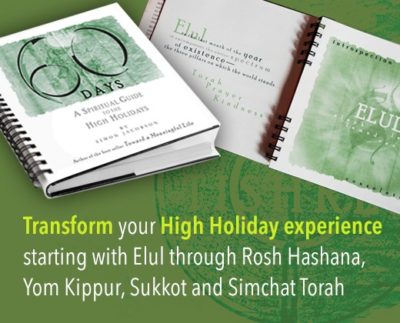
Transform your High Holiday experience starting with Elul through Rosh Hashana, Yom Kippur, Sukkot and Simchat Torah with best-selling 60 Days: A Spiritual Guide to the High Holidays.
Save
Save
Save
Tags: Alter Rebbe, new year, rebirth, renewal
Posted in Rosh Hashanah, Tishrei, Months & Holidays | 5 Comments »
September 11th, 2014
9/11: 13 Years Later
Va’yigdelu Ha’neorim — the boys grew up — Genesis (Toldot) 25:27
Thirteen years is a milestone. At that bar-mitzvah age one attains a level of maturity that should allow us to see things with deeper clarity. But have we grown up over the past 13 years since the attacks of 9/11?
* * *
The day of September 11, 2001 — just plain 9/11 — lives on in infamy. Every one of us vividly remembers where we were on that morning thirteen years ago when we saw or heard the news. The day began as a beautiful bright Tuesday morning with a clear blue sky. For those heading to an airport weather conditions could not have been better for a safe and pleasant journey. And then on this cloudless picture-perfect summer day, against the backdrop of pure blue, the planes struck New York’s Twin Towers and Washington’s Pentagon, releasing dark billowing clouds and ash, killing thousands, wreaking destruction, that is still affecting us today. A regular day was transformed into a watershed juncture in history.
Thirteen years have passed since that fateful day. Thirteen years is a milestone. At that bar-mitzvah age one attains a level of maturity that should allow us to see things with deeper clarity.
Indeed, in Genesis we read that at thirteen years “the boys grew up,” referring to Jacob and Esau, the forbears of the Jewish people and the Western world respectively.
But have we grown up over the past 13 years since 9/11?
Has anything changed since that day in 2001? Today’s Middle East battles, the rise of ISIS, the raging gales of Muslim fundamentalism, the attacks on Israel, the rise of anti-Semitism, the imminent threats to the West, the tremors of change being felt throughout Europe, seem stronger than ever.
What have we learned over these past thirteen years? Are we any closer to understanding the enemy and its intentions? Beyond band-aids and temporary fixes, do we better know how to diagnose the roots of the issues?
Consider:
President Obama, in his remarks Wednesday night about expanding a military offensive against ISIS (or ISIL), said: “Now let’s make two things clear: ISIL is not “Islamic.” No religion condones the killing of innocents, and the vast majority of ISIL’s victims have been Muslim. And ISIL is certainly not a state. It was formerly Al Qaeda’s affiliate in Iraq, and has taken advantage of sectarian strife and Syria’s civil war to gain territory on both sides of the Iraq-Syrian border. It is recognized by no government, nor the people it subjugates. ISIL is a terrorist organization, pure and simple. And it has no vision other than the slaughter of all who stand in its way.”
With all due respect to the president many Muslims and former Muslims vehemently disagree with his take. They argue that ISIS is actually following the ways of Muhammad and the Koran more accurately than anyone else. See this interesting video. The leader of ISIS, Abu Bakr al-Baghdadi, has a PhD in Islamic Studies and was proclaimed Caliph Ibrahim of the new Islamic State. Maybe he should have debate with Mr. Obama about the nature of Islam and the role of ISIS. It certainly would make, at the very least, for great entertainment (if it were not so tragic), and perhaps it would also force us to open our eyes to the realities of our times.
So while we commend the president for taking some action against barbaric terrorists, we also wonder whether this is only addressing some of the symptoms and ignoring the root causes of these battles — a long-festering cancer deeply embedded in the Middle East.
All you need to do is listen to the words of the ISIS. Al-Baghdadi, like his cohorts and colleagues before him (including Bin-Laden of 9/11 infamy), has declared war on the Great Satan, the United States, a war against the Crusader-Zionistic plot, with the intention of marching on and conquering Rome and Jerusalem.
Or listen to some ex-terrorists, who describe in frightening detail how they were programmed from early age to kill Jews and Westerners, and thereby be rewarded with heaven. Millions of Muslim children are indoctrinated from young age with a radical vision of a secular, Western world of infidels that must be destroyed and replaced with Islam. Martyrdom is deified. Children are brainwashed that the greatest thing they can do is give their lives for Islam against the infidels. This is a profoundly religious and ideological war against terrorism, deeply rooted in centuries-old battles between Christians, Muslims and Jews, tracing back almost 4000 years to their ancestors living in the home of Abraham.
The only way to truly address the issues is by taking a birds-eye view of today’s conflicts and placing them in context by peering into their historical beginnings, going back to the home of Abraham and Isaac and their children. By doing that, we gain a sweeping perspective of contemporary events, empowering us to actually and decisively win these battles, instead of just putting out fires. This is a real historical and spiritual war, which must be fought not just with armies (to defend the innocent, and for short term relief), but with ideas, minds, education and ideology.
Yes, my friends, as we mark 13 years since the 9/11 attacks, and we are told that at this age “the boys grew up” — the boys meaning Jacob and Esau, the ancestors of the Jews and the Roman/Western world, who are under attack by the children of Ishmael — we must stop and ask the big question: The boys have grown up, but have their descendants followed suit?
I am afraid that the United States and the Western world are still as young as this 21st Century is, clueless to the defining battle of our times — one that will last long into this century, unless we mature quickly and face the task at hand. As the wise say: Not everything that is faced can be changed, but nothing can be changed until it is faced. The only way out is through.
And the task at hand is: to challenge the Muslim world to live up to the true Abrahamic principles of virtue and justice. To embrace a policy of zero tolerance for Muslims who defy these divine laws. To begin a new era of education and inspiration of their youth — one that permeates their homes, schools and mosques — how to honor the dignity of every and all human beings created in the Divine image, even if you may disagree with them.
Nations of the world must unite and demand of the Muslim world to embrace the principles established by Abraham, father of all nations, to promote the deepest values of virtue and integrity, all with love and inspiration. To fight the pagan forces of the universe, not with violence, but with spreading light and warmth.
Today’s war must be waged with a powerful moral vision. It is not just a defensive war against terrorist attacks; it is an offensive battle for the ambitious vision of a world that will live in peace, while respecting the diversity of nations, cultures and faiths. We are fighting a war for a vision – first delivered at Sinai – which guided the Founding Father: That all people are created equal, with inalienable rights granted by virtue that we are all G-d’s children. Everyone has the right to practice and believe in their unique way. The enemy is anyone who breaches the universal and absolute law of hurting or killing another person; of denying and robbing any person of their fundamental, G-d given rights.
Bar-mitzvah — 13 years from 9/11 — is the right time for the boys to become men, to begin maturing and looking at the world with a bit less naiveté.
What will it take for us to grow up?
And once the children of Esau and Jacob grow up, can the children of Ishmael be far behind?
—————
Tags: Islamism, fundamentalism, bar mitzvah
Posted in Weekly Parsha, Personal Life, Social, Devarim, Torah, Ki-Tavo, September 11th, Terrorism, Current Events | No Comments »
September 5th, 2014
Staying Pure in an Impure World
Just as the terrible news arrived about the ISIS beheading of another American journalist — this time one of the “tribe,” a Jew by the name of Steven Sotloff — I just happened to be reading, rediscovering Christopher Morley’s heart-touching poem To A Child.
Just as I was embracing my two beautiful grandchildren before their return flight to LA, I hear about the tragic death of 23 year-old Aron Sofer in, of all places, the Jerusalem Forest. I tighten my clutch of these innocent children who, together with all children of the world, are completely oblivious to the pains of this life, drawing them close to my heart, in the hope that the world they grow into will spare them the anguish of our virulent universe.
As I hug my granddaughter and grandson I remember reading about the recently restored Chabad House in Mumbai, and I have a flashback to events that transpired six years ago. In November 2008 Chabad shluchim Rabbi Gabi and Rivky Holtzberg and four of their guests were murdered in cold blood by… Islamic terrorists as they were going about their business of helping everyone and anyone in their Mumbai Chabad Center, also known as Nariman House. That very week, while we were all glued to the live streaming news feed from India to hear the latest update, hoping for the best, my first grandchild, Luba, was born to my daughter Rashi and her husband Bentzy Marcus.
Oh what a psychotic world… Through one window we witness unbearable barbarism and brutality. And through another we see unbelievable beauty and awe-inspiring wonders. Look one way and you see death; look the other way and you see birth.
At times like this don’t you just want to curl back up into your fetal-like childhood innocence, seeing only the good in things?
Bringing to mind Morely’s wonderful poem:
The greatest poem ever known
Is one all poets have outgrown:
The poetry, innate, untold,
Of being only four years old.
Still young enough to be a part
Of Nature’s great impulsive heart,
Born comrade of bird, beast, and tree
And unselfconscious as the bee-
And yet with lovely reason skilled
Each day new paradise to build;
Elate explorer of each sense,
Without dismay, without pretense!
In your unstained transparent eyes
There is no conscience, no surprise:
Life’s queer conundrums you accept,
Your strange divinity still kept.
Being, that now absorbs you, all
Harmonious, unit, integral,
Will shred into perplexing bits,-
Oh, contradictions of the wits!
And Life, that sets all things in rhyme,
may make you poet, too, in time-
But there were days, O tender elf,
When you were Poetry itself!
The question and challenge, however, is this: Can we retain our childhood innocence even as we become seasoned and war-weary adults?
I knew one man who mastered that art. Despite witnessing and experiencing first-hand the most horrible events of the 20th century — the pogroms of Czarist Russia, the bloody Russian Revolution and even bloodier two World Wars, one worse than the previous one, the genocide of Jews throughout Europe, the anti-Semitic silence of a so-called “civilized” and “scientific” world; despite all these deep scars and wounds, personal and collective, this man was somehow able to retain an innocence of a child. The sparkle in his eye, even at age 90, was like that of a new-born.
How does one maintain such integrity and purity in such an impure world?
Only through a firm and unwavering connection to a reality beyond our own. A seamless connection to the Divine, which flows transparently and saturates his entire being, creating a seamlessness below as above, unscathed by the existential toxins inundating this world of ours.
No wonder the Rebbe told one of his assistants, Rabbi Berel Junik: Thank G-d that I trained myself to look at things with a right eye. Otherwise, I couldn’t have survived.
By attaching ourselves to this higher power we too can transcend the pain of our suffering existence and be the poet — the poetry — itself.
Thus, even on that day when G-d’s sad forecast is fulfilled and His face is covered from us — “I will cover my face on that day;” even when we cry out: “Why should the nations say, ‘Where is their G-d?'” — we still hold tight to our roots. How? Who knows, but that doesn’t change the fact.
No doubt that this Jewish eternal connection is what gave Steven Sotloff the super-human ability to retain his Jewish identity in the abyss of ISIS. The presence — as we are now being told by someone who who was held captive with Sotloff — of successfully managing “to hide the fact he was Jewish from his captors, managing to fast for Yom Kippur by feigning sickness… He told them he was sick and doesn’t want to eat, even though we were served eggs that day. He used to pray secretly in the direction of Jerusalem. He would see in which direction (his Muslim captors) were praying and then adjust the angle.” And now, even in his death he is not parted from G-d (as we say in the Yizkor service).
And this immortal bond is what gives us all the capacity to endure any challenge, and not just survive, but thrive through the process.
Even when we hear about the gruesome beheading of a Jew in the early days of Elul, a month that is supposed to be one of compassion, we somehow hold on, and open up (barely, at times) our right eye and see the blessings of life, the miracles that are taking place both in Israel and abroad, both individually and collectively.
We hold on to a force that is beyond pain and pleasure, death and life, dark and light, beyond all the ends of the spectrum — an energy that is even beyond paradox.
This is how we bare our souls in this month of Elul — the month of I am to my beloved and my beloved is to me — a supra-rational love that can never be vanquished. Accessing a purity that no impurity on earth or beyond can defile.
Tags: Rebbe, anti-semitism, Islamism, war, inner child, purity
Posted in Weekly Parsha, Month of Elul, Israel, Months & Holidays, Personal Life, Social, Devarim, Ki-Teitzei, Torah, September 11th, Pain & Suffering, Terrorism, Elul, Current Events | 2 Comments »
September 3rd, 2014
And you shall make the [priestly] robe completely of blue wool… And make upon its hem pomegranates of blue, purple and scarlet wool, and bells of gold between [or: within] them all around… And it shall be upon Aaron when he serves. And its sound shall be heard when he enters into the holy before G-d… lest he die.
Exodus 28:31-35
A great strong wind rent the mountains and shattered the rocks… but G-d was not in the wind. And after the wind came a storm, but G-d was not in the storm. And after the storm came fire, but G-d was not in the fire. And after the fire came a still, small voice.
I Kings 19:11-12
A rich man once invited a beggar to share his meal. The host settled quietly into his seat and tucked his linen napkin under his chin. The guest, finding his body supported by silken luxury instead of the usual hard bench, let go a sigh of surprised pleasure; with much creaking and squeaking he burrowed into the chair, determined to do justice to its opulent potential.
The soup arrived and proceeded to make its casual way down the rich man’s gullet. Across the table, a full frontal attack was being launched against the delicate china bowl; the heavy silver spoon clanged and swooped, carrying every precious drop of steaming gold to an audibly eager mouth. The subsequent assault on the steak platter was no less enthused. As the wealthy man silently ingested bite-sized pieces of meat, his dinner partner, a maelstrom of clattering knives and chomping jaws, ooh’ed and ah’ed his admiring way through the feast.
In the kitchen, the chef remarked to the butler:
‘‘At last, a man who appreciates fine cuisine! The master may be indifferent to the
fine things in life, but his guest! What passion! How involved he is, how worshipful of quality. Now, this is a man with a sense of the sublime…”
‘‘You are mistaken,’’ said the butler. ‘‘Indeed, the very opposite is true. The rich man’s tranquility indicates the depth of his involvement with his dinner, while the pauper’s noisy excitement only underscores how alien all this is to him. To the rich man, luxury is the very essence of life; so he no more exclaims over it than you jump for joy upon finding yourself alive in the morning. But for the poor man, this is an other-worldly experience —for him, life is a boiled potato. All that noise you hear is the friction between his habitual self and the pampered, steak-eating self he is attempting to assume.’’
The Hem
Noise is the sound of resistance. Consider the sounds emitted by a log fire, a pile of burning straw and an oil lamp. In each case, matter is succumbing to the energy locked within it. The log offers the most resistance, voicing its reluctance to part with its outer form with a noisy crackle and sudden explosions. The straw, not quite as physical as the brute log, protests with a whispering sizzle. And the oil in the lamp, the finest substance of the three, burns silently, freely yielding to the essence within.
Thus, Elijah the Prophet experienced G-d’s immanence as ‘‘a still, small voice.’’ In his refined self, the material of the body did not resist the spirituality of the soul; so the
Divine reality was not perceived in a norm-shattering storm, but in the same tranquil manner in which a person is aware of the life within him.
And yet, Aaron is commanded to wear a robe with bells sewn onto its hem, so that ‘‘its sound shall be heard when he enters into the holy before G-d.’’ For the Kohen Gadol (High Priest) represents the entirety of Israel in his service of the Almighty, including those for whom connection to G-d is still a noisy struggle—the struggle to transcend their external, earth-bound selves and bring to light their true, inner identity.
Rabbi Israel Baal Shem Tov was once asked: Why do certain disciples of yours make such a ruckus while praying? They shout, they wave their arms, they virtually throw themselves about the room. Is this the appropriate way to commune with the Almighty?
The founder of chassidism replied: Have you ever seen a drowning man? He shouts, he thrashes his arms, he struggles with the waves that threaten to claim him as their own. Throughout the day, a person is swamped by the demands of his material existence; prayer is the attempt to break free of the engulfing waters that threaten to extinguishone’s spiritual life.
True, a noisy service of G-d is an indication that the person is ‘‘not yet there.’’ Had he succeeded in transcending the mundane, his endeavor to draw close to the Almighty would be a tranquil one—his soul would strive upwards with a silent, frictionless flame. His noisy struggle reflects the fact that his spiritual self and priorities have not yet become the seat of his identity, that his ‘‘natural’’ self still lies with the material externalities of life. Nevertheless, this is a healthy sign: he has not succumbed. He is straining to free himself of the coarse envelope of his material being, straining to rise above his presently defined self.
So the bells on the Kohen Gadol’s robe are an indispensable part of his Divine service. ‘‘Its sound shall be heard when he enters into the holy before G-d,’’ commands the Torah, ‘‘lest he die.’’ Were he to disclaim the lowly ‘‘hem’’ of the nation he represents, he would be violating the very essence of his mission. Were his service of the Almighty not to embody also the struggles of his imperfect brethren, it would have no place in
G-d’s inner sanctum.
Apples and Pomegranates
In light of the above, we can understand the deeper significance of a debate between two of our sages regarding the bells and pomegranates on the Kohen Gadol’s robe.
The debate revolves around the question as to how to interpret the word b’tocham, which translates either as ‘‘between them’’ or, in a more literal rendering of the word, ‘‘within them.’’ Does the Torah command to ‘‘make upon its hem pomegranates… and bells of gold between them’’ or to fix the ‘‘bells of gold within them’’?
Rashi, [1] in his commentary on the verse, writes that the bells were ‘‘between them… between each two pomegranates a bell was attached and hanging on the hem of the robe.’’ Nachmanides [2] disagrees. ‘‘I don’t know why the master [Rashi] made the bells separate, a bell between two pomegranates,’’ he writes. ‘‘According to this, the pomegranates served no function. And if they were there for beauty, then why were they made as hollow pomegranates? They should have been made as golden apples… Rather, [the bells] were literally within them, for the pomegranates were hollow–like small, unopened pomegranates–and the bells were contained within them…’’
‘‘Why does he favor apples more than pomegranates?’’ wonders the Mizrachi. [3] As other commentaries explain, Nachmanides’ difficulty with Rashi’s interpretation is that the hollow form of the pomegranate (Rashi himself also says that they were ‘‘round and hollow’’) indicates that they served a functional rather than decorative purpose; but what does Nachmanides mean when he says that ‘‘if they were there for beauty… they should have been made as golden apples’’?
Indeed, the menorah was decorated with spheres resembling apples, whose sole purpose was for beauty. [4] Perhaps Nachmanides derives from this that in the making of the Sanctuary and its vessels and the priestly garments, the decorative fruit of choice was the apple. But this itself requires explanation. Why apples? And why, according to Rashi, is the menorah beautified with apples and the Kohen Gadol’s robe with pomegranates?
Insulated Deeds
Both the apple and the pomegranate are representative of the Jewish people. The Torah likens Israel to an ‘‘apple’’ (‘‘Like an apple among the trees of the wood, so is my beloved’’ [5] ) as well as to a ‘‘pomegranate’’ (‘‘Your lips are like a thread of scarlet, and your mouth is comely; your temple is like a piece of pomegranate within your locks’’ [6] ). But while the apple describes Israel in a virtuous state, [7] the pomegranate allegory refers to the ‘‘hollow’’ or ‘‘empty ones amongst you.’’ As the Talmud interprets it, the verse ‘‘your temple is like a piece of pomegranate’’ comes to say that ‘‘Even the empty ones amongst you are full of good deeds as a pomegranate [is full of seeds].’’ [8] (Raka, the Hebrew word used by the verse for ‘‘temple’’ is related to the word reik, ‘‘empty.’’ Thus ‘‘your temple’’ is homiletically rendered ‘‘the empty ones amongst you.’’)
The pomegranate is more than a model of something that contains many particulars. On a deeper level, this metaphor also addresses the paradox as to how an individual may be ‘‘empty’’ and, at the same time, be ‘‘full of good deeds as a pomegranate.’’
The pomegranate is a highly compartmentalized fruit. Each of its hundreds of seeds is wrapped in its individual envelope of flesh, and separated from its fellows by a tough membrane. In the same way, it is possible for a person to do good deeds –many good deeds–and yet, they remain isolated acts, with little or no effect on his nature and character. So unlike the ‘‘apple,’’ who is delicious from core to skin, the ‘‘pomegranate’’ contains many virtues, but they do not become him. He is full of good deeds, yet remains morally and spiritually hollow.
This explains the connection between the pomegranates and the bells on the hem of the priestly robe. As explained above, the noisy bells represent the imperfect individual who is striving to overreach himself. Although he is still a spiritual pauper he refuses to act like one—hence the noisy friction that characterizes his life.
Beautiful Noise
To become an apple one must first be a pomegranate. One must act unlike himself, like a poor man feasting at a rich man’s table; a clumsy spectacle, perhaps, but an indispensable one, if he is to transcend the selfish and animalistic ‘‘self’’ into which he was born. The first step to become perfect is to act perfect. Indeed, before Elijah experienced G-d in a ‘‘still, small voice,’’ he first beheld the wind, the storm and the fire.
Thus, Nachmanides sees the pomegranate-encased bells on Aaron’s hem as a preliminary phase of one’s Divine service, rather than as the service itself. [9] Beauty, however, is to be found in the apple-perfection of the menorah—seven lamps of pure olive oil, representing the soul’s silent, tranquil flame. Were the pomegranates on the priestly robe for beauty, argues Nachmanides, they would not be pomegranates, but apples. These hollow fruits are purely functional, a preparatory stage in the soul’s quest for perfection and union with her Divine source.
Rashi, however, expresses a perspective from which the beauty of Israel also lies in its pomegranates. In fact, in a certain sense, the struggle of the imperfect soul is even more beautiful than the serene perfection of her more virtuous fellow. For the perfectly righteous individual serves G-d by being what he is, while every positive deed of the ‘‘empty ones amongst you’’ is an act of sacrifice and self-transcendence. So even before a person attains perfection–even if his entire life is spent in the quest for perfection–the clamor of his efforts is music to G-d’s ear.
A Contemporary Application
There are those who claim that the Torah and its mitzvos are a private matter between the Jew and his G-d, not something to be paraded on the streets. Tefillin, Shabbos, the sanctity of family life, ‘‘esoteric’’ concepts such as ‘‘Divine Reality’’ or ‘‘Moshiach,’’ are not to be hawked on a downtown sidewalk or catch-phrased on a slick billboard. Never has anything like this been done in our history as a nation, they say. You are vulgarizing the soul of Judaism.
But this is the hem of history, the lowliest and most superficial generation yet. To this generation, the small still voice of G-d sounds like alien noise. Should this voice be hushed, to be whispered only among the apples? Or should its call be sounded, noisy be it, until it is heard above the din?
Speaking to this generation in its own language–the language of the sound-bite, of incessant compartmentalization and hollow packaging–ever further raises the noise level. But fighting fire with fire is not only effective—it also brings to light facets of one’s own potential that would otherwise remain unrealized.
The bells and pomegranates that broadcast the Divine truth are more than the means toward a tranquil end—they are themselves things of beauty.
Based on an address by the Rebbe, Adar 11 5735 (February 22, 1975).
____________________________________________
[1] Rabbi Shlomo Yitzchaki, 1040-1105.
[2] Rabbi Moshe ben Nachman, 1194-1270.
[3] Rabbi Elijah Mizrachi, 1448-1526, wrote a commentary on Rashi’s commentary.
[4] Rashi’s commentary, Exodus 25:31.
[5] Song of Songs 2:2; see Midrash Rabba on verse, Talmud, Shabbos 88a and Zohar II, 120b.
[7] Likkutei Torah, Bechukotai 49d; Ohr HaTorah, Noach 58a-b.
[9] See Nachmanides’ commentary on Exodus 28:43, where he compares the ringing of the robe’s bells to the requesting of permission before entering into the presence of a king.
Tags: Beis Hamikdash, Aaron, kohanim, Mishkan
Posted in Weekly Parsha, Tishrei, Biblical, Months & Holidays, Yom Kippur, Shmot, Torah Personalities, Torah, Pikudei | No Comments »
September 3rd, 2014
In the beginning, a simple divine light filled the entirety of existence… When there arose in His simple will the desire to create the worlds, He contracted His light, withdrawing it to the sides and leaving a void and an empty space in its center, to allow for the existence of the worlds. (However, this was not an absolute void, for there remained a residue of the divine light within the void.) He then drew a single line of His infinite light into the void to illuminate the worlds….
Rabbi Isaac Luria (the “Ari”)[1]
First of all, […] will marry […] in accordance with the law of Moses and Israel. They will not hide away nor conceal anything from each other. They will live together in love and affection, as is the way of the world…
From the text of the pre-marital contract (tena’im)
A man without a wife, say our sages, is but “half a body.”[2] For man was created in the image of G-d, and the divine image has both a male and female aspect. As the book of Genesis states: “And G-d created man in His image, in the image of G-d He created him; male and female He created them.”[3]
Man was initially created “male and female”—as a “single being with two faces.”[4] Soon after, however, G-d separated the female side from the male, recasting them as two distinct beings, man and woman. From that point on, man seeks woman and woman yearns for man. In marriage, the divine analogue is made whole again, as man and woman regain their original state as a single entity.[5]
The Splitting of the Light
The separation of the female from the male, creating the tension that draws them to each other and to their ultimate reunion, is a theme that runs through the entire process of creation, all the way to its very beginnings in the primordial will of G-d.
In the teachings of Kabbalah, the act of creation is described as an act of tzimtzum—an act of contraction, concealment and withdrawal. In the beginning, the “light” of G-d (i.e., the manifest expression of His omnipresence and omnipotence) filled the entirety of existence. A world such as ours—finite, self-defined and independent, with the capacity to turn away from and even deny its Creator—could not exist, for it would have been utterly nullified within the divine light. In order to allow for the existence of the world, G-d “contracted” His light, creating a “void” and “empty space” within which His infinite being and power is not manifest. Into this void G-d then allowed a single “line” (kav) of light to penetrate, through which flows a divine energy that is meted out to every level of reality in accordance with its capacity to receive it.
But the “line” is not the only source of divine energy in our world. For the withdrawal of divine light that occurred at the time of the tzimtzum was not absolute; rather, a “residue” (reshimu) of light remained within the “void.” This “residue” is the divine power of concealment and limitation (as opposed to the power of revelation and infinite expansion withdrawn by the tzimtzum). This divine energy does not contradict the existence of our finite and material word; on the contrary—it is the very source of its finiteness and materiality.
In other words, the divine light, as the expression of G-d’s infinite power and perfection, also includes the divine capacity for finite self-expression. In the words of the Kabbalist Rabbi Meir ibn Gabbai, “Just as He possesses the power of infinity, so does He possess the power of finiteness. For should you say that He possesses the power of infinity but does not possess the power of finiteness, you are detracting from His perfection.”[6] What to our perception was a tzimtzum—a contraction and concealment—was actually the separation of the divine power of finiteness from within the omnipotence of G-d. Originally, the divine light was utterly “simple” (i.e., not comprised of components or parts): the power of finiteness was not a distinct force, but simply a factor of the divine omnipotence. With the tzimtzum, the manifestation of the divine infinity was withdrawn beyond the parameters of the “void,” leaving behind the divine potential for limitation and definition, which is the source of finiteness and definitiveness of our reality.
Conquest and Cultivation
Our purpose in life is to undo the tzimtzum—to refill the “void” with divine light. There are two ways in which this is achieved. One way is to draw into the world the divine light that was withdrawn at the time of the tzimtzum. This means increasing the intensity of the light that flows through the “line” by gradually increasing our world’s capacity to receive it. Every time we do a mitzvah, we make the world more receptive to the divine truth, stimulating a greater infusion of infinite light via the “line.” Ultimately, the world is elevated to the point that it can receive the full intensity of the light coming from beyond the parameters of the “void,” and the area of the “void” is as saturated with the manifest presence of G-d as it was before the tzimtzum took place.
Another way of undoing the tzimtzum is to uncover the divine light already implicit in our world. Every time we exploit the very qualities that make our world “unspiritual”—its finiteness, physicality and materiality—toward a G-dly end, we bring to light its divine essence. The “residue” of the divine light that remained behind at the time of the tzimtzum, concealed and obscured by the coarseness of the worlds and the realities that derive from it, is thus revealed. The finiteness and physicality of our world is thus revealed as no less an expression of the divine truth than the infinity and spirituality that fills it from “above.”
The Contract
The power of infinity invested in the “line” is the male element in the divine light; the power of finiteness implicit in the “residue” is its female aspect. Originally they were one, a singular expression of the omnipotence of the divine. Then came the tzimtzum, separating them into two distinct forces.
Thus the endeavor to undo the concealment of the tzimtzum includes both a “male” and a “female” dynamic. On the one hand, we strive to overcome the limitations of our existence, to break free of the confines of the material. We strive to impose a higher, spiritual truth upon our world, to infuse the infinity of G-d into our finite lives. This is the “male” active/aggressive effort to overcome the nature of reality, to expand its frontiers, to draw in “new” G-dliness from the outside via the “line” that links our world to the infinity of G-d.
But there is also another aspect to our mission in life, another source of G-dliness for our world. A source that is to be found within, in the “residue” of divine light that underlies our reality. This is the “female” endeavor to seek the divine in what is, to stimulate our inner essence instead of overwhelming it with light from without. To cultivate rather than to conquer, to be rather than to do.
Ultimately, the goal is to effect the marriage between the male and female. When the light that was withdrawn from the void is reinfused and the “residue” of light left behind is revealed, the divine light will again be one. The “power of infinity” and the “power of finiteness” in our world will again constitute a singular expression of the quintessential truth of G-d.
According to Jewish custom, when a man and woman become engaged to marry, a contract—called tena’im (“conditions”)—is drawn up, in which the obligations of each side to the other are specified. The traditional text of the tena’im begins: “First of all, […] will marry […] in accordance with the law of Moses and Israel. They will not hide away nor conceal anything from each other. They will live together in love and affection, as is the way of the world….”
A marriage between two human beings is an analogue of the marriage of divine forces that is the purpose of creation. This is alluded to in the opening lines of the tena’im: the very first thing the parties promise each other (after declaring their commitment to marry each other) is that “they will not hide away nor conceal anything from each other.” Here we have the male and female elements of the cosmic marriage: that the divine light which was “hidden away” by the tzimtzum—withdrawn from the void—should be restored, and that the divine light which was “concealed” within the world should be revealed.
The achievement of these two aims will herald the era of Moshiach, when the diverse forces of creation “will live together in love and affection, as is the way of the world,” in harmony with itself and its G-d, envisioned by the Creator.
Based on a letter by the Rebbe dated Adar 18, 5704 (March 13, 1944)[7].
_______________________________________________
[1]. As recorded by his disciple, Rabbi Chaim Vital, in his works Etz Chaim (Heichal Adam Kadmon, 1:2; Shaar HaHakdamot, 4) and Otzrot Chaim (introduction to Shaar Ha-Igulim). The parenthetical sentence which speaks of the “residue” is from a gloss by Ramaz on Otzrot Chaim, which, according to Mikdash Melech, is also from the mouth of the Ari. See Likkutei Torah, addendum to Vayikra, 51b-54d; Sefer HaMaamarim 5699, p. 63; Sefer HaMaamarim 5702, p. 28-31; et al.
[2]. Zohar, part III, 7b.
[4]. Midrash Rabbah, Bereishit 8:1.
[5]. Cf. Genesis 2:23-24: “This, now, is a bone of my bones and flesh of my flesh; she shall be called woman, for she was taken from man. Thus shall a man leave his father and mother and cleave to his wife, and they shall become one flesh.”
[6]. Avodat HaKodesh 1:8.
[7]. Igrot Kodesh, vol. I, pp. 267-268.
Tags: gender roles, Moshiach, purpose of life, tzimtzum, creation, marriage, women, men
Posted in Weekly Parsha, Shmot, Personal Life, Love & Marriage, Social, Women & Men, Sexuality, Torah, Vayakhel | No Comments »
September 3rd, 2014
And the children of Israel should keep the Shabbat, to observe the Shabbat throughout their generations as an everlasting covenant… For in six days G-d made the heavens and the earth, and on the seventh day He rested…
Exodus 31:16-17
For everything there is a time and season…. A time for war, and a time for peace…
Ecclesiastes 3:1, 8
Will it ever end?
We seem to be forever waging wars. There are, of course, the “real” wars, fought with armed troops and increasingly sophisticated weaponry, wars in which a nation rallies against an enemy who threatens its “vital interests” or its very existence. But even in times of political peace, we are constantly battling the demons which menace our material and moral well-being: we wage wars against crime, against drugs, against disease, against illiteracy. Within, we fight our personal battles, be it a battle against one’s own selfishness or laziness, against an addiction to tobacco or a tendency to overeat.
Nor does it end with the battling of evil and negative forces: in school, in the workplace or in the social arena, we are constantly fighting our way to the top, constantly combating the obstacles in our quest toward greater success. We struggle to get more for our money, to use our time more efficiently, to develop our talents, to improve our mind and refine our character. Intrinsic to our humanness is the unceasing drive to make more of ourselves, to reach beyond yesterday’s attainments. Man is forever at war with the past.
So even when we overcome the blatant evils which inhabit our world, even when we succeed in bringing to light the goodness that is the essential nature of G-d’s creation—will we ever experience peace and tranquillity? Wherever we turn, we encounter turmoil. The solar system spins like a top, the galaxies simmer and revolve. The earth’s core is aboil, its atmosphere storms, its oceans churn. Physical life is sustained by perpetual motion—the throb of the heart, the contraction and expansion of the lungs. Seemingly “inanimate” matter is a cauldron of motion on the nuclear, atomic and sub-atomic levels. Motion means change, and every change is a struggle—the struggle to vanquish the status quo and replace it with a new reality.
The primary culprit in this is the phenomenon of time: time is what gives us a past to abandon, a present to not suffice with, a future towards which to strive. Time is the mother of motion, change, and struggle. Time is the canvas upon which all battles of life are etched. It would seem that as long as we exist in time, as long as our lives are defined by its pulse and flux, the battle of life will rage on.
Can man transcend time? A timeless existence would be free of motion, stress and strife. But would a timeless existence allow for challenge, improvement and progression?
Will it ever end? Should it ever end?
The Creation of Time
Each day has its particular function
Zohar, part III, 94b
Time, our sages tell us, is a created entity. Like all other creations, it was willed into being by the Almighty out of a prior state of nonexistence. In other words, the fact that time did not exist prior to G-d’s creation of the universe was not simply because there were no physical beings or forces, and thus no events to mark the passage of time; rather, it was because the entity “time”—its nature, its substance, its very notion—had not yet been created by G-d.[1]
G-d’s creation of the universe spanned seven days, each of which saw the creation of a new class of elements particular to the intrinsic nature of that day. For these seven days served (and continue to serve) as channels for the seven divine attributes (sefirot) that the Almighty chose to invest in His creation of our reality: the things created on the first day of creation are of a “giving” or “bestowing” nature, corresponding to the divine attribute of chessed that defines that day’s creations; those created on the second day embody “constraint” and “severity,” in keeping with the attribute of gevurah; and so on.
What is true of creation as a whole, is also true of the particular creation called “time.” Time, like the universe it underlies, was created in seven days because it possesses seven distinct qualities—on each day of creation, another dimension of time was brought into being.
In other words, not only is time per se an original creation, but also the divisions and cycles by which it is measured and defined are entities created by the Almighty. The day, week, month and year are not arbitrary measures of time. They are not artificial handles on a basically theoretical reality, invented by man so that he may make appointments or plan his vacation. Rather, they reflect time’s intrinsic texture and character.
Most basic of these is the week. The creation of time over seven days means that time is a seven-hued spectrum: chessed-time was created on the first day, gevurah-time on the second day, and so on. It was not until “G-d concluded, on the seventh day, the works which He had made”[2] that the seven basic components of time were completed and fixed in place as a seven-day cycle.
This explains why, in Hebrew, Sunday is called Yom Rishon, “the first day,” Monday is Yom Sheini, “the second day,” and so on. This is not merely a reference to the first week of time, in which Sunday was the first day ever and Monday the second. Each Sunday is literally a first day, the first of a new time cycle which repeats, from the beginning, the seven qualities of time, which represent the spiritual meaning of days of the week.
The Element of Rest
G-d concluded on the seventh day the works He had made; and He rested on the seventh day from all the works He had made
Genesis 2:2
The above verse appears to contradict itself: did G-d conclude His work on or before the seventh day? Were there six or seven days of creation?
Our sages explain: “What was the world lacking? Rest. When Shabbat came, rest came.”[3] On Shabbat G-d created the element of rest—the final and culminating brick in the edifice of creation.
On the eve of the first Shabbat, the creation of time was also almost complete, lacking only the element of rest. With the creation of Shabbat-time—time possessing the quality of rest—the cycle was closed.
But can “rest” be considered a characteristic of time? Is not time, and its sister-phenomenon, motion, the very antithesis of rest?
But that is precisely the point. Shabbat represents an area in time that transcends time’s own basic definition. Time, though synonymous with motion and change, also includes an element of rest—a potential to create, within the framework of time, an area of permanence and serenity. A potential to bring harmony and tranquillity to the struggles and fluctuations of life.
So while the “weekday” aspect of our lives is defined by Torah as “going out to war on your enemies,”[4] of Shabbat it is said: “Sit, each man in his place; no man shall go out of his place on the day of Shabbat.”[5] If our life’s mission is to “go out,” to vanquish the negative, to perfect the imperfect, to extend oneself beyond the limitations of our presently defined self—it also includes the potential for rest, for settling down, for the peace of finding one’s true “I” and place. Life includes not only the challenge of getting there, but also the fulfillment of being there.
A Taste
On the first Shabbat of history, there was no darkness. The light lasted for 36 hours
Midrash Rabbah, Bereishit 11:2
Shabbat has a profound effect on the entire week. If, in our daily lives, we experience not only the drive for achievement but also satisfaction over what has been achieved; if we have the ability not only to vanquish the prevalent reality but also to transform it into a friend and ally; if our life is not only an ongoing quest but also a series of attainments—it is because Shabbat, an island of rest in a sea of flux, radiates of its essence to the other six components of time.
But if every day of our week has something of Shabbat in it, on Shabbat itself we enter into a dimension in time whose essence is rest and tranquillity. “Six days a week you shall labor,” commands the Torah, “and you shall do all your work; the seventh day is Shabbat to G-d…”[6] But how can we tell a person to do “all your work” in six days? Even to conclude “all your work” in the course of one’s lifetime is no small feat! But on Shabbat, explain our sages, “all your work” is indeed “done.”[7] Shabbat is not only a break in the toil of life, but a glimpse and a taste of its ultimate realization.
On Shabbat, we cease to struggle with the world not because the task of perfecting it is “on hold,” but because on Shabbat, the world is perfect: we are relating to that which is perfect and unchanging in it. We cease to battle darkness not merely to recoup our strength for the next onslaught, but because there is no darkness—the light which we have created through our positive deeds, obscured throughout the week by the veil of mundanity which shrouds our workday lives, is now perceptible to our more rarefied selves.
This better explains why each Sunday is indeed a “first day.” Shabbat is a venture into the realm of timelessness—a realm that lies beyond the struggles that characterize our weekday lives. Following each Shabbat, we return to a time-bound existence. Time, in the sense of motion and flux, begins anew.
Shabbat, however, is but a foretaste of “the day that is wholly Shabbat and rest, for everlasting life.”[8] The seven-day week is a microcosm of a far greater time-span: the entirety of history is also a “week,” comprised of six “workday” millennia and a seventh millennium of rest, the era of Moshiach.[9]
On the weekly Shabbat, we experience the perfection that has been achieved through our efforts of the past six days to develop and refine our world; the era of Moshiach is the time when the combined attainments of all generations of history will be realized. A time when every positive deed, word and thought of the six millennia of the human experience will result in a truly tranquil world—a world free of discord and strife, a world suffused with the wisdom, goodness and perfection of its Creator.
The Reversal of Time
Students of Torah have no rest, not in this world and not in the world to come, as it is written: “They go from strength to strength, beheld by G-d in Zion”[10]
Talmud, Berachot 64a
Yet Shabbat is an integral part of time. Even the messianic age is an era within time—a seventh millennium of history. Obviously, these are also arenas for progression and achievement. For were they to represent wholly static states of being, why would we regard them as epochs in time?
On the most basic level we might explain that, indeed, both the work-week and Shabbat, both the six millennia of history and the era of Moshiach, are times for advancement and progression. The difference lies in the manner in which this is achieved. Our “work-week” challenges include dealing with outright evil and negativity, so progress inevitably involves struggle. On Shabbat, however, and to an even greater extent, in the age of Moshiach, advancement and progression means the tranquil graduation from good to better, the attainment of greater heights within the infinite realm of good itself.
If today we fight to eliminate war and hatred, in the era of Moshiach, when “they shall beat their swords into plowshares,”[11] the pursuit of peace will mean finding deeper and more meaningful ways for people to unite and fuse their differences into a symphonious whole. If today we must struggle to defeat illness, the “medicine” of the seventh millennium will concern itself with the further perfection of already flawless health and the enhancement of the bond between body and soul. If today we must battle ignorance, in the era when “the world shall be filled with the knowledge of G-d as the waters cover the sea,”[12] the quest for wisdom will be for greater and greater degrees of insight into the infinite truth of all truths.
Nevertheless, this does not fully answer the question. For any change, any departure from a previous state, is ultimately a battle and struggle, albeit a far more subtle battle and struggle than the conquest of evil. Again we ask: how can any form of progress be defined as a state of rest?
But progress may have two directions: outward and inward. The equation of progress with struggle, of graduation with change, is valid if we speak of “going out of our place,” of reaching beyond what we are to make more of ourselves. But there is also a progress that is an inward journey, a journey to uncover deeper dimensions to our own being.
In such an inward journey, each successive station is not a “change,” but the very opposite of change: it is a state that is more consistent with who and what we truly are. It is “rest” in the truest sense of the word: a settling into one’s true “place” and identity.
“G-d created man in His image,”[13] creating him to reflect His own goodness and perfection. In the “workday” phases of our existence, the mantle of corporeality which shrouds our world and encases our souls causes us to lead lives that are at odds with our true identity and essence. So the betterment of ourselves and our world is a struggle, a battle to change reality (or rather, what to our perception is reality) into something which is (again, to our perception) beyond us. But in truth, this “reality” is a distortion of our true selves, while the elusive “beyond” is our true self.
So when six millennia of struggle and achievement will come to fruition, when six millennia of battling darkness will reveal the light within, we will experience an era “that is wholly Shabbat and rest.” This is not a golden age of retirement for humanity, for the potential within us is as infinite as the divine perfection it reflects. But the direction of “progress” will be reversed: from a conflict-ridden, outward-bound quest for change, to a serene, inward-bound encounter with self.
But this “reversal” of the flow of time is not confined to the seventh millennium. Every Shabbat is a taste of this futuristic time, and a provider of its tranquillity to the entire week. While yet in the midst of the war of life, we are enabled to experience moments of true “rest.” Even as we struggle to transcend the imperfections of a more external self, we can touch base with the goodness and perfection that lies at the core of each and every one of us.
Based on the Rebbe’s talks on various occasions[14].
_______________________________
[1]. Rabbi DovBer of Mezeritch, quoted in Siddur Im D’ach, Shaar HaKriat Shema, 75d ff.
[4]. Deuteronomy 21:10; Likkutei Torah, Teitzei 35c; et al.
[8]. Grace After Meals, addendum for Shabbat.
[9]. Nachmanides’ commentary on Genesis 2:3.
[14]. Likkutei Sichot, vol. XVII, pp. 59-61; Sefer HaSichot 5752, vol. II, pp. 502-514.
Tags: creation, Shabbat, rest, good and evil, time, light and darkness
Posted in Weekly Parsha, Shmot, Personal Life, Daily Life, Life Cycles, Torah, Ki tissa | 1 Comment »
August 22nd, 2014
Remember what Amalek did to you on your way leaving Egypt. When they encountered you on the way, and you were tired and exhausted, they attacked those of you who were weak, at the rear, and they did not fear G-d. Therefore, when G-d gives you peace from all the enemies around you in the land that G-d is giving you to occupy as a heritage, you must obliterate the memory of Amalek from under the heavens. You must not forget – this weeks’ special Torah reading; Parshat Zachor (Deuteronomy 25:17-19)
G-d shall be at war with Amalek for all generations (Exodus 17:16)
What is it about Amalek that is so important to remember and never forget? Why the adamant need to “obliterate the memory of Amalek from under the heavens,” to the extent that G-d fights this war in “all generations”?!
There are various practical and legal (halachik) reasons given for the significance of the war against Amalek. This column has also addressed the basic question, how the compassionate Torah can possibly call for mass genocide of an entire nation.
But the full implications of the war against Amalek can be appreciated only by understanding its psychological and spiritual dimensions. The Torah, above all, is a blueprint for life. Every character, episode and event in the Torah is actually another piece of a comprehensive spiritual map that lays out the inner nature of our lives and all our challenges.
Amalek embodies the most potent enemy we face. That enemy is not an external force, nor a prowler or weapon on the attack. It is not an enemy from without, but one from within. The enemy is: Doubt.
In the words of the Rebbe Yosef Yitzchak: “The numerical value (gematria) of the Hebrew letters that spell Amalek (240) is equivalent to that of the letters that spell safek, “doubt.” All things holy are certain and absolute. Torah is absolute, the mitzvot are absolute, divine providence is absolute. Amalek is doubt; baseless, irrational doubt that cools the fervor of holiness with nothing more than a cynical shrug.”
Ahhh doubt.
Of all our enemies, of all the forces that impede our ability to grow, to love and to build, one root cause stands out among them all: Insecurity. Doubt has many names and many faces: Fear. Distrust. Uncertainty. Skepticism. Cynicism. Indecisiveness. Avoidance. Ambiguity. Complacency. The list goes on.
Is there someone, even the most confident of people, who has not at some point been plagued by self-doubt? And then, how many of us are actually self-confident? Insecurity is arguably today’s norm. Indeed, many people suffer from incessant fear and uncertainty – self doubts that affect your every move and choice.
What exactly is this thing called doubt? Doubt is basically the feeling – or rather the non-feeling – that you don’t have the tools or the strength to make a decision. Over an extended period such doubt becomes a debilitating poison that paralyzes us from making commitments.
Perhaps the most insidious element of doubt is its invisibility. Doubt does not have a shape or form of expression.
To have doubt for a short period of time is natural. But when doubt persists, and takes on persistent indecision, and time passes, a deep paralysis begins to fester and grow inside. On the surface level it, we can often appear completely functional. Lack of commitment can be explained away and be even justified as healthy caution, necessary introspection, sober skepticism, wise caution, when in truth it really is nothing more than a mask for fear and doubt. Our deepest insecurities often hide behind sophisticated justifications and a million rational reasons why one cannot commit – smokescreens to protect a frightened psyche terrified of commitment.
Often people replace the need for certainty in their emotional lives with aggressive confidence in business and the market place. But let that not be mistaken for true confidence.
Facing doubt – a force that is with us at all times – is the never-ending battle with Amalek, the battle with all forms of lurking doubts, that do not allow us the clarity and confidence to take risks, to make choices, to take on challenges and to forge ahead with our lives.
Amalekite doubt can attack at any given time. But it particularly likes to prey on us when we are “leaving Egypt:” As we are being freed from constraints (Mitzrayim – Egypt in Hebrew – means constraints), as we get inspired and motivated – there is always a counter voice casting doubt and throwing “cold water” on our enthusiasm.
How often do you find that just as you feel inspired to make a move, just as you become upbeat, another voice creeps in telling you how it can’t be done, how you don’t have the strength or the will, how you are bound to fail in your attempts to excel – doubts and more doubts feeding into all your insecurities and weakening your resolve.
This is Amalek attacking you just as you have found freedom and begin to feel confident. And it attacks your point of weakness – when you are “tired and exhausted.”
How do we protect and fend off the enemy of self-doubt? How do we build self-confidence in a world plagued with profound insecurity? How do we learn to trust in a life that can so often disappoint?
The answer lies in a previous verse: Just before Amalek attacks the Jewish people, the Torah tells us that the people doubted and questioned: “Is G-d with us or not?” (Exodus 17:7). Once they allowed doubt to seep into their psyches Amalek was empowered to launch a full fledged assault. To explain the sequence, Rashi cites a Midrashic analogy (Tanchuma Yitro 3; Exodus Rabbah 26:2): [G-d says:] “I am always among you, and always prepared for all your necessities, but you say, ‘Is G-d with us or not?’ By your life, the dog will come and bite you, and you will cry out to Me, and [then] you will know where I am.” This can be compared to a man who mounted his son on his shoulder and set out on the road. Whenever his son saw something, he would say, “Father, take that thing and give it to me,” and the father would give it to him. They met a man, and the son said to him, “Have you seen my father?” So his father said to him, “You don’t know where I am?” He threw his son down off him, and a dog came and bit the son.
All doubts begin with the first cosmic doubt: “Have you seen my father?” “Is G-d with us or not?”
In Kabbalistic terms, Amalek is Kesser of klippah, the crown of all impurities. Doubt is the root of all maladies. And that doubt originates from the primordial Tzimtzum, which concealed the Divine conscious presence, thereby setting the stage for all forms of uncertainty. In the pre-tzitmzum state, the Divine presence is the all pervasive, all-consuming reality. In such a state of seamlessness – above the heavens – there are no doubts; all is clear. But “under the heavens” – once that unifying presence is concealed and we feel alone, doubt is its inevitable product: “Is G-d with us or not?”
Self doubt is driven by insecurity. But why should we be insecure? Because we live in an independent universe whose existence is possible only by virtue of concealed light.
Certainty is the converse of doubt. How is it possible to find certainty in an uncertain world? Everything in this universe – its very nature – is forever changing, in unpredictable ways. We can make the greatest plans, everything can seem right, but then… things happen and all our plans are upset. We all age, everything erodes, everyone dies – how can we ever expect to find certainty in such an unstable environment?
The one and only answer is that we have within us an inherent connection to the eternal, to the absolute – to the pre-tzimtzum unity – that gives us a sense of utter certainty. Some call this faith – not the blind faith of the fool, but the sophisticated belief in something greater than arbitrary logic or ever-changing circumstances.
This connection is the power of the soul. The body and everything material, by its very nature, is in a state of flux, and thus always shrouded in doubt: What will come next? The soul is a consistent flame, always sure of itself, always connected. It is the sense within that we are not alone. And when we really feel that we are not alone and G-d is with us, all doubt melts away.
As children, when our parents and support systems nurture and validate us, they cultivate our soul’s natural connection to its source and build our self-confidence – inbuing us with a profound sense of certainty and belonging. But when our love and nurturing is compromised, doubts begin to fill up our psyches, only reinforced by the narcissism we begin to witness in others.
The vicious cycle is now in relentless motion. Doubt breeds doubt.
Thus we are commanded to “go forth and fight against Amalek.” And do so with absolute vigilance – “obliterate the memory of Amalek from under the heavens.” Because doubt is our greatest enemy; one that brings on all our other problems. With confidence we can take on any challenge. But when we doubt ourselves, and have no self-confidence, every difficulty becomes a monster. “Obliterate Amalek” – obliterate every doubt, even the memory of doubt, “from under the heavens.” Because above the heavens there is no doubt; doubt is only possible in a post-tzitmzum, material world where truth and reality are concealed.
And we don’t fight this battle against Amalekite doubt alone. Led by Moses and his trusted disciple, Joshua, we have the power to overcome any doubt. Moses is the ultimate spiritual mentor – the selfless leader that helps us connect to the Divine. His prayers help us overcome the Amalekite doubts. As the Torah relates: While they fought Amalek, Moshe held up his hands in prayer, entreating G-d to strengthen His people. When his arms weakened, Moshe sat on a stone while his brother, Aaron, and his nephew Chur supported him on each side. A night passed this way, and by the time the sun rose, the Amalekites were defeated.
The same happens in the story of Purim: Everyone bows to Haman the Amalekite, except Mordechai. Mordechai refuses to bow to any man or man-made idols, and the inevitable insecurity and doubts that these human forms bring. Only through connecting to the Divine does one reach clarity and certainty.
Just as all doubt stems from the cosmic concealment, all certainty originates from the clarity that “G-d is with us” and the concealment is just that: Concealment with the purpose that we reveal the Reality within.
And just as doubt breeds doubt, certainty breeds certainty. Once you open the doors of certainty in your life, that you are connected to the Divine, it begins to spill over into other areas of your life.
[Some of you may argue that there are many confident and secure people who don’t have any connection to the Divine. I submit that if they indeed are that secure, they are connected to the Divine, even if may be called by another name].
The battle against Amalekite doubt is in every generation and in every situation; perhaps the single most important battle of our lives – because when we overcome our doubts and conquer our fears everything else becomes possible.
As we celebrate the holiday of Purim, and prepare for it with the Shabbat Zachor reading about the battle against Amalek, we celebrate the conquest over Haman/Amalekite doubts – and there is no joy like the one of resolving doubts.
Purim is a powerful opportunity to overcome every form of doubts and insecurities.
Use the holiday well; this may be the greatest battle of your life.
Tags: certainty, confidence, doubt, Amalek, insecurity
Posted in Weekly Parsha, Shmot, Personal Life, Torah, Emotions & Psychology, Tetzaveh | 7 Comments »
August 22nd, 2014
Behold, I place before you today a blessing and a curse… These are the laws you must carefully keep in the land that G-d, Lord of your fathers, is giving you to settle in it all the days that you live on Earth – Opening of this week’s Torah portion (Deuteronomy 11:26; 12:1)
All your children will be taught about G-d; great will be the peace of your children… They may gather to attack you, but it will not be from Me; whoever comes to fight you shall fall because of you. Behold, it is I who created the smith who blows beneath the forge, and makes a weapon for his work. I have also created the ravager to destroy. No weapon that is formed against you shall prosper – This week’s Haftorah (Isaiah 54:13-17)
Now that the United States, Britian and the Western World have witnessed yet again – almost thirteen years from 9/11/2001 – the horrifying ISIS beheading of U.S. journalist James Foley, while Israel is entangled in its war against Hamas terror – you would think that it’s high time to revisit the issues at hand and come up with a game plan.
But it’s not that simple.
No one likes to be rudely awakened in middle of a peaceful slumber. But like every war, the longer we wait the greater the danger. The quicker we wake up, recognize and take on the enemy the less we will have to suffer, and the faster we will vanquish those that want to hurt us.
Yet the key to any battle is to define the reality of the situation before you. Can one launch any successful campagin without a clear pictuire of the terrain? There is no hope in winning a war if you can’t define its parameters, dissect the anatomy of the enemy and spell out our goals: Who is the enemy? What does he want? What is the cause of the hostilities? And then what possible solutions are available?
The greatest blessing one can receive is the blessing of clarity: To see with crystal lucidity the situation around you. As so poignantly stated at the open of this week’s chapter: Behold, I gift you today a blessing and a curse. The gift endowed to us is not just the blessing but also the curse — to see both the blessed path and the cursed path. To know what road not to take is as important, if not more, than to know what road to take.
In contemprary terms this is called “intelligence” — an area where clearly the West and even Israel are failing.
Though Islamic terrorists have declared war on Israel, the United States, Europe and the Western world – and have acted on their declaration on 9/11 and the subsequent attacks over the last decade, not to mention all the thwarted plots – it is quite clear that the countries of the world have not come to grips with this war. It doesn’t take genius to see that President Obama and most other world leaders today are seriously lacking the moral clarity necessary to fight this war, not merely a war that is going away just because we don’t like it.
The only thing that is clear is that… there is no clarity.
Our inability to acknowledge this challenge is most obviously due to the unusual and unprecedented nature of this war.
Who exactly is our enemy today? In a conventional war, the enemy is clear and defined. Your enemy has a country, a capital, and armed forces in distinct uniforms. In the current terrorist war the enemy has no face, no place, no land – nothing to lose, and nothing to fear. We don’t have a target to attack, no cities to bomb which will serve as a deterrent.
In a conventional war the enemy also has tangible objectives: Conquest of land, resources, power, and money. What is the objective of the Muslim fascists when they attack Western targets? What do they want? In every war, each side states its terms, and what they want their enemy to surrender. What would satisfy these extremists? What would it take for them to stop their attacks?
All these questions testify to the mysterious nature of our current war, and the resulting prevailing confusion and debates on how to deal with this adversary.
Indeed, this is the first time in history when people are wondering whether this is even a war or not! And if yes, what type of war is it?
How in the world can one fight with any direction, fortitude or confidence if we don’t even know or acknowledge that we are fighting a war?!…
So, once and for all we have to decide one way or another: Are we are fighting a war or are we not fighting a war?
Which is why it so aggravating to see the world pouring its wrath on Israel despite it simply defending itself against the unprovoked attacks by Hamas. Even Israel seems at times to be ambiguious about this war: On one hand Israel correctly exercised its fundamental obligation to protect its citizens by seeking out the terror missles and tunnels built by Hamas in Gaza, behind civilian cover. But then Israel concedes to one “cease-fire” after another (how many are they by now: eleven? Who’s even counting?). Why? So that negotiations can begin? Can you negotriate with a sworn enemy calling for your annihilation? These talks break down, and we’re back to rocket launches and Israel repsonding yet again — in a vicious cycle with no end in sight. Back and forth, back and forth.
On one hand, Israel correctly argues that you can’t negotiate with terrorists that don’t play by any rules, hide behind civilians and wantonly attack innocent people. On the other hand, they keep putting things off awaiting a diplomatic solution. And even if a cease-fire is imposed, what happens next? Next month? Next year? Has the problem been solved, the enemy vanquished? Has Hamas disappeared? And what about ISIS, Hezbollah, Qatar and the others hiding in the deep crevices of the Middle East?
What is going on? If this is a war – fight all the way. And if not don’t fight at all. The worse thing to do is to fight with one hand tied behind your back…
Which explains why after four weeks of fighting people question what has been achieved? Clearly, leadership is lacking – to put it mildly – or perhaps they simply are inept…
Amidst all this confusion, suddenly we see the chilling images of ISIS beheadings streaming from Iraq and Syria, with the most recent dreadful one of an American journalist in full view of the entire world! Is this what it has come to?! How can your blood not boil when you witness the sickening horrors perpetrated by these… what do we even call them? And even worse: as they decapacitate their victims that yell “Allahu Akhbar,” God is the greatest…
And what are we doing about it?
Is this latest repulsive murder a coincidence? Or is it perhaps a rude and horrific reminder that we are indeed engaged in a very real and persistent war that must be fought to the very end, or else we will continue to be haunted.
Imagine: In middle of World War II the Allies enter into diplomatic negotiations with Hitler and Nazi Germany. One shudders to think what would have happened if the UN and… CNN would be intervening in that conflict.
The single most critical component in war is clarity – a very clear definition of the targeted enemy, an unwavering commitment to fight the enemy, and above all an absolute crystal-clear conclusion to the war, in which there is a clear winner and loser.
Hitler and the Nazis, for all their abhorrent behavior, made their objectives very clear: Control of the earth for the pure Aryan race, and annihilation of all Jews and anyone else they saw fit. This “clarity” made it far easier (though it did take some time) to define the enemy and cultivate the willpower to fight him to the bitter end.
The Allies demanded unconditional surrender from the Axis powers – Germany and Japan without any face-saving, diplomatic measures. Why? Because when you are fighting a sworn enemy, who has demonstrated its objective to destroy you, there is no room for loopholes, ambiguity and fluctuating attitudes. Allow the enemy any small opening, and they will never go away.
The twisted irony in the case of Israel is, as Abba Eban put it (aftert the six-day war): “I think that this is the first war in history that on the morrow the victors sued for peace and the vanquished called for unconditional surrender.” Tragic, tragic, especially considering that Israel empowered the loser to feel like a winner…
No one wants or likes war. No one wants innocent people to die and be displaced due to war. But when there is a sworn enemy, who challenges the very right of innocent people to live in peace – and assaults the basic foundations of civilization (no matter what grievance and excuse the enemy may have) – then war against this enemy is an act of peace, and act of preserving life.
How many people have to die or be threatened with death before we realize that the world is at war with a new enemy: terrorism?
Just look at how airports around the world have been transformed since 9/11. How populations around the globe are being paralyzed and held hostage psychologically by the fears of potential terrorist plots.
What will make things get better and not worse?
We can put off the inevitable confrontation, but there is no doubt that we are dealing with a sworn enemy, who wants to destroy the Western way of life, Israel, Europe and the United States.
OTHER PERSPECTIVES
Some students of history may argue that its naïve and even arrogant to draw such stark lines and state that the Western World is in the all right and the Islamic fundamentalists is all wrong. They may point out to the many flaws in European and American society, and who gave the West the right to take the moral high ground and insist that they have a monopoly on truth and demonize the Muslims.
All wars, the argument goes, is not about absolute right and wrong. With this approach some could go as so far and say that even the Nazis were not absolutely evil.
Without beginning a theological discussion on the definition of good and evil, the universal law that governs us all is that no one – absolutely no individual, nation, religion or culture – has a right to compromise the rights or kill other people. What you believe in your heart is your business, but when you attack others you will be held accountable.
Others recognize that the war against Islamic terrorism is war, but not our war. It is Israel’s problem not ours.
Inevitably there will be those that will scapegoat Israel and the Jews for all “our problems” – the claim made by anti-Semites throughout history. Several years ago Richard Cohen wrote in a Washington Post column, “Israel itself is a mistake . . . an honest mistake, a well-intentioned mistake, a mistake for which no one is culpable [but which] has produced a century of warfare and terrorism of the sort we are seeing now.” Citing these words, Kurt Andersen wrote in New York Magazine, that “Sixty years on, there can be no revising or reversing that mistake—and when the choice is Israel versus unaccommodating Islamist fanatics, we must be for Israel. Is there any more inconvenient truth?,” “Israel is a good and miraculous nation that deserves the support of civilized people, but the great unfortunate fact about its creation—being carved by the U.N. out of Arab land in 1947—cannot be ignored or wished away. We have no choice but to support Israel.”
Then there are those that recognize that this is a war against us all. And they do not forget the lesson of the miners’ canary: Throughout history Israel and Jews always stood at the front line; fascists and killers of all sorts attacked the Jews first and then terrorize the rest of the world.
Is it a coincidence that the Middle East quagmire keeps spilling over to the rest of the world?
An attack on one innocent person is an attack against all innocent people. Once the line is crossed in compromising the basic dignity of life in one corner of Earth it is only a matter of time when it will come to haunt the entire globe. An unstemmed attack against innocent people in Israel foretells what will inevitably – and sadly – happen around the world.
Unfortunately this isn’t just a theory, but the call of Islamic jihad against the “infidels of the West,” agents of the Zionist/Crusader/American plot. They specifically state time and again that their war is not with Israel alone but with the entire secular West. Tragically these aren’t mere words. The attacks of September 11 in the USA, and again in Spain, London and other cities around the world only demonstrate what the world is up against.
So, how do we proceed? What is the true nature of this war, and what is the solution?
Some, perhaps most, choose denial. Ignore the situation and go on with our lives. Especially when the situation becomes complex, most people simply do not want to look at the issues head on. “Let us rest in peace,” is the popular cry of denial.
Others argue that we need to join forces with other countries and not behave unilaterally, and work at solutions together. But what do you do when countries have their own interests in mind – for instance, economic interests as in oil and the Middle East – that taint their positions regarding Middle Eastern regimes?
And, finally, others feel that we have no choice but need to go to declare war against terrorism, against all extremists who have declared jihad against Israel and the Western World. Following 9/11, America had embraced this approach. It’s not clear whether it still does.
And as America becomes more uncertain, the nations of the world, some argue, lose confidence in this country. The world, they say, always admired the United States (albeit with envy) for its naiveté and eternal optimism. America offered the world a buoyant message of hope and confidence in a better future. Today, they claim, the nations feel that America is promoting a dark message of despair, defensiveness and fear.
Whether this is correct or not, the current war on terrorism definitely behooves America to not just advocate the vices of the enemy, but the virtues of freedom.
And this brings us back to the nature of today’s war, unlike any war ever fought. Today’s war is fundamentally an ideological one. Perhaps for the first time in history this war is driven by purely religious and faith based forces. Millions of Muslim children are indoctrinated from young age with a radical vision of a secular, Western world of infidels that must be destroyed and replaced with Islam. Martyrdom is deified. Children are brainwashed that the greatest thing they can do is give their lives for Islam against the infidels.
All you have to do is listen to some ex-terrorists, who describe in frightening detail how they were programmed from early age to kill Jews and Westerners, and thereby be rewarded with heaven. When asked what they suggest should be done with Muslim terrorists, they unequivocally reply: Do not negotiate. Go all the way and destroy them all. They will never understand words, logic and dialogue.
As the most powerful country in the world the United States must lead this war with a powerful moral vision. It is not just a defensive war against terrorist attacks; it is an offensive battle for the ambitious vision of a world that will live in peace, while respecting the diversity of nations, cultures and faiths. We are fighting a war for a vision – first promoted by Abraham and then delivered at Sinai – which guided the Founding Father: That all people are created equal, with inalienable rights granted by virtue that we are all G-d’s children, created in the Divine Image. Everyone has the right to practice and believe in their unique way. The enemy is anyone who breaches the universal and absolute law of hurting or killing another person; of denying and robbing any person of their fundamental, G-d given rights.
Beyond resources, strategy and tactics every triumphant battle requires, above all, cause and confidence. Nothing is more vital for success. You can have the strongest army, the most advanced technology, state of the art weaponry, but if you don’t believe that you are fighting for a just cause you will not have the fortitude to fight and see it through. Viet Nam is a case in point. The American army lost (or never had) its morale, never understood the purpose of the war and therefore never fought with resolve.
In sum: To effectively protect the future of our and our children’s lives and create a better world several things are necessary:
- Not go into denial and gravitate to our comfort zones.
- Define the enemy.
- Believe in the justness of our cause.
- Not negotiate with sworn enemies.
- Use all available tools – dialogue, pressure, economic influence and if necessary, war – to vanquish the enemy.
- If you must fight, do so with resolve and determination.
- Demand strong leadership with moral vision and authority.
- Focus on a positive vision for the future of the world.
With the new type of war upon us – with no defined boundaries and targets – the time has come to adjust our sensors: Not only our airport metal detectors to detect insidious, innocuous liquids, but also our consciousness to detect the devious enemy lurking within our society.
Once you know that you are fighting a sworn enemy, and at the same time you carry a deep sense of a positive vision of life, you have the necessary strength to do what it takes to protect the innocent and build a better world.
For all it’s gruesome horror, and with all sensitivity to the family of James Foley, there is nothing as crystal clear as a beheading. Will the beheading of an innocent American journalist wake us up? If not, what will it take?
Tags: Islam, Islamism, war, anti-semitism
Posted in Weekly Parsha, Operation Iron Swords, Israel, Personal Life, Re'eh, Social, Devarim, Torah, Government, September 11th, Pain & Suffering, Terrorism, The Inside Story, Current Events | 10 Comments »
August 21st, 2014
Is there a person on Earth that has never hurt another, intentionally or unintentionally? Is there anyone that has not failed or fallen in some way?
As human beings, we all have our shortcomings and our share of transgressions. Whether we have lapsed and betrayed ourselves, others or G-d (or all the above), whether it may have been “small” white crimes or grave sins, everyone of us knows in his or her heart, when we are honest with ourselves, some of the ugly things we are capable of.
But don’t feel all alone. Ecclesiastics declared long ago “there is no tzaddik on Earth that has done good and not sinned” (7:20). On the other hand, let us not console ourselves with that fact.
This week’s Torah portion deals with many of our human ways of harming each other.
It is always humbling to read the verses of this portion. We often can soar into the sublime, with lofty, spiritual concepts. The power of Torah’s spirituality is that it is not divorced from our earthly realities. We must ground our deepest soulfulness in our day-to-day, profane lives. The challenge is to fuse spirit and matter, to fight the battle and allow our souls to dominate over our selfish, greedy, mindless and reckless temptations.
And thus, following the sublime Sinai experience (in last week’s portion), we are quickly reminded (in this week’s chapter) of our all too human frailties, and what we are capable of left unchecked.
Yet, this portion is not meant to depress us. Quite the contrary. By recognizing our weaknesses and potential failings, by being accountable and assuming responsibility, by rectifying our errors – we actually demonstrate the ultimate human dignity: To repair a broken a world. After all, trust is built not on perfection but on accountability. It is human to err; it is Divine to repair. When we rise to the occasion and correct a crime of the past, we manifest the majestic Divine Image in which were created – the ability to transcend our mortality, go beyond our humanity, our offenses, even beyond our pasts, and come out stronger than before the fall.
It would be wise and healthy for our business and political “leaders,” and for that matter, for every one of us – especially the ones that helped create the current mess – to sit down and quietly read some of these verses, if for no other reason than to realign our sights to what it means to be truly human: The gift, responsibility and obligation to be contrite and accountable, to correct our wrongs and live up to the highest standard of our life’s calling.
But there is something even more to this idea of personal transformation. This week’s Torah portion contains a strange passage: In discussing the laws of burglary, the Torah distinguishes between a burglar that comes in hiding, at night, and one who robs in broad daylight. Regarding the latter, the expression used is this: “If the sun shines on him, he has blood,” meaning that if he robs in broad daylight, or it is clear that he has no deadly intent, then if he is killed it is considered murder (“he has blood” which has been wrongly shed).
The verses are coming to teach us the penalties of stealing. Yet, in the name of true virtue and justice, the Torah is also concerned with the welfare of the thief, that though he has committed a crime, one still has to recognize his rights and not wantonly kill him. But why use a misleading positive expression: “If the sun shines on him?!” It would have been much clearer to simply state “if it happens in broad daylight,” or “if his intentions are clear.” The cryptic “if the sun shines on him” suggests that even the thief has at times the virtue that “the sun shines on him.”
They tell the story of a young widow who once came crying to the Baal Shem Tov. “I recently lost my husband. Now my young child, my only child, is lying gravely ill. The doctors have given up hope. Please, Baal Shem Tov, please do something to save my child.”
The Baal Shem Tov, whose heart was always open especially to the needy and oppressed, soothed and reassured her saying that she should go home and her child will be fine. He then proceeded to gather together ten (a minyan) of his holy hidden Tzaddikim, to pray for the child’s welfare and immediate healing.
But to no avail. As much as they tried opening their souls and in turn opening the gates of heaven, they sadly were unsuccessful. The Baal Shem Tov sensed that the decree in heaven was sealed and could not be reversed by the Tzaddikim’s prayers.
The Baal Shem Tov, however, was not one to take no for an answer and give up. He fell upon an idea. He asked his wagon driver to prepare the wagon and the horses. They were going for a trip to the forest. He directed the driver to go to a particular spot, which surprised the driver, being that this was known to a be a dangerous area where thieves lurked, and everyone would avoid.
They arrived at the designated spot. The Baal Shem Tov climbed off the wagon, and within a few moment he was, to the chagrin of the driver, surrounded by several thieves. When the head of the band of thieves saw that it was the Baal Shem Tov, he put down his weapon and with wonder and astonishment asked: “Baal Shem Tov, what are you doing here in the wild?”
The Baal Shem Tov replied: “Listen, I need to speak with you. I need your help.” All of them wondered what possible help could the Baal Shem Tov need from lowly thieves. The Baal Shem Tov continued speaking to the band leader: “I need you to gather ten of your thieves and come with me to pray for a sick child.” The head thief didn’t understand, but since the Baal Shem Tov was requesting he complied. He gathered a minyan of his partners in crime, and they prayed with the Baal Shem Tov.
The child miraculously recovered.
Later, when the Baal Shem Tov was asked by his surprised students, “how were you able to accomplish with ten thieves more than you could have accomplished with ten Tzaddikim?!” the Baal Shem Tov replied: “Simple. I saw that all the gates in heaven were locked. And I needed someone to break in…”
So, even a thief has times when “the sun shines on him” and “he has blood.”
This does not condone theft or any other crime. It teaches us, that once a person has transgressed, he has the power not only to correct his ways, but his very crimes can teach him and all of us new ways to “break in” and reach heights that honest people can never reach.
And this is the ultimate redemption of our past wrongs, and also the ultimate expression of the Divine Image in each human: The power and ability to transform our pasts. To use the newfound knowledge and methods that came from illicit sources to open up unprecedented channels of holiness and sanctity.
Now, let us see if the “leaders” of our time can do the same with our economy. We too have a few thieves today that may learn some of these lessons. But before we hold our breaths, let us each apply this lesson to our own personal lives. Rather than wait for the establishment to create changes, grass roots have the power to create a revolution from below.
Tags: good and evil, teshuvah, Jewish law, Baal Shem Tov, responsibility, leadership, tikkun olam, transformation
Posted in Weekly Parsha, Baal Shem Tov, Shmot, Beliefs & Concepts, Torah Personalities, Modern, Social, Mishpatim, Moshiach & Redemption, Torah, Government | 3 Comments »



